Minatōkī(1928–1931)
The first Japanese sound-on-film talkie system, licensed from the De Forest Phonofilm Company, New York, by Minagawa Yoshizō for use in Japan.
Film Explorer
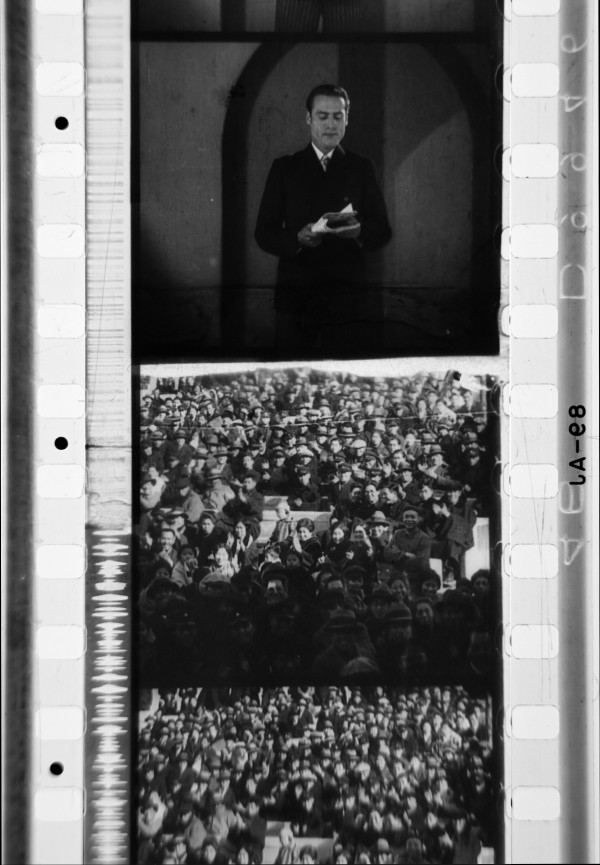
A 35mm preservation copy of Fujiwara Yoshie no Furusato (Hometown, 1930) made by the National Film Archive of Japan. The original soundtrack, recorded using the Minatōkī System, is clearly visible on the left-hand side of the picture. Interestingly, this film switches between a variable-density optical soundtrack and a variable-area type.
National Film Archive of Japan, Tokyo, Japan. Photograph by Eri Muraki and Ryo Ishikawa.
Identification
Unknown
Approx. (Itakura, 2020: p. 203)
B/W
Unknown
(80 ft [24.38m] per minute) (Rokuon, 2024b: pp. 25–6).
1
Mina Talkie (ミナトーキー)
Originally, variable-density optical sound, as with the Phonofilm system. However, it appears that a variable-area type soundtrack (RCA) was also used based on surviving copies. The first reel of Hometown (1930) switches from variable-area to variable-density in the course of one scene. The fourth and final reel switches from variable-density to variable-area after Fujiwara Yoshie finishes singing in the film. It is unknown when the change from variable-density to variable-area occurred (Rokuon (2024a): p. 15). Western Electric carbon microphones were used. All sound was recorded live on set; no additional dubbing was done.
Unknown
B/W
Unknown
History
In 1925, returning from a trip to the United States to study the sound-on-film system at Lee De Forest’s De Forest Phonofilm Company, Minagawa Yoshizō (1882–1960), an international trader from Osaka and a member of the Chamber of Commerce and Industry in Tokyo, bought the exclusive Japanese rights for Phonofilm. He brought back and exhibited 17 American-made Phonofilm films at the theaters Shinbashi Enbujō, in Tokyo, and Nakanoshima Kōkaidō, in Osaka, in July of the same year.
To produce sound films in Japan, Minagawa built a studio in Ōmori, Tokyo, in late 1926 and sent ex-Shōchiku cinematographer Chiba Yoshio and electrician Igarashi Masao to the laboratory of the De Forest Phonofilm Company in New York City, NY. In January 1927, Minagawa initiated Japan’s first sound cinema company, Shōwa Kinema (Kinema Junpō, January 21, 1927: p. 18). There had been earlier attempts to produce sound films in Japan, but they had not borne fruit in the form of any commercially trading companies (Daibou, 2011). Minagawa was soon producing his own Phonofilms, despite the fact that his studio lacked any sound insulation (Nordström, 2011: p. 3). This lack of sound insulation would have made recording film audio somewhat challenging. These early films were screened publicly, albeit in a limited capacity. However, due to the absence of sound reproduction infrastructure in Japanese movie theaters at this time, specialized screening technology had to be transported to each cinema, every time the films were screened. This encumberment provided the impetus for a deal with Nikkatsu, Japan’s leading production company and film studio, to install sound reproduction facilities at several Nikkatsu theaters. This was the first step towards a closer collaboration between Nikkatsu and Minatōkī, which would culminate in the co-produced Fujiwara Yoshie no Furusato (Hometown, 1930) (Nordström, 2014: p. 68).
The subjects of these short sound films were typically such things as moving trains, modern dance, western music, and classical Japanese music and stage performance. A series of them were screened at Tokyo’s Imperial Hotel Engeijō on October 5, 1927 (Nordström, 2011: p. 2; Kinema Junpō, October 11, 1927: p. 7). Following the critical failure of part-talkie Reimei (Dawn, 1927), for which poor sound quality and lack of plot were main criticisms (Nordström, 2011: p. 4), Minagawa sought financial support from Itaya Junsuke, the president of railway companies in the northern Japanese island of Hokkaido, and the son of business magnate Itaya Miyakichi, who had made his fortune in marine transportation during the First Sino-Japanese War (1894) and the Russo-Japanese War (1904–5). Itaya was elected to the Japanese Diet (national legislature) in 1927. During the 16th election of the House of Representatives, in February 1928, Prime Minister Tanaka Giichi and other cabinet members used the Minagawa Phonofilm to record their campaign speeches. Their films included Seiyukai sōsai Tanaka Giichi-shi enzetsu (The Speech of Prime Minister Tanaka, 1928). It is assumed that Itaya’s interest in sound films was not solely about investing in a nascent film industry, but also about using this new medium to further his own political ambitions.
With financial support (¥1.2 million of capital stock; a significant sum for a medium-to-large corporate entity in Japan, particularly following the infamous financial crisis of 1927, which triggered bank consolidation and stricter capital requirements) from Itaya and industrialist Nezu Yoshiichirō, Minagawa reincorporated Shōwa Kinema as the Hassei Eiga Company on June 27, 1929, with Itaya as the company’s president. Minagawa was the executive director. Minagawa renamed Minagawa Phonofilms to Minatōkī for marketing purposes. The Hassei Eiga Company released the feature film Taii no musume (The Captain’s Daughter, 1929), the first Minatōkī production, in November of that year.
In 1929, the production company Nikkatsu produced three films using Eastphone, a sound-on-disc system that imitated Vitaphone and was developed by Tōjō Masao, Minagawa’s former business associate, of Nippon Talkie company. Eastphone was, according to a media studies scholar Fukuda Yūdai, “a system that plays two sets of projectors with a 10-minute recording mechanism and a gramophone one after another” (Fukuda, 2015). Eastphone was not able to record diegetic sound simultaneously with the film footage, so all dialogue, music and sound effects were dubbed during post-production (Hase, 2024: p.87). Nikkatsu decided to turn to Minagawa’s sound-on-film system for Mizoguchi Kenji’s Fujiwara Yoshie no Furusato (Hometown, 1930). According to the acclaimed leftist film critic Iwasaki Akira, Minatōkī replicated the “oldest form of De Forest’s Phonofilm” and its cost was “only one-fifth of the original” (Iwasaki, 1930: p. 170). The director Mizoguchi had to overcome various technical challenges during production. For instance, he clearly distinguished silent sections and talkie sections, enabling him to incorporate camera movements during the silent sections. This allowed him to overcome a limitation of Phonofilm: specifically that the camera, tripod and cinematographer were required to remain inside a special fixed booth when shooting a scene with simultaneous sound recording (Hase, 2024: p. 88). On release, Hometown became a box-office hit, thanks, in part, to the presence of opera singer Fujiwara Yoshie, who enjoyed nationwide popularity and fame.
In 1931, due to a slump in business resulting from the Great Depression (1929–39), Minagawa sold his studio, including all its equipment, to Itaya (Kinema Junpō, June 11, 1931: p. 2). Itaya changed the name of the business from Hassei Eiga to Shōwa Hassei Eiga. Itaya invited cinematographer Henry Kotani to join Shōwa Hassei Eiga as studio head and chief cinematographer. Kotani was already involved in Shōwa Kinema as he had introduced Mineo Yoshio, who had been studying electromagnetic waves, during the foundation of Shōwa Kinema.
By hiring Kotani, Itaya sought to complement Shōwa Kinema’s in-house sound-on-film system with Hollywood techniques. If Kotani could finesse the Minatōkī system, then Itaya would avoid having to pay expensive patent fees to the leading companies in the field of sound-on-film systems, such as Western Electric (WE), or the Radio Corporation of America (RCA). Minagawa and WE already had a dispute, in June 1929, when Redskin (1929) was released as the first American sound film to play in Japan. Minagawa sued Paramount Cinemas in Japan because Minagawa regarded the installation of the WE system in Paramount theaters as a territorial rights violation (Nordström, 2011: p. 7).
Even though Kotani did not have any experience in making talkies, he was an expert in Hollywood cinematographic technology and techniques. Kotani had worked as a cinematographer in Hollywood in the 1910s, under the aegis of renowned filmmaker Cecil B. DeMille. In 1920, eagerly pursued by the representatives of Shōchiku, and highly recommended by DeMille, Kotani returned to Japan. Nakayama-shichiri (1930) was the first film that Kotani photographed at Shōwa Hassei Eiga.
Also in 1930, Minagawa sent a crew and cast to Shanghai to photograph scenes for a film that he would produce, Mono iwanu hana (The Silent Flower, 1931). After the completion of this film, Kawatani Shōhei (1898–1975), a Japanese cinematographer who worked for the Da Zhonghua (Great China) company in Shanghai, contacted Minagawa and Itaya, and asked if they would be interested in co-producing a talkie film, Yuguo Tianqing (Peace After Storm, 1931) (Yamaguchi, 1995: p. 251).
In 1931, Da Zhonghua partnered with Jinan and established the Huaguang Sound-on-Film Motion Picture Company. As small companies, Da Zhonghua and Jinan invested in Minatōkī, which was more technologically advanced than any Chinese sound-on-film system, gaining them a competitive edge in the Chinese film market. It was certainly a cheaper investment than incorporating an American sound-on-film system. The plan was for Da Zhonghua and Jinan to pay all production costs and cast expenses during their stay in Japan, while Shōwa Hassei Eiga would provide the technology and technicians. The shooting of Peace After Storm was completed by the end of May 1931, around the same time as the shoot for Madamu to nyōbō (The Neighbor’s Wife and Mine), the first talkie film by Shōchiku, which used the competing Tsuchihashi sound-on-film system, modeled on RCA’s Photophone and invented by Tsuchihashi Takeo. Peace After Storm achieved unprecedented box-office success in Shanghai, when it was previewed at the Carlton Theater and subsequently released at the Olympic Theater, in July 1931. However, while the film’s director Xia Chifeng was deciding on a buyer to distribute the film in all of China beyond Shanghai, the Mukden Incident of 1931 occurred. (The events at Mukden were a false-flag attack by members of the Japanese military on a Japanese-owned railway in South Manchuria, which provided a pretext for a full-scale military invasion and occupation of Manchuria by Japanese forces, and resulted in some years of conflict and frosty relations between the two nations.) As a result, Peace After Storm was never sold to a distributor in China, and the film was not screened widely in Japan, except for a press screening at the Imperial Hotel, Tokyo, which resulted in at least one review of the film, in the June 1, 1931, issue of Eiga jidai magazine.
Shōwa Hassei Eiga entered into bankruptcy in September 1931 (Kinema Junpō, September 11, 1931). The Huaguang Sound-on-Film Motion Picture Company was also wound-down when the partnership between Da Zhonghua and Jinan was cancelled. This spelt the end for Minatōkī.
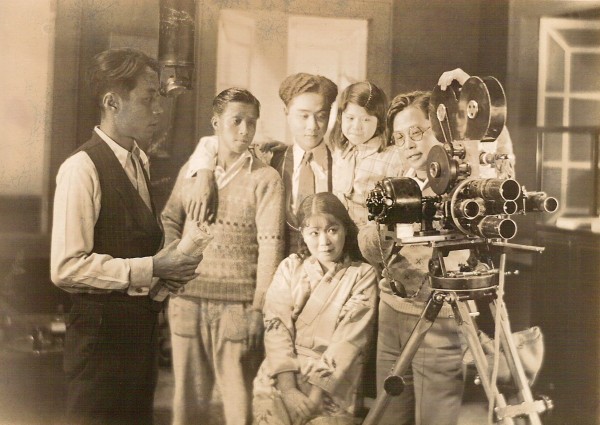
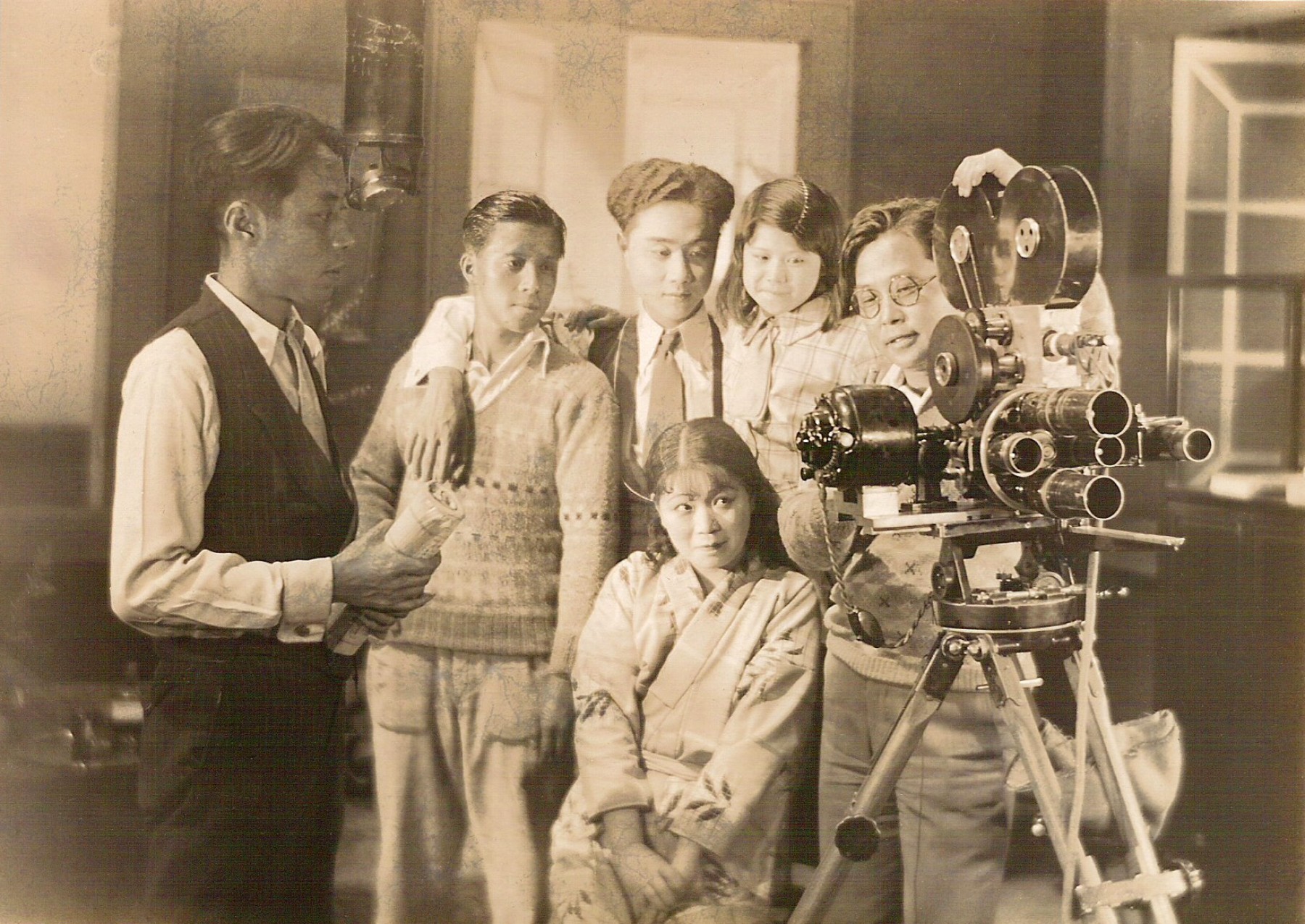
Cinematographer Henry Kotani explains the Minatōkī sound camera/recorder to the Chinese cast of Yuguo Tianqing (Peace After Storm, 1931).
Courtesy of Henry Kotani Production.
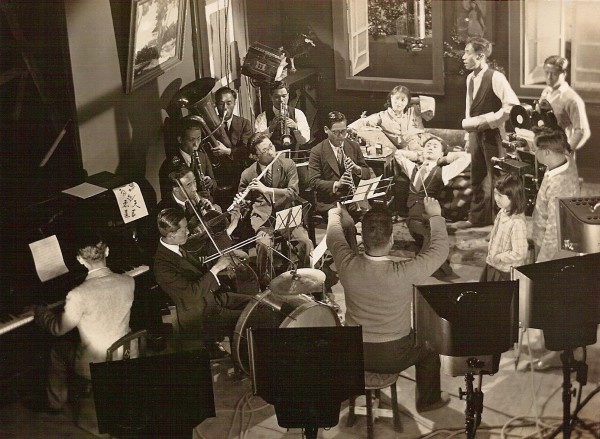
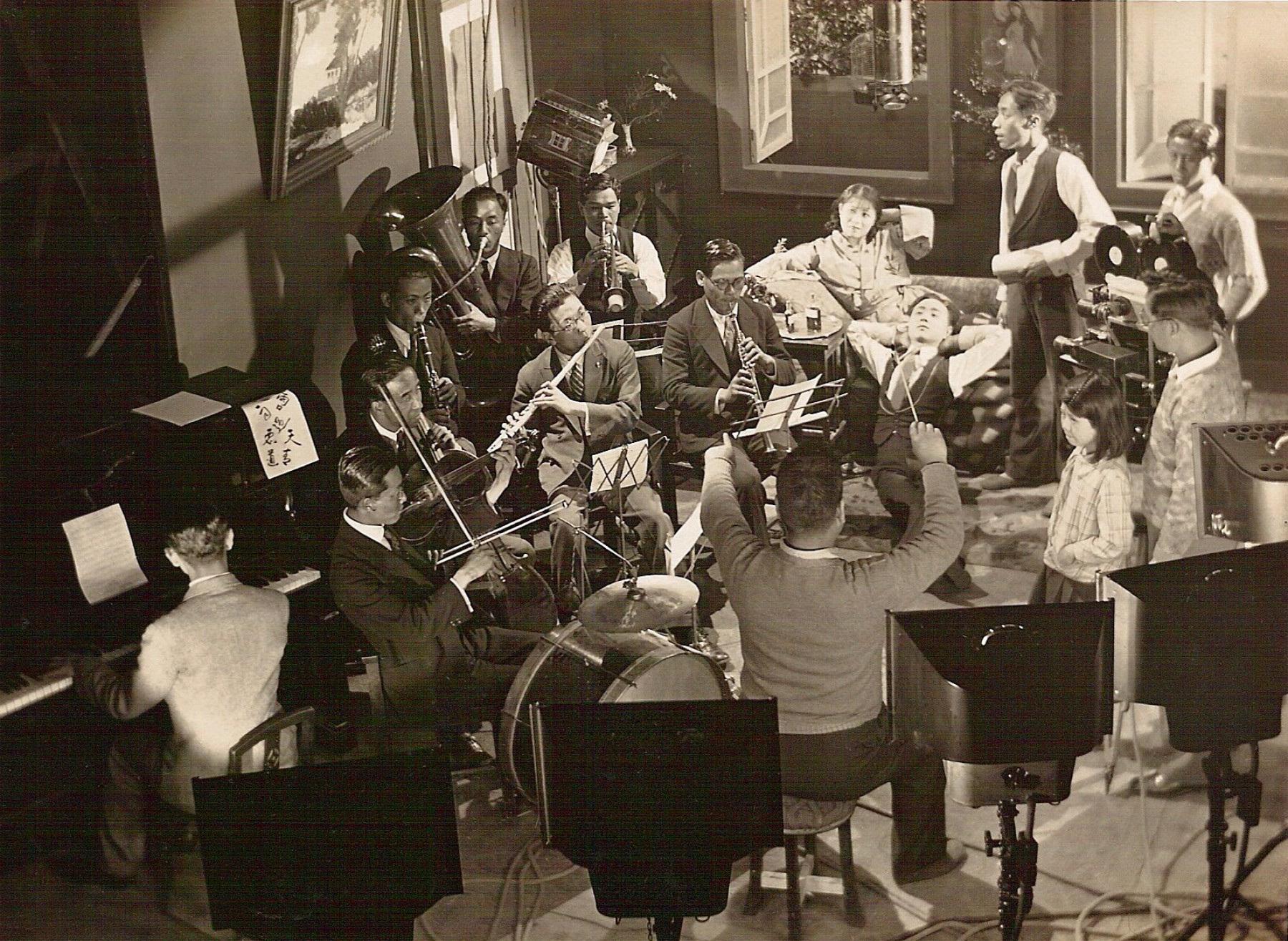
The Minatōkī camera/recorder is set to film a scene from Yuguo Tianqing (Peace After Storm, 1931).
Courtesy of Henry Kotani Production.
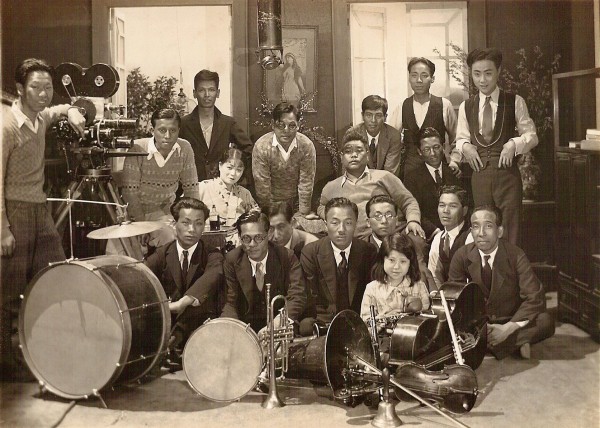
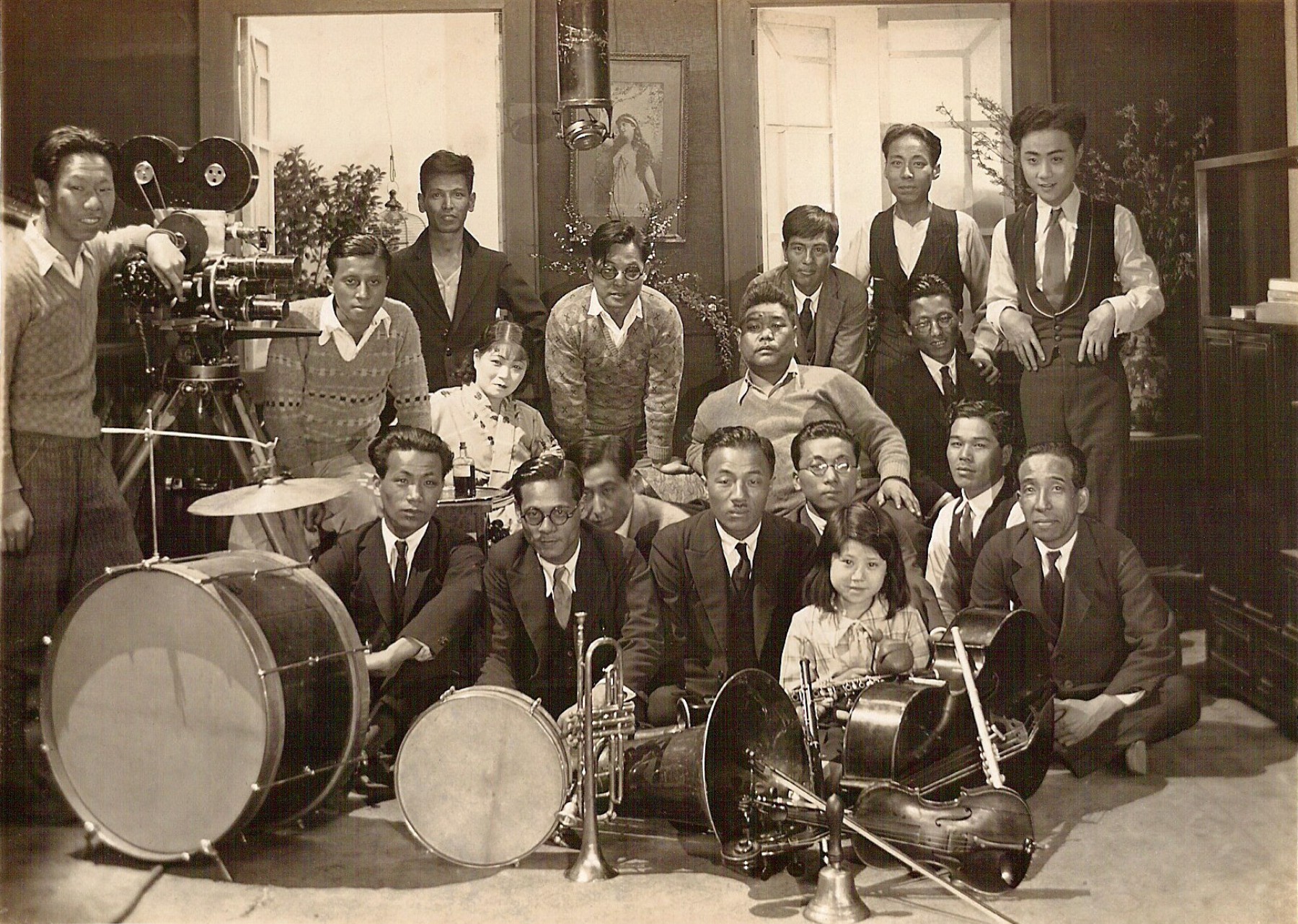
The Japanese crew and Chinese cast of Yuguo Tianqing (Peace After Storm, 1931), with the Minatōkī sound camera/recorder.
Courtesy of Henry Kotani Production.
Selected Filmography
Nikkatsu’s first talkie film co-produced with Hassei Eiga Company. 35mm copies are preserved at the National Film Archive of Japan.
Nikkatsu’s first talkie film co-produced with Hassei Eiga Company. 35mm copies are preserved at the National Film Archive of Japan.
A tragic story of a woman named Koume whose husband unknowingly kills her brother over money.
A tragic story of a woman named Koume whose husband unknowingly kills her brother over money.
Talkie produced at Hassei Eiga.
Talkie produced at Hassei Eiga.
Cinematography by Henry Kotani. 35mm fragments are preserved at the National Film Archive of Japan.
Cinematography by Henry Kotani. 35mm fragments are preserved at the National Film Archive of Japan.
Part-talkie film.
Part-talkie film.
Japan’s earliest surviving sound film. 35mm fragments are preserved at the National Film Archive of Japan.
Japan’s earliest surviving sound film. 35mm fragments are preserved at the National Film Archive of Japan.
Reproduction of a Kyōgen stage play, starring Matsumoto Kōshirō.
Reproduction of a Kyōgen stage play, starring Matsumoto Kōshirō.
A film version of the play of the same name by Nakauchi Chōji about a captain's daughter who gave birth to an illegitimate child. The story was adapted to films several times.
A film version of the play of the same name by Nakauchi Chōji about a captain's daughter who gave birth to an illegitimate child. The story was adapted to films several times.
The first Chinese–Japanese co-production and the first Chinese sound-on-film talkie produced by the Huaguang Sound-on-Film Motion Picture Company in Shanghai. Cinematography by Henry Kotani.
The first Chinese–Japanese co-production and the first Chinese sound-on-film talkie produced by the Huaguang Sound-on-Film Motion Picture Company in Shanghai. Cinematography by Henry Kotani.
Technology
The Minatōkī system used the De Forest Phonofilm camera technology, imported from the United States. The Phonofilm camera could simultaneously record images and sound in synchronization without the need for additional sound recording equipment. It recorded a variable-density optical soundtrack along the left-hand edge of 35mm film, between the edge of the image frame and the perforations. It is unknown if the Minatōkī system further refined the Phonofilm technology, although surviving prints are a mix of variable-density and variable-area sound, indicating that some modifications were made, or technology replaced.
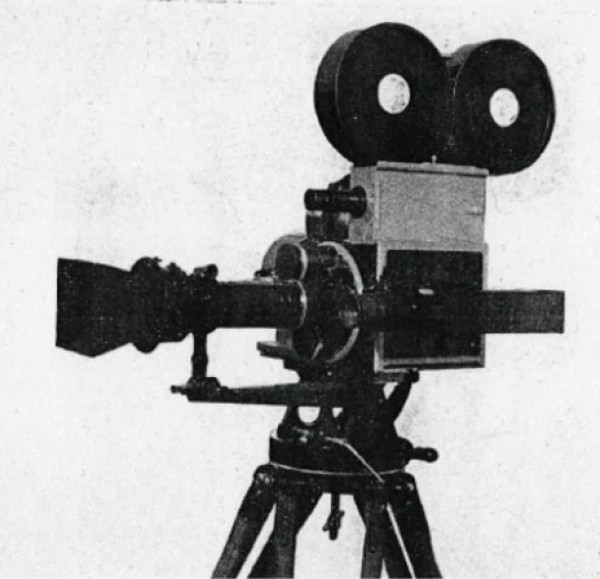
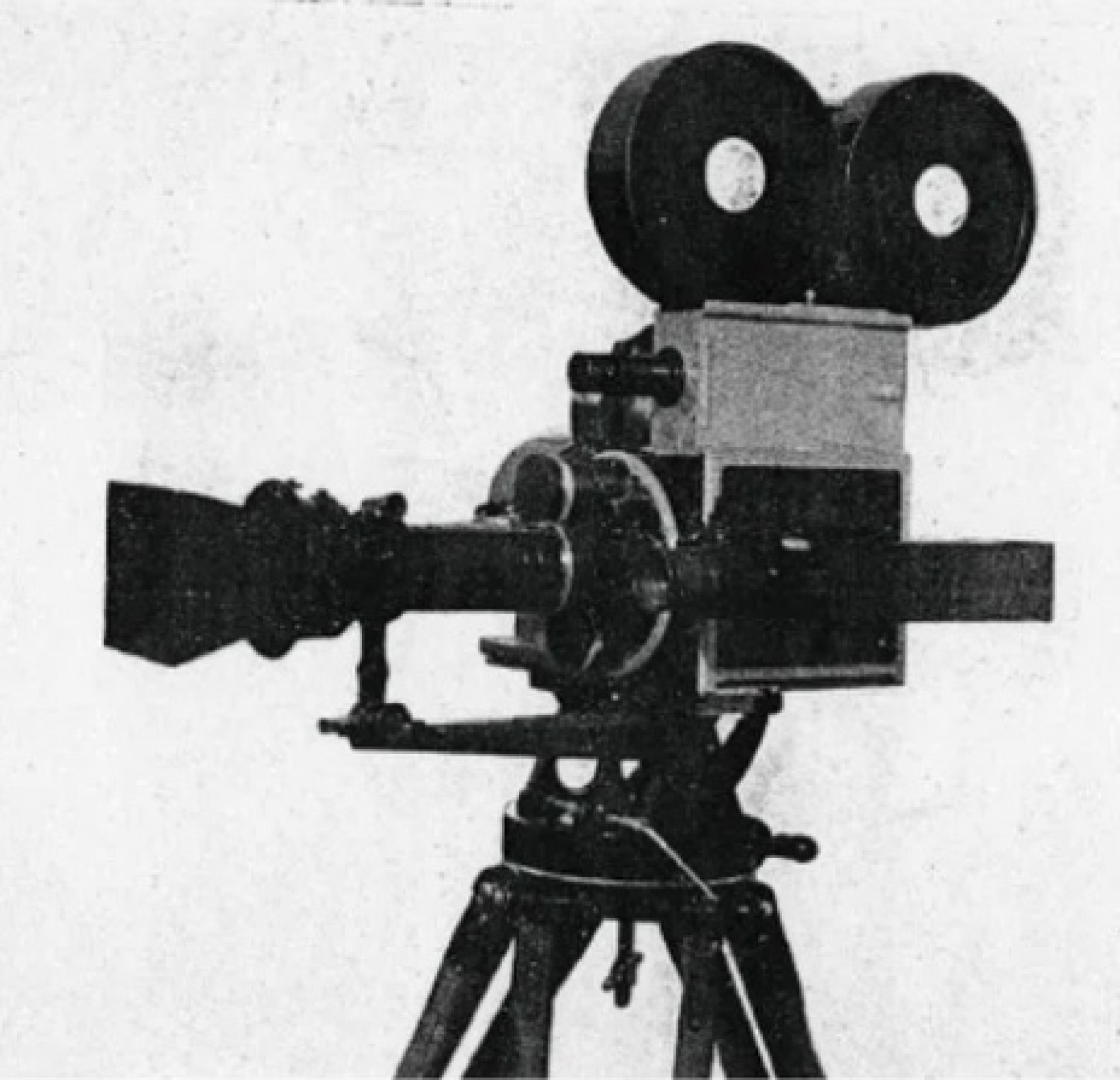
The 35mm Phonofilm camera.
Rokuon (2012). “Phonofilm: Camera/Recorder (Hassei Eiga the First Exhibition)”, Rokuon, 203 (Nov.): p. 4.
References
Daibou, Masaki (2011). “Musei eiga to chikuonki no oto: Kabu ongyoku to kakushinteki chōryū” [“Silent Cinema and the Sound of Gramophone: Song and Dance and the Innovative Trend”]. In Nihon eiga no tanjō [The Birth of Japanese Cinema], Iwamoto Kenji (ed.), pp. 329–366. Tokyo: Shinwa sha.
Fukuda, Yūdai (2015). “Koramu: Saundotorakku” [“Column: Soundtrack”]. In Onkyō media shi [History of Audio Media], Taniguchi Fumikazu, Nakagawa Katsushi & Fukuda Yūdai (eds.), p. 158. Kyoto: Nakanishiya shuppan.
Hase, Kenichirō (2024). “Nikkatsu ni okeru tōkī senryaku no kenshō: Tōkī ikō ki no afureko o chūshin ni” [“Reevaluating Nikkatsu Talkies: Dubbing during the Transition to Sound Cinema in Japan”]. Eizōgaku, 112: pp. 81–102.
Itakura, Fumiaki (2020). “The Early Talkie Frame in Japanese Cinema”. In The Culture of the Sound Image in Prewar Japan, Michael Raine & Johan Nordström (eds.), pp. 201–22. Amsterdam: Amsterdam University Press.
Iwasaki, Akira (1930). Eiga geijutsu shi [History of Film Art]. Tokyo: Geibun shoin.
Kawaguchi, Kazuo (1970). “Mukashi no satsueijo ato o tazunete (6)” [“Visiting the Locations of Old Film Studios (6)”]. Eiga Terebi Gijutsu, 216 (Aug.): pp. 47–52.
Kinoshita, Chika (2007). “Mise-en-scène of Desire: The Films of Mizoguchi Kenji”, PhD diss., University of Chicago.
Komatsu, Hiroshi (2004). “The Foundation of Modernism – The Situation of Japanese Cinema in the Year 1927”. Bulletin of the Graduate Division of Letters, Arts and Sciences of Waseda University. III, Japanese Literature, Theatre and Film Arts, History of Fine Arts, Japanese Language and Culture, 50 : pp. 25–42.
Makino, Masahiro (1977). Eiga tosei ten no maki: Makino Masahiro jiden [The Life of Cinema Volume of Heaven: Makino Masahiro Autobiography]. Tokyo: Heibon sha.
Minagawa, Yoshizō (1927). “Shakai jigyō toshite no hassei eiga” [“Sound Film As a Community Enterprise”]. Teikoku Kōgei (Jul.): pp. 8–10.
Miyao, Daisuke (2018). “Peace Before Storm: The Concept of Trans-Asian Cinema and Peace After Storm (‘Yuguo Tianqing’, 1931)”. In The Palgrave Handbook of Asian Cinema, Aaron Magnan-Park, Gina Marchetti & Tan See-Kam (eds.), pp. 245–68. New York: Palgrave Macmillan.
Nordström, Johan (2011). “The Emergence of the Sound Film in Japan: Mina Talkie and the Reception of Its Early Works”. International Institute for Education and Research in Theatre and Film Arts, Global COE Programme, Theatre and Film Studies, 5 (Mar.): pp. 1–17.
Nordström, Johan (2014). “‘Tōkī wa P.C.L’ – Eigaseisakujo P.C.L o saikō suru” [‘The Talkie Is P.C.L’ – Film Production Studio P.C.L Reconsidered], PhD dissertation, Waseda University Shinjuku, Tokyo.
Okada, Susumu (1957). Nihon eiga no rekishi [History of Japanese Cinema]. Tokyo: Sanichi shobō.
Rokuon (2024a). “Eiga hyōgen to oto Dai 3 kai ‘Minatōkī’ (Zenpen)” [“Film Expression and Sound (3): ‘Mina Talkie’ (1)”]. Rokuon, 237 (Mar.): pp. 14–23.
Rokuon (2024b). “Eiga hyōgen to oto Dai 3 kai ‘Minatōkī’ (Kōhen)” [“Film Expression and Sound (3): ‘Mina Talkie’ (2)”]. Rokuon, 238 (Jul.): pp. 18–26.
Yamaguchi, Takeshi (ed.) (1995). Mato o kakenuketa otoko: Watashi no kyameraman jinsei [The Man Who Ran Through the Evil City: My Life As a Cinematographer]. Tokyo: Sanichi shobō.
Yasuda, Yōzō (1974). “Nihon ni okeru tōkī eiga no paionia Mina tōkī ni tsuite” [“About Mina Talkie, the Pioneer of Talkies in Japan”]. Eiga Terebi Gijutsu, 261 (May): pp. 69–72.
Patents
De Forest, Lee. Recording and reproducing sound. US patent US1769908A, filed July 10, 1926, and issued July 1, 1930. https://patents.google.com/patent/US1769908A
Related entries
Author
Daisuke Miyao is Professor and Hajime Mori Chair in Japanese Language and Literature at the University of California, San Diego. Miyao is the author of Ozu and the Ethics of Indeterminacy (Duke University Press, 2026), Le Samouraï (BFI Film Classics, Bloomsbury, 2026), Japonisme and the Birth of Cinema (Duke University Press, 2020), Cinema Is a Cat: A Cat Lover’s Introduction to Film Studies (University of Hawai’i Press, 2019), The Aesthetics of Shadow: Lighting and Japanese Cinema (Duke University Press, 2013), and Sessue Hayakawa: Silent Cinema and Transnational Stardom (Duke University Press, 2007). He is also the editor of The Oxford Handbook of Japanese Cinema (Oxford University Press, 2014) and the co-editor of The World of Benshi with Michael Emerich (UCLA Yanai Initiative, 2024), and Transnational Cinematography Studies with Lindsay Coleman and Roberto Schaefer (Rowman & Littlefield, 2017).
The author would like to thank Mr. Kotani Eiichi, the son of Henry Kotani, for sharing precious photos; Daibō Masaki of the National Film Archive, and Johan Nordström for their valuable help in obtaining important resources for this entry.
Miyao, Daisuke (2026). “Minatōkī”. In James Layton (ed.), Film Atlas. www.filmatlas.com. Brussels: International Federation of Film Archives / Rochester, NY: George Eastman Museum.