Indu(1967–1999)
B/W positives and sound negatives manufactured by, and color print stocks imported and distributed by, Hindustan Photo Films Manufacturing Company Limited (HPF), India.
Film Explorer
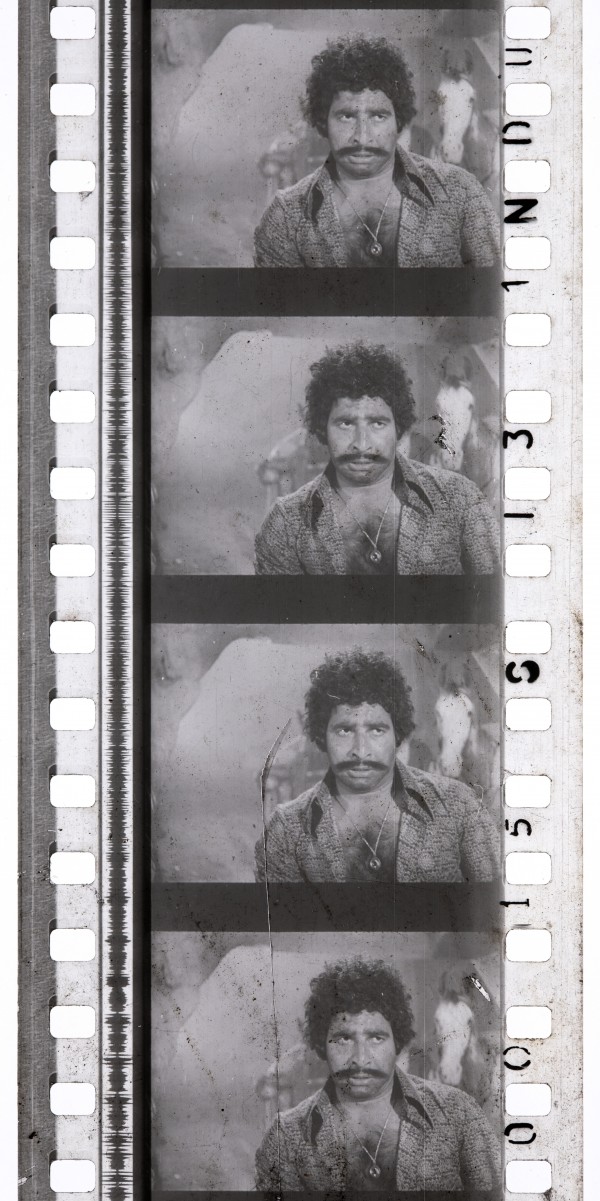
A 35mm B/W print of Cheeta Chalbaaz (1978) on safety-film base, with a variable-area soundtrack. 35mm Indu Cine Positive B/W print stock was manufactured in India by the Hindustan Photo Films Manufacturing Company Limited (HPF).
George Eastman Museum, Rochester, NY, United States.
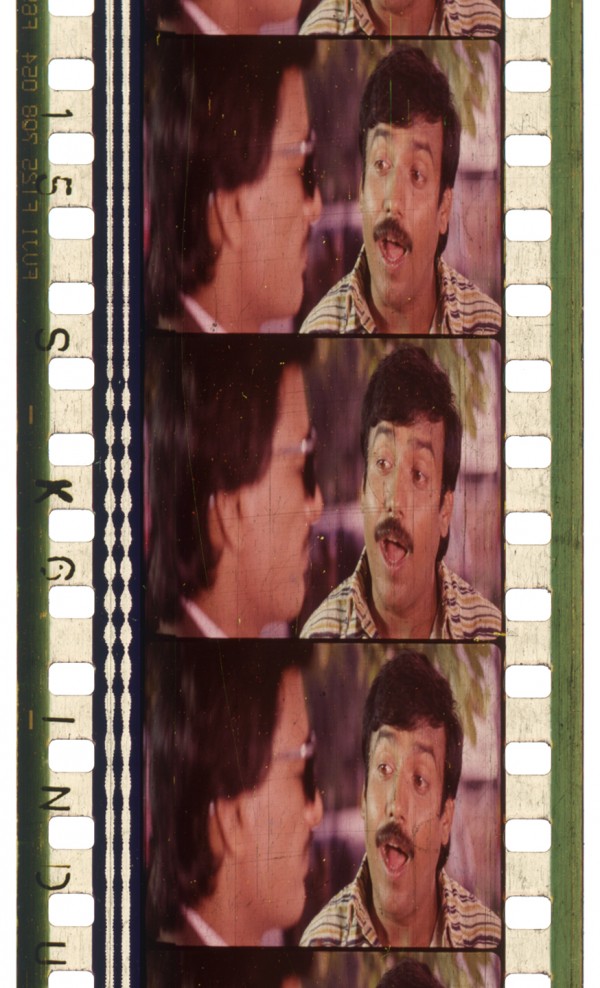
A 35mm Inducolor print of Baduku Jataka Bandi (1997) on polyester base, with an anamorphically-compressed widescreen image and twin bilateral variable-area soundtracks. Indu imported large rolls of color release-print stock from major international film stock manufacturers, slit it into 35mm widths, and rebranded it in India as Inducolor. This particular example is on Kodak stock, as indicated by the “K6” designation in the stenciled edge markings.
NFDC-National Film Archive of India, Pune, India. Scan by Leenali Khairnar.
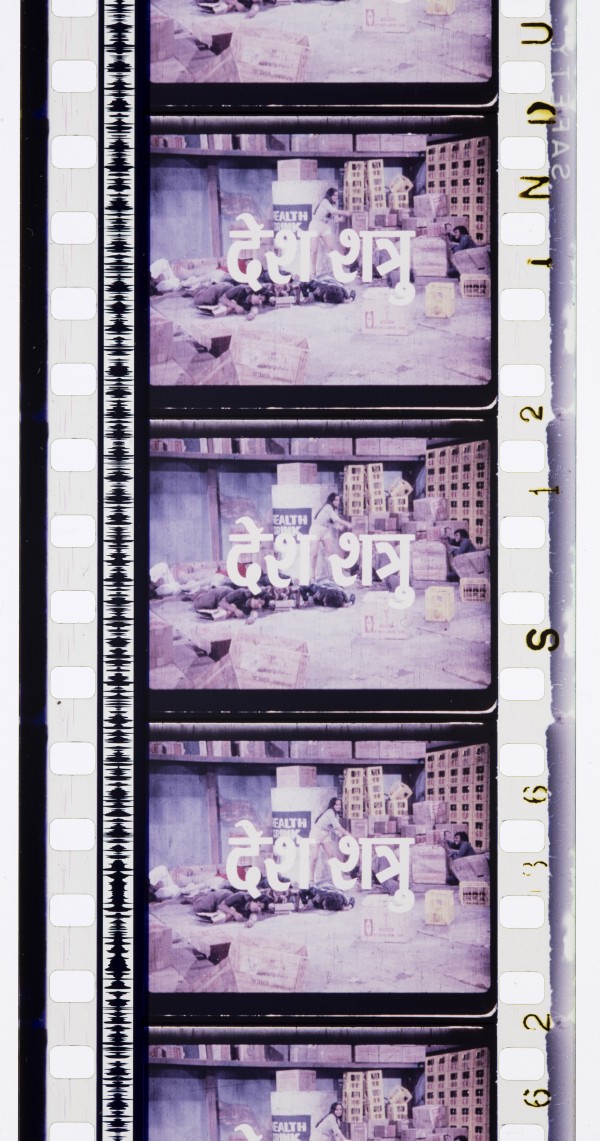
A 35mm Inducolor print of Desh Shatru (Agent 009, 1983), on cellulose triacetate base, from an unknown manufacturer. The image shows light color fading.
George Eastman Museum, Rochester, NY, United States.
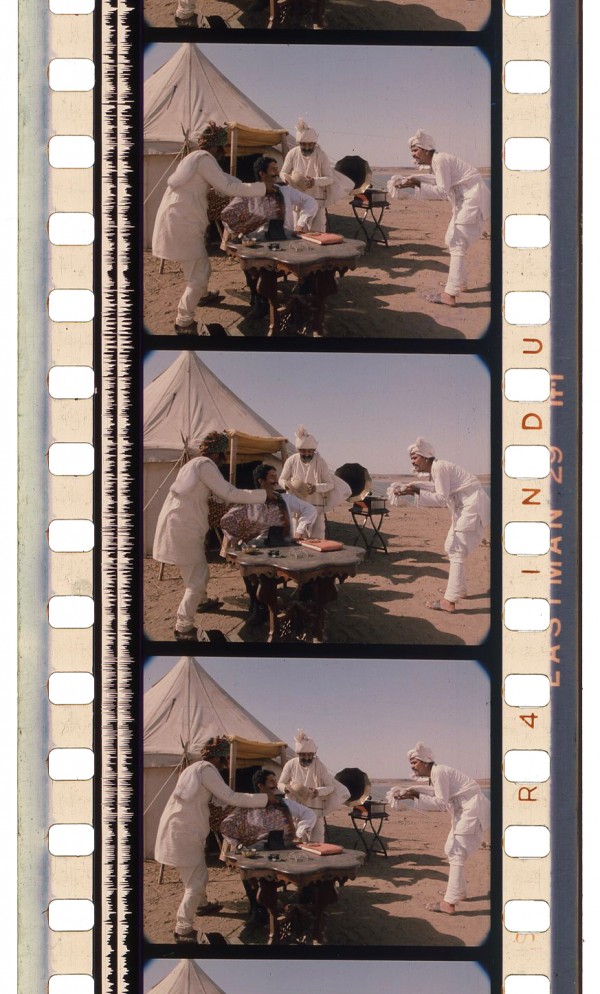
A 35mm Inducolor print of Mirch Masala (1987) on cellulose triacetate base. Inducolor stock was imported in jumbo rolls from international manufacturers, then slit down into 35mm width for sale and use within India and other territories. The meaning of the “R4” source-manufacturer indicator in the edge print is not presently known.
NFDC-National Film Archive of India, Pune, India. Scan by Leenali Khairnar.
Identification
The B/W Indu Cine Positive was manufactured using the conventional method of coating a gelatin-based silver halide emulsion onto acetate, or polyester film base. The photosensitive layer primarily consisted of silver bromide and silver chloride suspended in gelatin. Hindustan Photo Films (HPF) did not manufacture color film stock domestically. Instead, it operated under license to import color positive jumbo rolls from Agfa-Gevaert, ORWO and Kodak, which were then slit into various gauges and roll sizes and packaged for commercial distribution.
Edge markings are stencilled on the film’s edge in black ink between perforations. On color prints, a letter and number combination indicate the source of the film stock prior to slitting (eg. “G9” = Agfa-Gevaert, “K6” = Eastman Kodak and “O7” = Orwo). “S” signifies safety film. (The standard edge markings of the source manufacturers for Inducolor prints are not typically present).
Indu B/W positives tend to exhibit high contrast, with very dark blacks and bright highlights, sometimes lacking shadows and nuanced mid-tone separation.
Variable-area optical soundtrack.
Print-through edge markings from the source negative are often visible. These can be from any manufacturer.
History
With India’s independence in 1947, every sector of national life underwent reconfiguration to align with the aspirations of a democratic and self-reliant nation. Within the field of photography too, the demand for domestically produced film stocks and photochemical products for still photography, the motion picture industry, education and medical X-ray applications became increasingly urgent (Thomas, 1981: pp. 51–2). To achieve self-sufficiency, reduce import dependence and foster research-driven product development through industrialization, the Government of India set up Hindustan Photo Films Manufacturing Company Limited (HPF), an integrated state-owned public sector enterprise. However, its establishment was founded upon various international collaborations, the first of which was with Bauchet, a French photo and camera company. This partnership was formalized on April 25, 1960, aimed at acquiring expertise and infrastructure (Thomas, 1981: p. 53). The agreement was to be officially transferred to HPF within a year, while the company was still at its nascent stage and yet to be inaugurated. Meanwhile, Bauchet was acquired by the Minnesota Mining & Manufacturing Company (3M) of the United States in May 1963, but the collaboration continued. Seventy-five experts from France were stationed in India, and a group of 18 Indian specialists, who would later comprise the core technological team of HPF, underwent over a year of intensive training in France (Hindustan Photo Films, 1986: p. 22; personal correspondence with HPF staff). During this period, the design of HPF’s silver recovery plant, which was critical infrastructure, was completed with Bauchet’s support (Hindustan Photo Films, 1985/6). The factory was formally inaugurated by the then Prime Minister of India, Ms. Indira Gandhi, on January 7, 1967, and production commenced that same year (Hindustan Photo Films, 1986: p. 18).
HPF was established in Udhagamandalam (formerly Ootacamund, also known as Ooty), in the Nilgiri Hills of Tamil Nadu, a site selected for its cool, stable climate and access to pure river water – conditions considered ideal for film stock production. The factory, initially spread across 45 acres of land provided free of charge by the Government of Madras (since 1996, Madras has been known as Chennai), was conceived to meet up to 60 per cent of India’s demand for raw cinematographic and photographic stock, X-ray films and photographic paper (Premkumar, 2023). The company’s products were marketed under the brand name “Indu”, a Sanskrit word with multiple connotations, including “silver” – the essential element in photographic emulsions. The town itself subsequently came to be known as Indunagar. From its first year of production, the company also pursued international markets, securing early success with exports to Sri Lanka, Malaysia, Indonesia and Singapore (Hindustan Photo Films, 1985/6). Over time, HPF achieved its goal of becoming one of the few fully integrated manufacturers of photographic films and chemicals worldwide, alongside global leaders Eastman Kodak, Agfa and Orwo.
To augment its manufacturing capacity, HPF established a conversion plant in Ambattur, where jumbo rolls of imported and domestically produced film were slit down into retail sizes. The choice of Ambattur was strategic, given its proximity to Chennai, a major hub of India’s regional film industry. This plant also produced color photographic paper, chemicals and developers (Hindustan Photo Films, 1986: p. 35). HPF also worked to manufacture essential raw materials domestically, such as cellulose triacetate, gelatin, methanol, acetone and methylene chloride, and it established an ancillary unit to produce silver nitrate (Hindustan Photo Films, 1985/6).
These pioneering attempts toward self-reliance were not without significant infrastructural and qualitative challenges. In March 1967, production of the B/W Indu Cine Positive encountered defects such as white spots and microbubbles, which were eliminated only after repeated trials by May of that year. In May 1969, HPF reported to the Government of India that the quality and suitability of domestically produced cellulose triacetate had been tested and deemed usable, albeit with minor variations from imported materials. However, when the indigenous cellulose triacetate was tested alongside imported materials in June, the dimensional stability of HPF’s film base proved inadequate (Committee on Public Undertakings, 1974). These shortcomings hindered its acceptance among Indian filmmakers and producers. Nevertheless, given import-license constraints and a shortage of foreign stocks during this period, HPF continued to refine the quality of the domestic base, ensuring its sustained commercial use.
HPF strategically invested in research and development to reduce dependence on imported technology. The original French process for cine sound negative was adapted to Indian environmental and production conditions to improve audio fidelity. The company also developed indigenous techniques for producing silver nitrate of 99.9 per cent purity and improved its methods of silver recovery. HPF consolidated domestic production of key organic chemicals, including hardeners, sensitizers and stabilizers, and successfully replaced imported active gelatins with locally produced inert gelatins (Hindustan Photo Films, 1986: p. 22). During 1969–70, HPF appointed agents in Sri Lanka and Myanmar for the sale of Indu cine positive, medical X-ray film and photographic paper (Union Government, 1970–71: p. 96).
Although HPF produced B/W cine positive and sound negative films, it did not manufacture B/W negatives or color positives during the 1960s. From the mid-1970s, it began importing color positive film in jumbo rolls from other international manufacturers, such as Orwo and Agfa, extending its repertoire of international collaborations. By 1974–75, the necessary infrastructure was in place to slit these rolls into consumer and prosumer sizes and gauges, in a process the company termed “conversion”, which yielded substantial foreign exchange savings (Hindustan Photo Films, 1985/6, 1986: p. 41). HPF entered a three-year agreement with Orwo of the German Democratic Republic (GDR) for the supply of X-ray film, roll film and color film in jumbo rolls, which were slit down into narrower gauges at HPF’s Ambattur plant, near Madras [now Chennai] (Committee on Public Undertakings, 1974: p. 149). A further licensing agreement was concluded with Orwo on July 9, 1977, granting HPF the technology to manufacture B/W negative roll film for a fee of 5.6 million Indian rupees (approximately US$ 667,000 in 1977). Under this arrangement, Orwo conferred on HPF the exclusive right to manufacture the licensed products in India, subject to the conditions that (Balakirshnan, 1981: p. 48):
(a) HPF would not use the Orwo brand name;
(b) the technology transfer would take place primarily in the form of technical documentation;
(c) acceptance tests would be based on the continuous and satisfactory production of 25,000m² of the three varieties of licensed roll film (NP 15, 22 and 27); and
(d) these tests would be conducted at the Orwo plant in Wolfen.
In a similar pursuit, HPF’s chairman visited the facilities of Agfa-Gevaert in Mortsel, Belgium, in July 1973 to establish a partnership for a polyester plant. Agfa-Gevaert, however, sought to sell its technical know-how outright, and the negotiations failed (Balakirshnan, 1981: p. 48). The outcome was limited to HPF’s continued import of Agfa-Gevaert jumbo color film rolls. These parallel collaborations with Orwo and Agfa-Gevaert contributed to the emergence of HPF’s 35mm Inducolor print film range on polyester base (Camera Wiki, 2024).
In the 1980s, HPF expanded its product portfolio and international collaborations further. A major initiative involved the production of magnetic tapes for audio, video and computer applications in partnership with Magna Tontraeger Productions of West Germany. Additional diversification encompassed dental X-ray films, photoresists, diazo papers, microfilms, 35mm roll films and the INDU Photomaker, a four-minute automated kiosk capable of shooting, developing and printing photographs. In collaboration with DuPont in the United States, HPF established improved facilities to manufacture polyester-based X-ray and graphic arts films (Hindustan Photo Films, 1986: p. 57). By 1985 – within 25 years of its founding – HPF’s turnover had surpassed 1 billion Indian rupees (approximately US$ 80.9 million at the time), marking a significant industrial achievement for post-independence India. By 1986, through extensive import substitution, the company had saved the country over 6 billion Indian rupees (approximately US$ 475 million in 1986), underscoring its substantial economic and technological contributions (Hindustan Photo Films, 1985/6: p. 57).
In filmstock manufacturing, where technological intensity, environmental sensitivity and oligopolistic control by global players defined competitiveness, sustained R&D and careful adaptation to local environmental and market conditions were indispensable. In HPF’s case, despite establishing these systems, continued reliance on international collaborators, persistent qualitative constraints, high costs of training and technology assimilation, and simultaneous pressures of import substitution and profitability made the pursuit of self-reliance a complex and resource-intensive challenge (Balakirshnan, 1981: p. 49). The liberalization of India’s economy in the 1990s, coupled with the rapid digitization of photography and cinema in subsequent years, accelerated HPF’s decline (Vishwanathan, 2016). Although color film stock continued to be converted and sold until about 1999, the company’s prospects grew increasingly precarious (Bengali, 2015; Thiagarajan, 2023).
In January 1996, the Board for Industrial and Financial Reconstruction (BIFR) declared HPF a “sick unit” (BS Reporter, 2013; Thiagarajan, 2023). The company challenged this designation in the Madras High Court and secured a temporary stay (Wikipedia, 2025). Despite receiving an excellence award for productivity and innovation in 2007–8 from the Institute of Economic Studies, Delhi – a rare distinction for a sick unit – HPF was unable to recover (Thiagarajan, 2023). Multiple rescue efforts, including a joint venture proposal with Kodak, failed, and the company officially closed in 2018. Ultimately, the Cabinet Committee on Economic Affairs (CCEA) recommended the permanent closure of HPF, and its remaining assets were auctioned in 2023 under the Corporate Insolvency Resolution Process (Jagannathan, 2023).
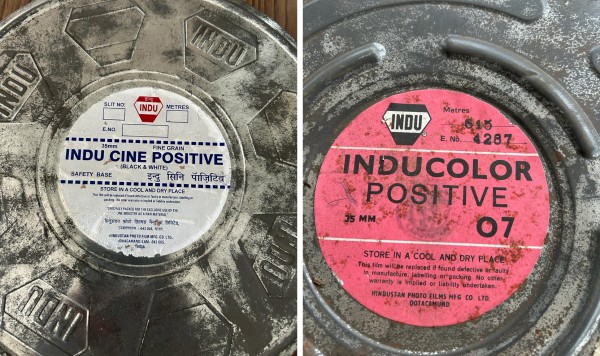
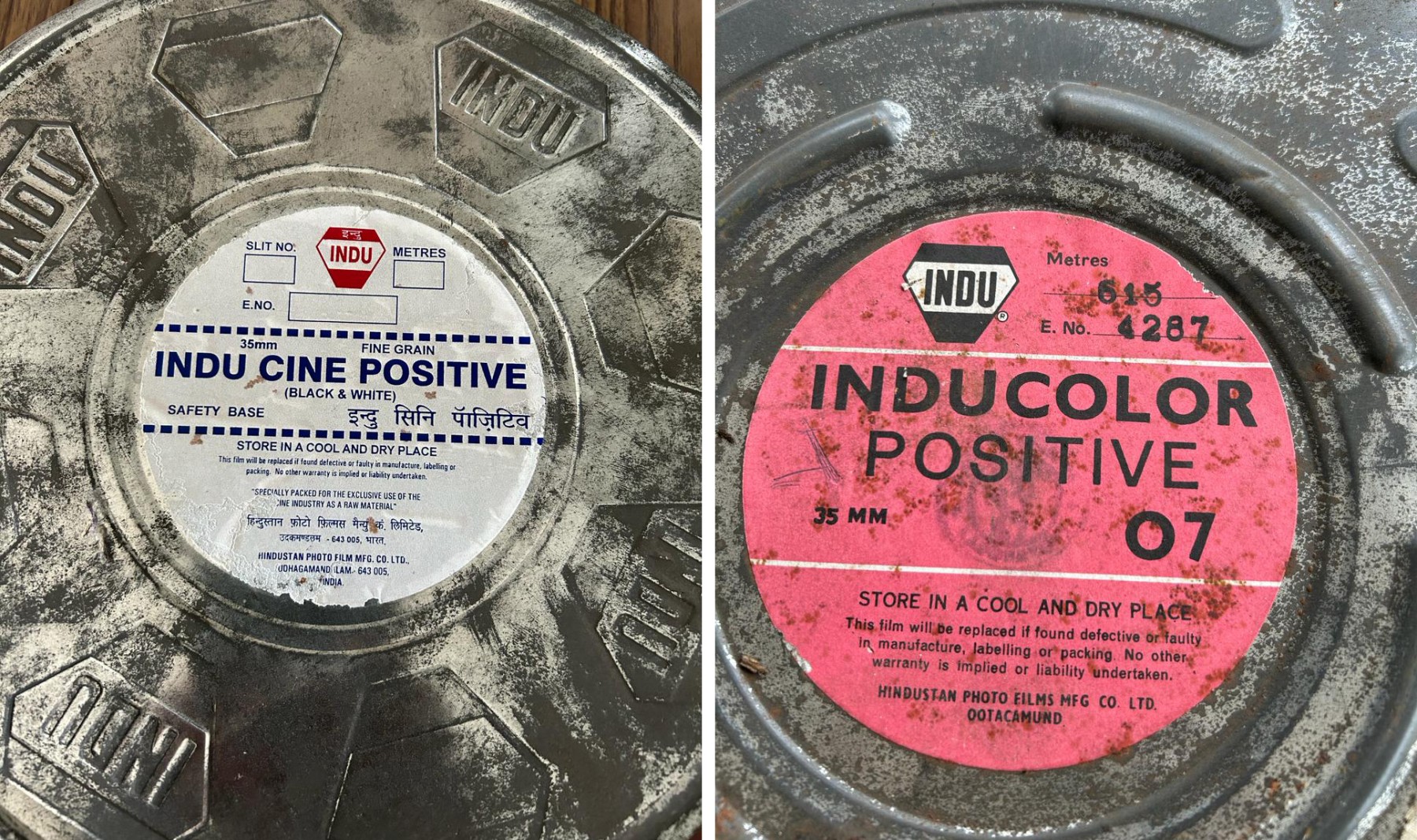
Left: Film can of 35mm B/W fine-grain Indu Cine Positive on acetate base.
Right: Film can of 35mm Inducolor Positive on acetate base. The “O7” on the left of the can lid indicates that the material was converted by HPF to Inducolor from Orwocolor source material.
Hindustan Photo Films Manufacturing Company Limited (HPF), Ootacamund (Ooty), India. Photographs by Leenali Khairnar.
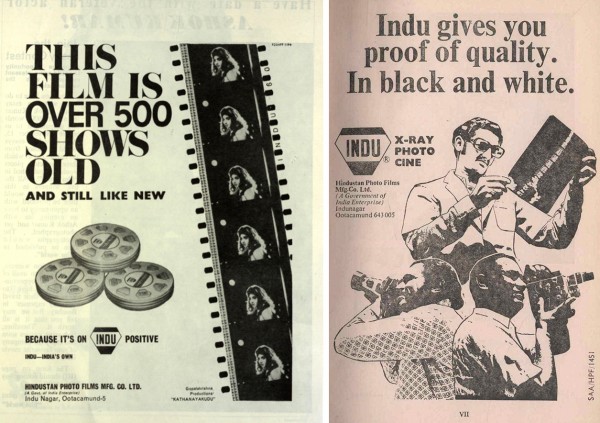
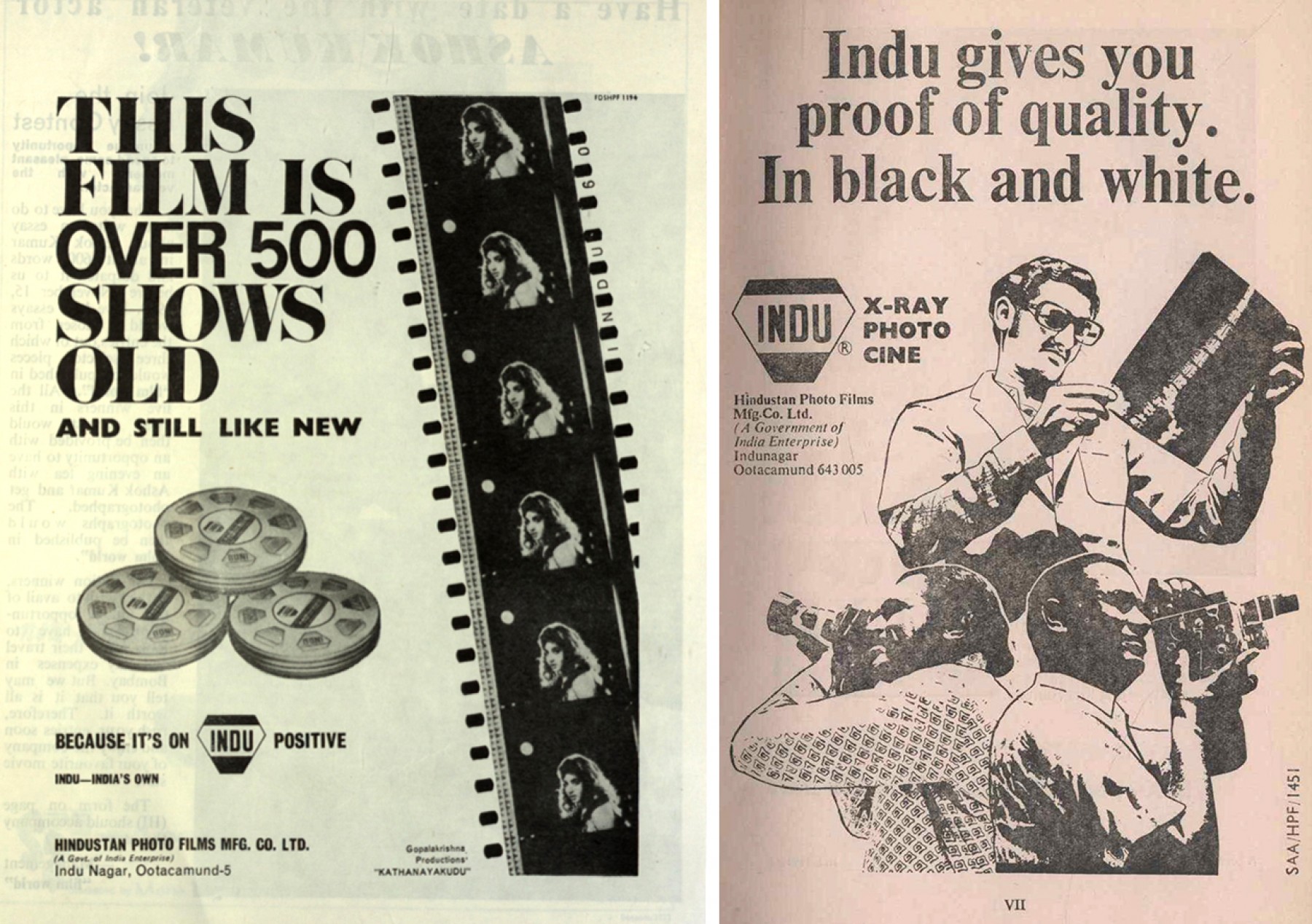
Print advertisements of Hindustan Photo and Films featuring a range of Indu materials, such as cine positives, photographic and X-Ray films.
Left: Unknown publication. Right: Indian Film, 1974 (exact date and page unknown). Courtesy of NFDC-National Film Archive of India, Pune, India.

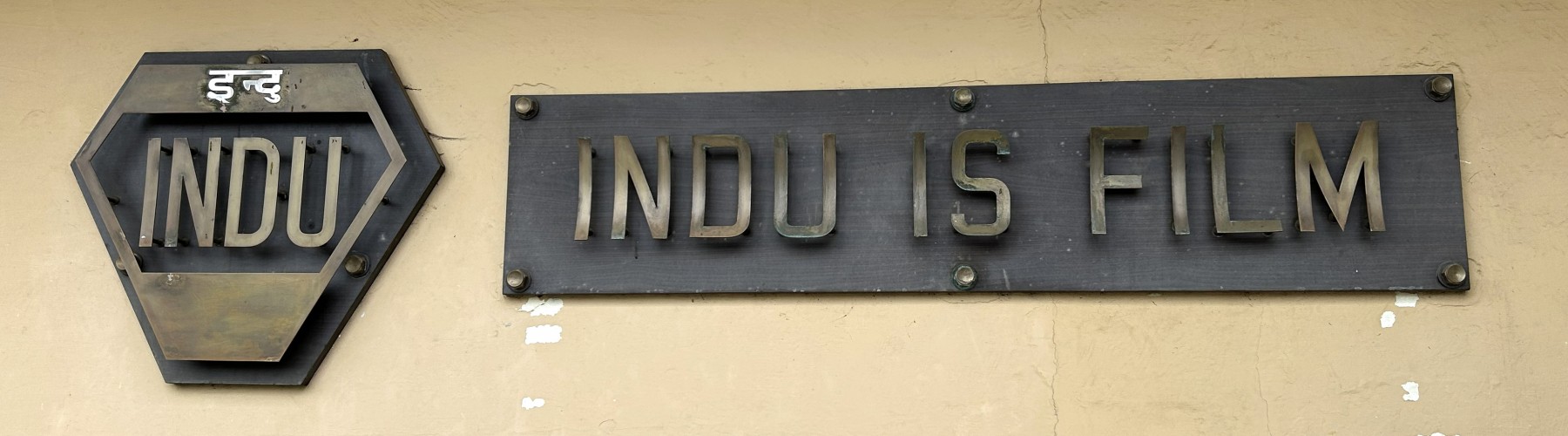
Plaques indicating the logo of Indu at the premises of Hindustan Photo Films Manufacturing Company Limited, Ootacamund, India.
Photograph by Leenali Khairnar, December 18, 2023.
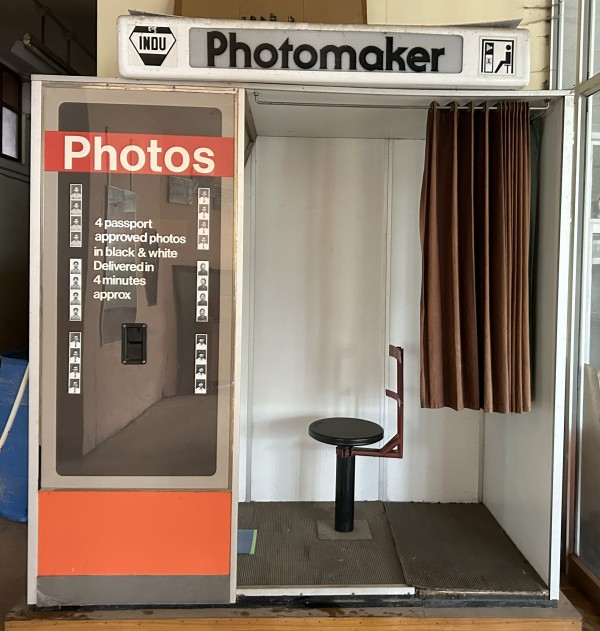
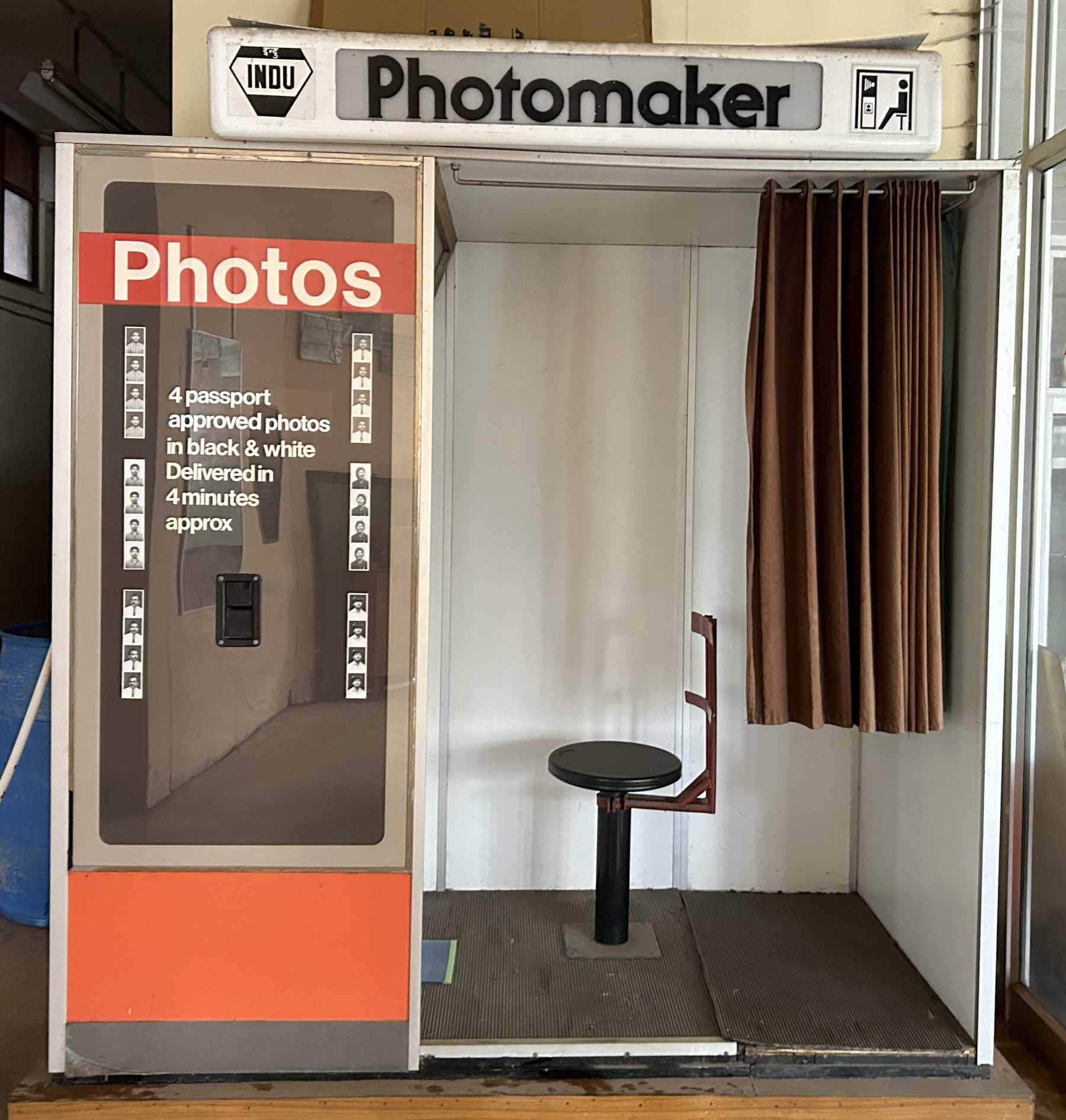
An INDU Photomaker photographed at the premises of Hindustan Photo Films Manufacturing Company Limited, Ootacamund, India.
Photograph by Leenali Khairnar, December 18, 2023.
Selected Filmography
Tamil, B/W, 136 mins.
Tamil, B/W, 136 mins.
Kannada, Color, 132 mins.
Kannada, Color, 132 mins.
Tamil, B/W, 146 mins.
Tamil, B/W, 146 mins.
Telugu, Color, 152 mins.
Telugu, Color, 152 mins.
Kannada, Color, 136 mins.
Kannada, Color, 136 mins.
Telugu, B/W, 171 mins.
Telugu, B/W, 171 mins.
Kannada, B/W, 140 mins.
Kannada, B/W, 140 mins.
Malayalam, Color, 130 mins.
Malayalam, Color, 130 mins.
Hindi, Color, 128 mins.
Hindi, Color, 128 mins.
Bengali, B/W, 110 mins.
Bengali, B/W, 110 mins.
Malayalam, B/W, 131 mins.
Malayalam, B/W, 131 mins.
Technology
The Indu photographic and cinematographic materials, produced by Hindustan Photo Films Manufacturing Company Limited (HPF), constituted a landmark achievement in India’s pursuit of industrial and photochemical self-reliance. At the core of its diverse product range were indigenously produced B/W positive cine films and cine sound negatives, as well as imported color positive cine films – all available in both 35mm and 16mm to serve the needs of the Indian feature film industry, educational media and documentary production. Furthermore, HPF supplied B/W roll films for photography, medical X-ray films for clinical diagnostics, industrial radiographic films for non-destructive testing in engineering and construction, and specialized emulsions designed for aerial reconnaissance and space photography (Hindustan Photo Films, 1986: p. 25).
Technologically, Indu’s production was grounded in classical silver halide emulsion science. B/W films were manufactured by coating gelatin-based silver bromide and silver chloride emulsions onto cellulose triacetate safety film base. The factory was organized into four principal production departments – Film Base, Emulsion, Coating and Conversion – each utilizing key raw materials such as cellulose triacetate, silver nitrate, methylene chloride, gelatin, methanol, acetone, silver, potassium bromide and dibutyl phthalate (Union Government, 1970–71: pp. 55 & 77). The manufacturing process was structured into four primary stages, namely (Balakirshnan, 1981: p. 44):
(i) production of the substrated cellulose triacetate safety base;
(ii) preparation of the photosensitized silver emulsion;
(iii) coating of the sensitized emulsion onto the acetate film base, or in the case of photographic paper, onto baryta-coated paper; and
(iv) conversion of the coated film or paper into the required sizes by slitting down, followed by packaging for distribution.
The first stage of producing B/W cine positive involved preparing the film base, in which cellulose triacetate was dissolved in a mixture of volatile solvents. Methylene chloride and methanol were cast simultaneously onto stainless-steel belts to produce films of precise thickness, typically ranging from 0.090mm to 0.200mm depending on the application, across six production machines (Hindustan Photo Films, 1986: p. 20). A substrate was subsequently applied to the resulting safety film to ensure adhesion of the light-sensitive emulsion. Rolls of film base, approximately 1.2m (3.93 ft) wide and 450–650m (1,476–2,132 ft) long depending on the product, were then prepared for the coating stage (Hindustan Photo Films, 1986).
The Emulsion Department produced B/W emulsion using conventional raw materials, such as gelatin, silver nitrate and alkali halide solutions. The emulsion layer comprised finely controlled silver halide microcrystals, precipitated through the reaction of silver nitrate and alkali halides, suspended in gelatin. This was conducted in jacketed stainless-steel vessels to ensure precise temperature regulation. Continuous stirring promoted the uniform formation of crystals, whose morphology – namely size, shape and structure – directly influenced the photographic characteristics of the final product. Once the desired crystalline structure was achieved, the emulsion was rapidly cooled, set and shredded. Residual halides and soluble salts were removed through washing, after which the emulsion underwent a ripening phase under controlled conditions and in the presence of specialized chemical sensitizers to attain the requisite sensitivity, contrast and image resolution. Stabilizers and hardeners were then incorporated to preserve the physical and optical integrity of the emulsion through subsequent coating and processing stages (Hindustan Photo Films, 1986).
The finished B/W emulsion was transferred to the Coating Department, where it was applied onto the substrated film base, accompanied by a top coat or protective layer (Union Government, 1970–71: p. 34). For photographic papers, the emulsion was coated onto a baryta-coated paper base to ensure quality and durability. The photographic papers were available in various grades, such as soft, special, normal, super sheen, etc. (Hindustan Photo Films, n.d. [Indu Bromide Paper]; Hindustan Photo Films, 1986: p. 20).
Finally, the coated B/W film proceeded to the Conversion Department. Here, the indigenously produced B/W cine positives and sound negatives as well as the imported jumbo rolls of color positive print films were slit to required width, perforated and wound onto plastic cores (Parliament of India, 1991: pp. 193–6). While X-ray films, sheet films and roll films for still cameras were slit and cross-cut to specified dimensions in a fully automated process before being packaged (Union Government, 1970–71: p. 34; Hindustan Photo Films, 1986: p. 29).
Despite rigorous quality control measures, maintaining consistent, marketable quality in its film stock remained a persistent challenge for HPF and ultimately hindered its commercial acceptance. Indeed, many Indian cinematographers and directors consulted for this essay considered Indu products to be of inferior quality.
Film stock manufacturers typically employ edge printing to enable laboratories and production facilities to trace emulsion batches, coating lines, slit lots and shift codes. While companies such as Kodak and Fuji publicly documented their edge code systems, HPF did not publish any such records. However, according to their “Standard Operating Manual – Cine & X-Ray” (Section 4.8: Product Identification and Traceability, 01.11.1998), once the jumbo rolls were slit, each roll was assigned an emulsion number and roll number, and upon dispatch, the cans were labeled with the emulsion number, roll number and roll length. Research and collation of Inducolor positive stock by the authors have enabled the identification and study of several edge codes (findings from consulting parliamentary reports, visiting the HPF factory and talking to Mr. Ramesh Natraj Srinivasan, former Head of Section [Film Processing], MGR Government Film and TV Institute of Tamil Nadu, Chennai). For instance, in the code 15-G9-S-INDU, the element “G9” may indicate conversion from Agfa-Gevaert jumbo rolls, and in the code 15-S-K6-INDU, the element “K6” may indicate conversion from Kodak jumbo rolls. Other codes, such as 12-S-F8-INDU and 2743-20-S-R4-INDU, remain inconclusive so far, and further investigation will be undertaken to ascertain the significance of codes such as “F8” and “R4”.
To conclude, the Indu film stock portfolio embodies the convergence of photochemical science, industrial engineering and national policy. Since its inception in 1961, HPF produced over 100 million m2 of photosensitive materials, serving the visual, medical, scientific and industrial needs of a rapidly developing nation (Hindustan Photo Films, 1986: p. 41) – a legacy that remains under-documented and under-analyzed. With the recent auction of HPF’s assets, this chapter of India’s domestic innovation and industrial self-reliance in photographic and film stock manufacturing bears the risk of being pushed into quiet oblivion.
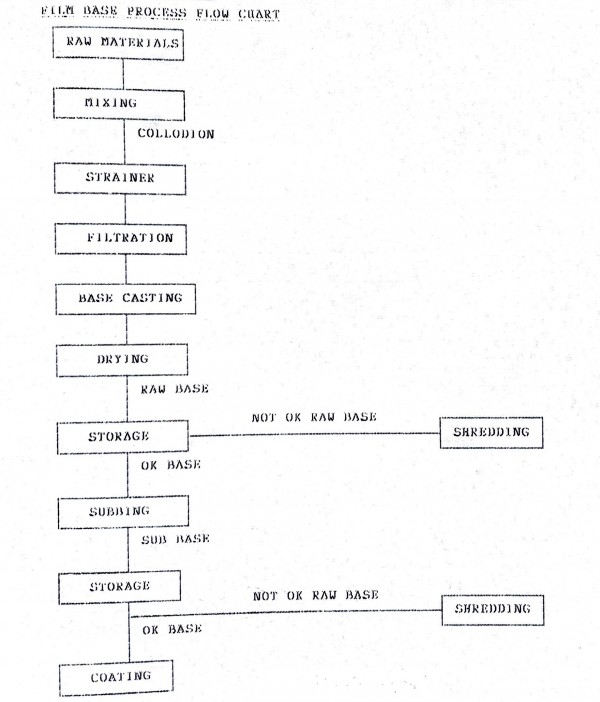
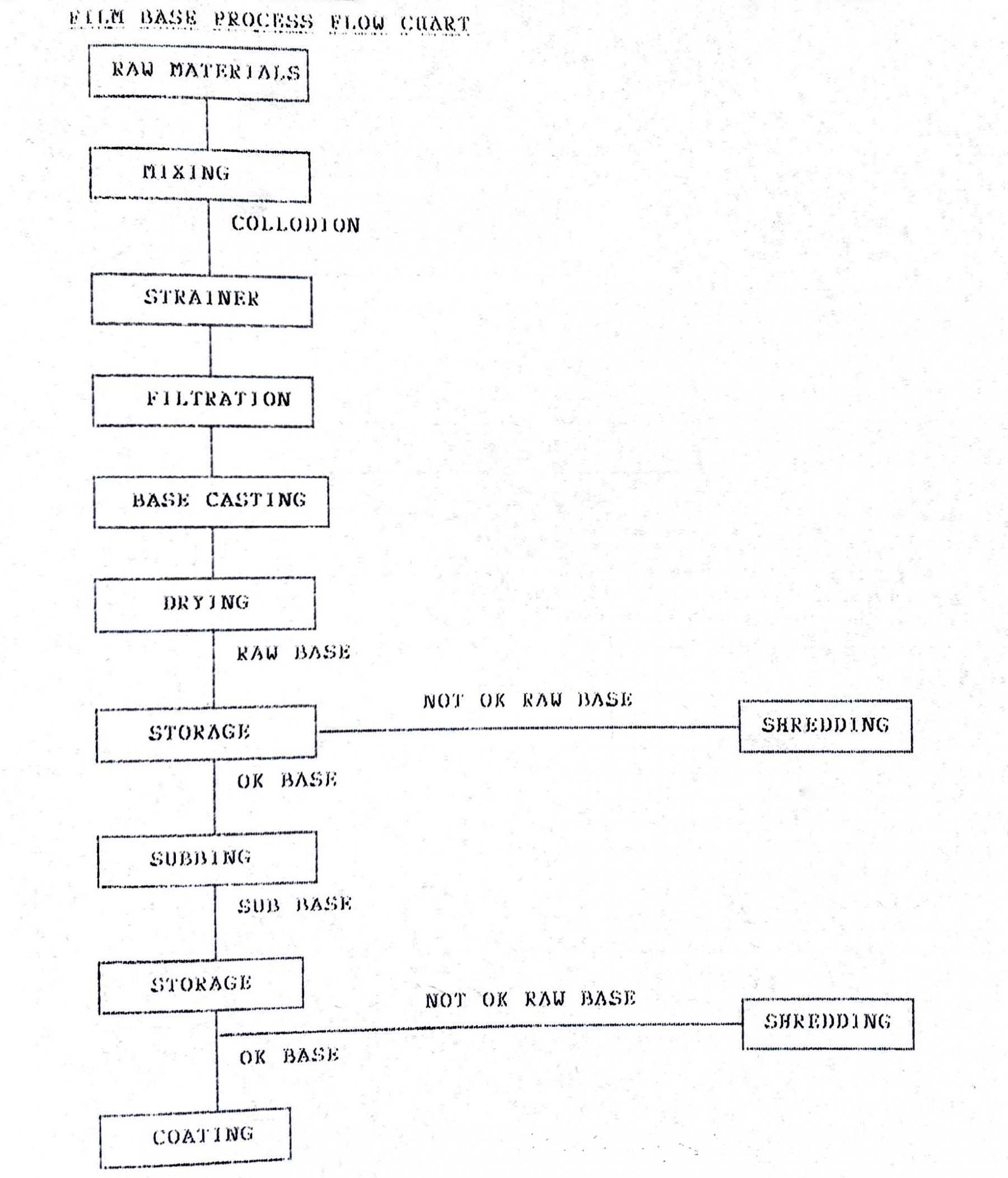
Film base process flowchart of Hindustan Photo Films Manufacturing Company Limited.
Hindustan Photo Films Manufacturing Company Limited, Ootacamund, India. Standard Operating Manual, Nov. 1, 1998: p. 19.
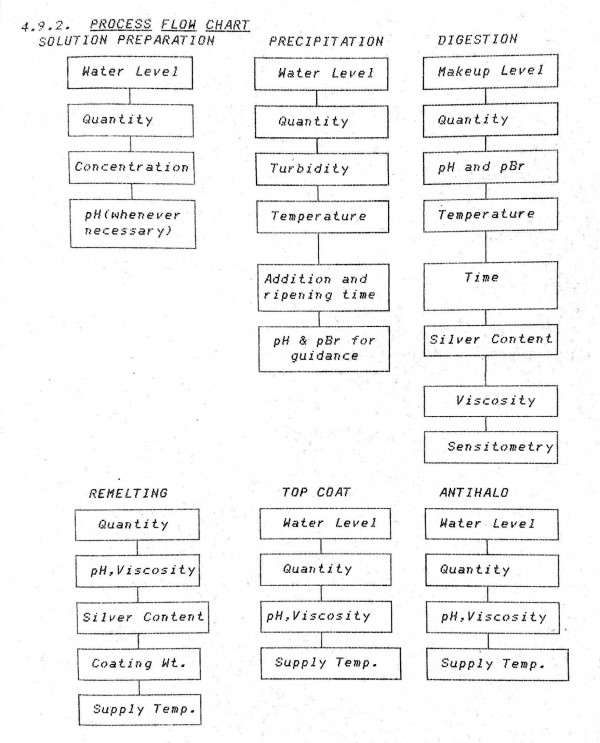
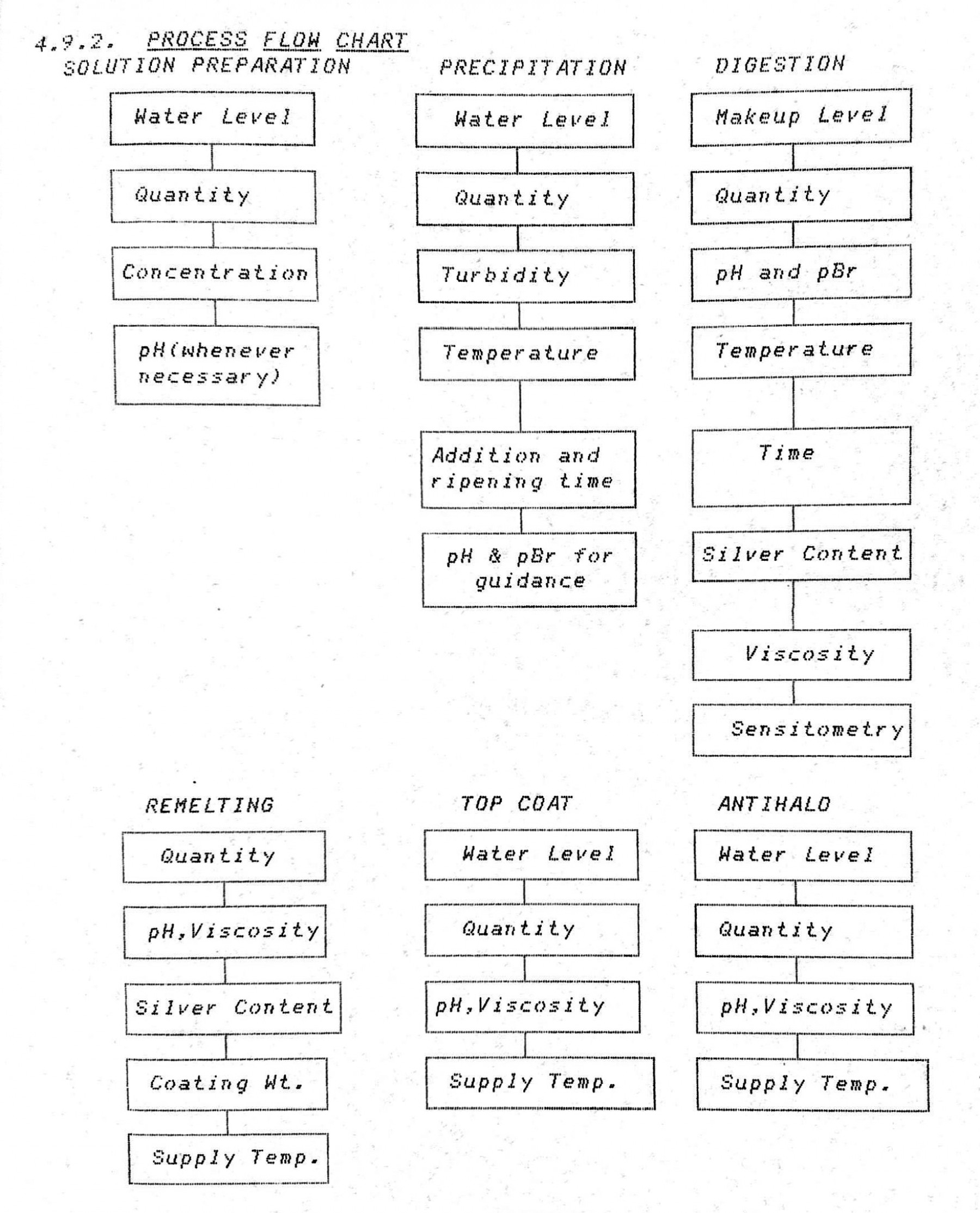
Emulsion process flowchart of Hindustan Photo Films Manufacturing Company Limited.
Hindustan Photo Films Manufacturing Company Limited, Ootacamund, India. Standard Operating Manual, Nov. 1, 1998: p. 23.
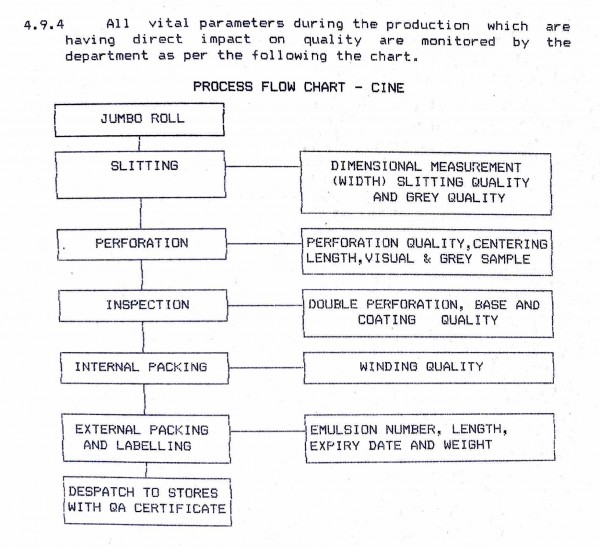
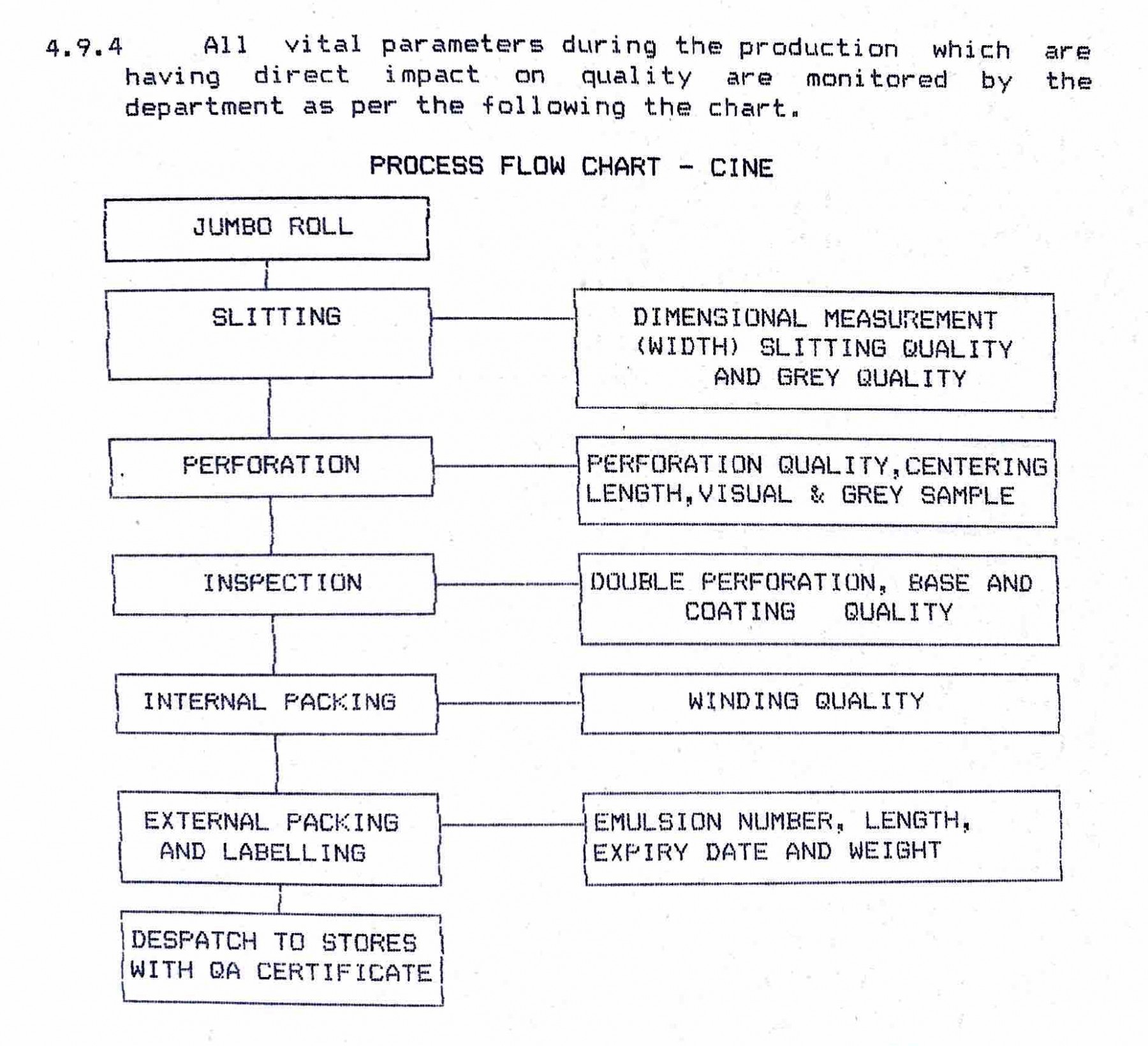
Conversion process flowchart for cine films of Hindustan Photo Films Manufacturing Company Limited.
Hindustan Photo Films Manufacturing Company Limited, Ootacamund, India. Standard Operating Manual, Conversion (CINE), Nov. 1, 1998: p. 22.
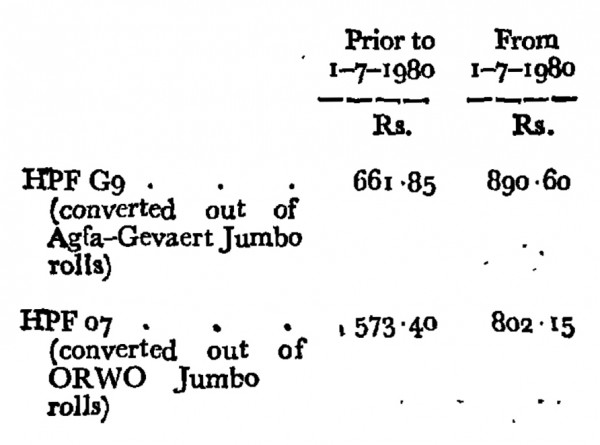
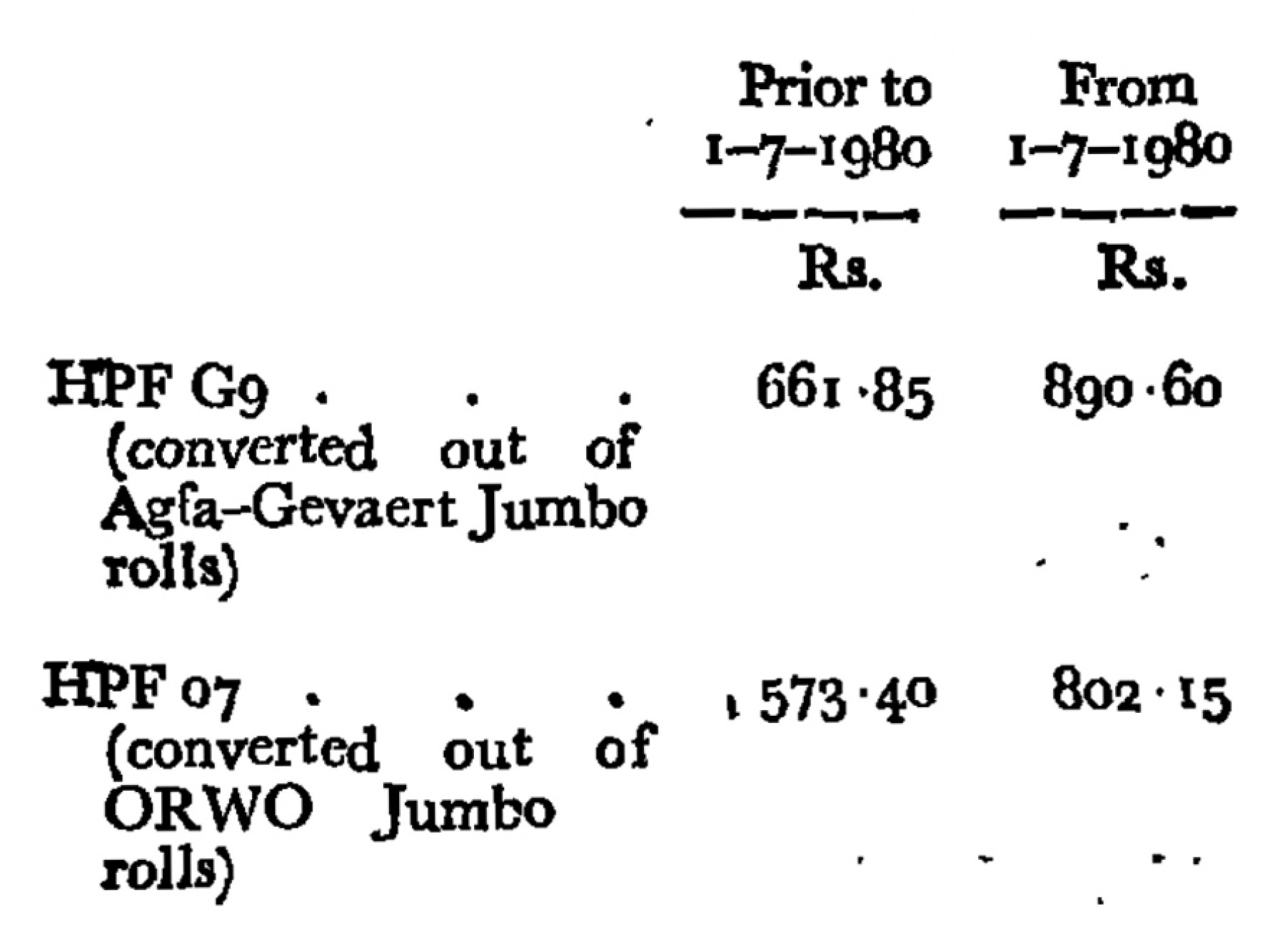
A parliamentary document from 1980 indicating the costs incurred in the process of conversion of the color cine positives from Agfa-Gevaert and Orwo materials prior to and post Jul. 1, 1980.
Indian Parliament Document (1980). File name: ID115.12081980.15.p247.p294.12 (Aug. 12): p. 249.
References
Balakirshnan, K. (1981). “Hindustan Photo Films, Ootacamund: A Case-Study of Acquisition and Assimilation of Technology”. In Case-Studies in the Acquisition of Technology (I), Development and Transfer of Technology Series No. 14. New York: United Nations Industrial Development Organization, pp. 26–50.
Bengali, Shashank (2015). “In India, the Slow (Slow) Death of a Black-and-White Film Maker”. The Times of India (Oct. 16). https://www.latimes.com/world/great-reads/la-fg-c1-india-factories-20151016-story.html. (accessed Jul. 20, 2026).
BS Reporter (2013). “Govt Sets the Ball Rolling on Hindustan Photo Films’ Revival”. Business Standard, January 20, 2013. https://www.business-standard.com/article/economy-policy/govt-sets-the-ball-rolling-on-hindustan-photo-films-revival-112032800027_1.html (accessed Jul. 20, 2026).
Camera Wiki (2024). “Hindustan Photo Films”. Camera Wiki (website). https://camera-wiki.org/wiki/Hindustan_Photo_Films (accessed Jul. 20, 2026).
Committee on Public Undertakings (1972). Twenty-Second Report. Fifth Lok Sabha. Lok Sabha Secretariat, May 1972: pp. 1–11.
Committee on Public Undertakings (1974). Fifty-Fifth Report: Hindustan Photo and Films Manufacturing Company Limited. Fifth Lok Sabha. Ministry of Industrial Development. Lok Sabha Secretariat, April 1974: pp. 1–235.
Committee on Public Undertakings (1975). Seventieth Report: Hindustan Photo and Films Manufacturing Company Limited. Fifth Lok Sabha. Ministry of Industry and Civil Supplies. Lok Sabha Secretariat, July 1975: pp. 1–96.
Committee on Public Undertakings (1978). Fourth Report on Extraordinarily High Expenditure on Publicity by Public Undertakings. Sixth Lok Sabha. Lok Sabha Secretariat, April 1978: pp. 9–10, 13, 18, 20, 26, 34, 41–2.
Committee on Public Undertakings (1982). Forty-First Report on Hindustan Photo and Films Manufacturing Company Limited. Seventh Lok Sabha. Ministry of Industry, Department of Industrial Development. Lok Sabha Secretariat, April 1982: pp. 1–74.
Committee on Public Undertakings (1983). Sixty-Third Report on Action Taken by the Government on the Recommendations Contained in the Forty-First Report of the Committee of Public Undertakings (Seventh Lok Sabha) on Hindustan Photo and Films Manufacturing Company Limited. Seventh Lok Sabha. Ministry of Industry, Department of Industrial Development. Lok Sabha Secretariat, April 1983: pp. 1–35.
Flueckiger, Barbara (n.d.). “Indu Colour”. Timeline of Historical Photography and Film (website). https://filmcolors.org/timeline-entry/1391 (accessed Aug. 22, 2025).
Hindustan Photo Films (n.d.). Indu Black and White Motion Picture Release Positive: Technical Data Sheet. Hindustan Photo Films.
Hindustan Photo Films (n.d.). Indu Bromide Paper (BL): Technical Data Sheet. Hindustan Photo Films.
Hindustan Photo Films (n.d.). Indu Processing Chemicals Liquid Developers: Technical Data Sheet. Hindustan Photo Films.
Hindustan Photo Films (1985/6). Silver Service. Hindustan Photo Films Manufacturing Company Limited.
Hindustan Photo Films (1986). The Silver Years: Hindustan Photo Films 1961–1986. Hindustan Photo Films Manufacturing Company Limited.
Hindustan Photo Films (1998a). Standard Operating Manual: Cine & X-Ray (Nov. 1).
Hindustan Photo Films (1998b). Standard Operating Manual: Coating (Nov. 1).
Hindustan Photo Films (1998c). Standard Operating Manual: Conversion (Nov. 1).
Hindustan Photo Films (1998d). Standard Operating Manual: Processing Chemical (Nov. 1).
Hindustan Photo Films (1998e). Standard Operating Manual: Production Planning (Nov. 1).
Hindustan Photo Films (1998f). Standard Operating Manual: Quality Assurance (Nov. 1).
Hindustan Photo Films (1998g). Standard Operating Manual: Quality Control (Nov. 1).
Hindustan Photo Films (1998h). Standard Operating Procedure: Purchase (Nov. 1).
Hindustan Photo Films (1998i). Standard Operating Procedure: Quality Assurance (Nov. 1).
Hindustan Photo Films (1998j). Standard Operating Procedure: Quality Control (Nov. 1).
Hindustan Photo Films (2010). 50th Annual Report 2010–2011. Hindustan Photo Films Manufacturing Company Limited.
Jagannathan, K.T. (2023). “Central PSU Hindustan Photo Films Put on the Auction Block”. Moneycontrol, September 12, 2023. https://www.moneycontrol.com/news/business/stocks/central-psu-hindustan-photo-films-put-on-the-auction-block-11354291.html (accessed Jul. 20, 2026).
The Journal of Parliamentary Information (1972), XVIII:3 (Jul.). Lok Sabha Secretariat.
Parliament of India (1989). Parliament Document, XIII (Apr. 11): p. 110.
Parliament of India (1991). Parliament Document (Dec. 11): pp. 193–96.
Premkumar, Rohan (2023). “The Rise and Fall of Hindustan Photo Films Manufacturing Company in the Nilgiris”. The Hindu (Sep. 13). https://www.thehindu.com/news/national/tamil-nadu/the-rise-and-fall-of-a-central-public-sector-photo-film-manufacturer-in-the-nilgiris/article67300503.ece (accessed Jul. 20, 2026).
Press Trust of India (2014). “Govt Approves VRS for Employees of Hindustan Photo Films”. The Hindu, May 18, 2014. https://www.thehindu.com/news/cities/Coimbatore/govt-approves-vrs-for-employees-of-hindustan-photo-films/article5736535.ece (accessed Jul. 20, 2026).
Thiagarajan, Shantha (2023). “Photo Finished”. The Times of India, (Sept. 27). https://timesofindia.indiatimes.com/city/chennai/photo-finished/articleshow/103974267.cms.
Thomas, G. (1981). History of Photography: India 1840–1980. Hyderabad: Andhra Pradesh State Akademi of Photography. https://archive.org/details/history-of-photography-india-1840-1980/mode/2up (accessed Jul. 20, 2026).
Union Government (Commercial) (1970). Report of the Comptroller and Auditor General of India for the Year 1970–71, Part IX: Hindustan Photo and Films Manufacturing Company Limited.
Vishwanathan, S. (2016). “Negative Photo Finish: Mauled by Competition, HPF on the Block”. The Times of India, October 10, 2016. https://timesofindia.indiatimes.com/blogs/tracking-indian-communities/negative-photo-finish-mauled-by-competition-hpf-on-the-block/ (accessed Jul. 20, 2026).
Wikipedia (2025). “Hindustan Photo Films”. Wikipedia (website). https://en.wikipedia.org/wiki/Hindustan_Photo_Films (accessed Jul. 20, 2026).
Patents
Srinivasan Gunaseelan, Purna Chandra Rath & Srinivasan Lakshminarasimhan. Process for preparation of sensitised silver halide emulsion for screen-type radiography. Indian Patent 149117, Hindustan Photo Film Manufacturing Company Limited, filed in 1979 and issued in 1981.
Purna Chandra Rath, Srinivasan Gunaseelan, Horashola Joghee Nanjan. Process for the preparation of sensitised silver halide emulsion used for manufacture of motion picture positive film. Indian Patent 149836, Hindustan Photo Film Manufacturing Company Limited, filed in 1980 and issued in 1982.
Compare
Related entries
Authors
Leenali Khairnar is Manager, Film Preservation at NFDC–National Film Archive of India. She is a graduate of the L. Jeffrey Selznick School of Film Preservation, George Eastman Museum, Rochester, and a Haghefilm Digital fellow. She holds a B.Sc. in Physics, a Post-Graduate Diploma in Journalism, and an M.A. in Communication Studies from the University of Pune, India.
Sreya Chatterjee is a scientific researcher and teaching assistant at the University of Applied Sciences (HTW), Berlin, and a doctoral student at Martin Luther University, Halle-Wittenberg. She holds a BA in Mass Communication and Film Studies, a Post-graduate Diploma in Film Editing, and an MA in Conservation and Restoration from HTW, Berlin.
The authors would like to express their sincere gratitude to the National Film Development Corporation–National Film Archive of India (NFDC-NFAI) for providing access to archival collections, facilitating research support, and enabling interactions with Hindustan Photo Films Factory (HPF), its former staff, and other industry experts. The authors also acknowledge the valuable assistance and support extended by the NFDC–NFAI team and staff, whose efforts in preserving and providing access to film heritage resources made this research possible. In particular, we wish to acknowledge the invaluable assistance of Ms. Usha Kumari, Senior Chemist/Section Officer, HPF; N. Maheshwaran, Technical Services, HPF; N Ramesh Natraj Srinivasan, Former Head of Section (Film Processing), MGR Government Film and TV Institute of Tamil Nadu, Chennai; Jayalakshmi Vasant, General Manager, International Client Relations, Prasad Corporation Private Limited; Geetha Sanumathy, Chief Delivery Officer, Prasad Corporation Private Limited; and S. Sivaraman, General Manager, Operations, Prasad Film Labs. Their guidance, insights, and support were instrumental in this ongoing research.
Khairnar, Leenali & Sreya Chatterjee (2026). “Indu”. In James Layton (ed.), Film Atlas. www.filmatlas.com. Brussels: International Federation of Film Archives / Rochester, NY: George Eastman Museum.