Ultra Panavision 70
A 65mm/70mm anamorphic process developed by Robert Gottschalk, co-founder of Panavision, and Douglas Shearer, head of research and development at MGM.
Film Explorer
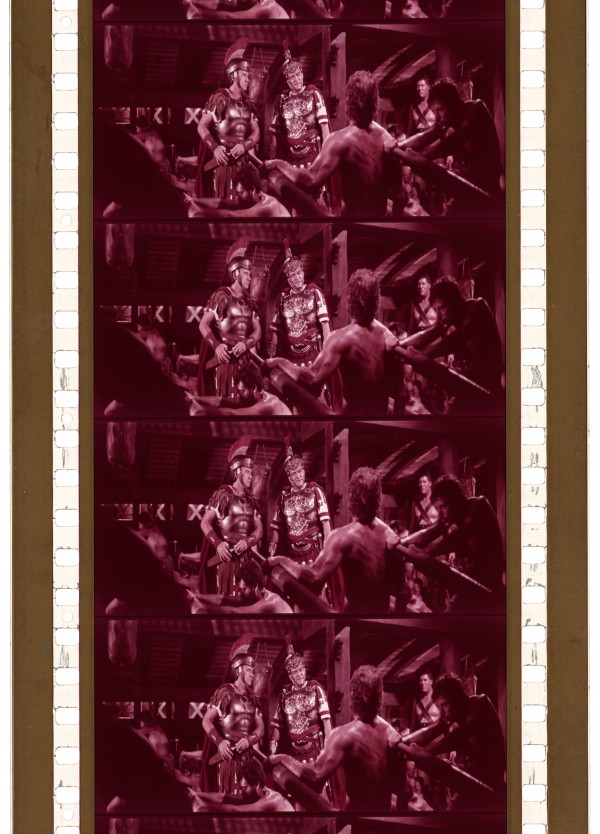
A color-faded 70mm Eastman Color print showing Jack Hawkins and Charlton Heston in Ben-Hur (1959), shot in MGM Camera 65. Note the 1.25x anamorphic compression of the image and the six iron-oxide magnetic sound tracks, on either side of the perforations, typical of this format, which was renamed Ultra Panavision 70 in 1962. When stretched during projection, the onscreen image had an ultra-wide aspect ratio of 2.76:1.
La Cinémathèque française, Paris, France. Special thanks to Laurent Mannoni.
Identification
48.56mm x 22.10mm (1.912 in x 0.870 in).
Eastman Color.
Standard Eastman Kodak edge markings.
1
Eastman Color. Prints made before 1982 are now likely to suffer from heavy color fading.
MGM Camera 65 “The Window of the World” (Raintree County, 1957); Photographed in MGM Camera 65 (Ben-Hur, 1959); Ultra Panavision 70 (Mutiny on the Bounty, 1962); Filmed in Ultra Panavision (It’s a Mad, Mad, Mad, Mad World, 1963)); Photographed in Ultra Panavision 70 (The Hateful Eight, 2015).
Six-track magnetic sound (five tracks supplying the speakers behind the screen and a sixth supplying the room's ambient speakers). The 35mm anamorphic version featured mag-opt sound (four stereo magnetic tracks and one mono optical track).
52.63mm x 23.01mm (2.072 in x 0.906 in).
Eastman Color.
Standard Eastman Kodak edge markings.
History
Ultra Panavision 70 is an anamorphic 70mm film process with a very wide aspect ratio of 2.76:1 and six-channel stereo magnetic sound. Originally named MGM Camera 65, it was designed by Douglas Shearer of Metro-Goldwyn-Mayer and Robert Gottschalk of Panavision – but ultimately, it was only used on the shooting of nine feature films between 1956 and 1965. The format was designed for flexibility – the easy extraction of 35mm reduction prints, and other formats, theoretically made it compatible with all pre-existing widescreen systems.
The origins of the technology can be traced back to 1953, when staff from Todd-AO were brought in by MGM, Culver City, CA, to carry out development testing on the 70mm process. At the time, the Hollywood studio was using Fox's CinemaScope for its widescreen productions. But, for the monumental remake of its 1925 historical epic Ben-Hur (not released until 1959, but already in its planning stages), the use of a competitor's widescreen technology was simply not an option. As head of MGM's Research and Development department, Shearer chose to team up with Robert Gottschalk and Richard Moore, the recent founders of Panavision Inc., a firm that specialized in the design and production of a range of anamorphic lenses that Shearer greatly admired.
As indicated in an August 1955 memo (Shearer, 1955), the plan was to develop a 65mm process running at 24 fps (unlike the original Todd-AO spec of 30 fps), no significant image distortion (unlike CinemaScope) and, above all, improved definition, capable of producing quality copies for all types of projection (three-strip Cinerama, 70mm, anamorphic 35mm, etc.) (Lightman, 1960: p. 163). The Panavision engineers, including Tak Miyagishima, took on the task of adapting and soundproofing seven old Mitchell FC Grandeur 70mm cameras (dating from the late 1920s) to handle 65mm film with a frame five-perforations tall (Lipton, 2021: p. 573), while Walter Wallin developed a lens producing image anamorphosis at a 1.25 compression ratio. For projection in movie theaters, the same arrangement of six magnetic tracks used for the Todd-AO system were chosen.
Early test shoots carried out by Panavision in 1956 were positively conclusive. The process appeared ready for production, but the shooting of Ben-Hur was not, so director of photography Robert Surtees was the first use it, on the historical drama Raintree County (1957). Originally named “Ultra Panavision” by Gottschalk, the studio instead chose to brand the process “MGM Camera 65”, as stated in the film's opening credits. But the film was never released, as intended, on 70mm prints. It was only seen in a 35mm anamorphic version, with a 2.35:1 aspect ratio and mag-opt sound. Theaters equipped for 70mm were being monopolized at the time by the Todd-AO hit feature Around the World in 80 Days (Lightman, 1960: p. 163).
Ben-Hur, shot at the Cinecittà Studios in Rome with six of Panavision's available 65mm cameras, did premiere in anamorphic 70mm with a 2.76:1 aspect ratio, on November 18, 1959, at Loew's State Theatre in New York City (a theatre owned and run by MGM’s parent company). The film was a huge success and was also released in non-anamorphic 70mm (with a 2.55:1 ratio) and subsequently in anamorphic 35mm with 2.50:1 ratio, with masking. Ben-Hur went on to win eleven Oscars in 1960, while Gottschalk, Moore and Shearer were awarded the “Scientific and Technical Achievement” award for their MGM Camera 65 format (Scot, 1960: p. 302).
Towards the end of 1960, the studio planned to use the system again for another blockbuster remake, Mutiny on the Bounty (1962), but as a result of the film's mounting production delays and spiraling costs, in 1961 MGM was forced to sell-off several in-house departments to its competitors to offset the eye-watering overspends. The studio sold its camera department to Panavision, who in turn rented the equipment back to MGM. Miyagishima of Panavision worked on lightening the cameras and further refining their lenses, while the company re-introduced the original name, Ultra Panavision 70 – as seen in the film's credits – when Bounty was eventually released in December 1962. Sadly, the film proved to be the final production to be released in true anamorphic 70mm.
Although Ultra Panavision 70 continued to be used to shoot some films in 65mm during the early 1960s, other competing processes were ultimately used. In 1962, the format was used to shoot some of the action scenes (and rear projections) for How the West Was Won (1962), which was primarily shot in three-strip Cinerama (Lipton, 2021: p. 538). Indeed, some of the battle scenes illustrating the American Civil War were built-up using repurposed footage from Raintree County. The following year, It's a Mad, Mad, Mad, Mad World (1963) was shot in Ultra Panavision, though it was distributed in the single strip 70mm Cinerama format. This was also the case for several other films shot in Ultra Panavision in the middle of that decade, except for The Fall of the Roman Empire (1964), which was shot in Ultra Panavision 70, but only screened on 70mm with a 2.20:1 ratio and on standard 35mm.
The unwieldy size of the cameras put off many producers, and Ultra Panavision was shelved in fairly short order .... but, not for good! Almost 50 years later, cinematographer Robert Richardson persuaded the director Quentin Tarantino to shoot his The Hateful Eight (2015) in 65mm using the long dormant Ultra Panavision 70 process. Since then, the original Ultra Panavision lenses have been used for digital shoots such as Rogue One: A Star Wars Story (2016), Avengers: Infinity War (2018), and Avengers: Endgame (2019). For Sinners (2025), Ryan Coogler combined both 65mm IMAX film and Ultra Panavision 70.
But, despite its limited and sporadic use over the years, the Ultra Panavision 70 format will forever be remembered as a turning point in the history of the Panavision. Having taken up the challenge of developing an extra-wide large-format process of unparalleled quality, Panavision asserted itself on the professional camera market for decades to come.
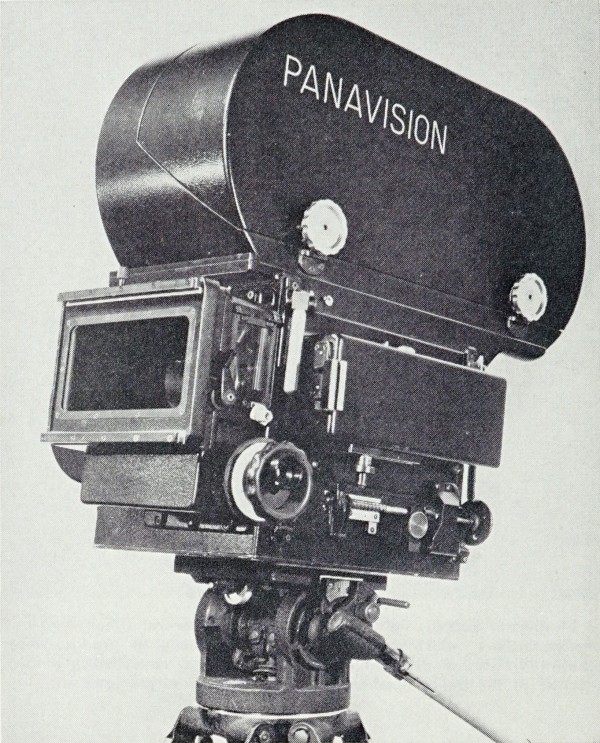
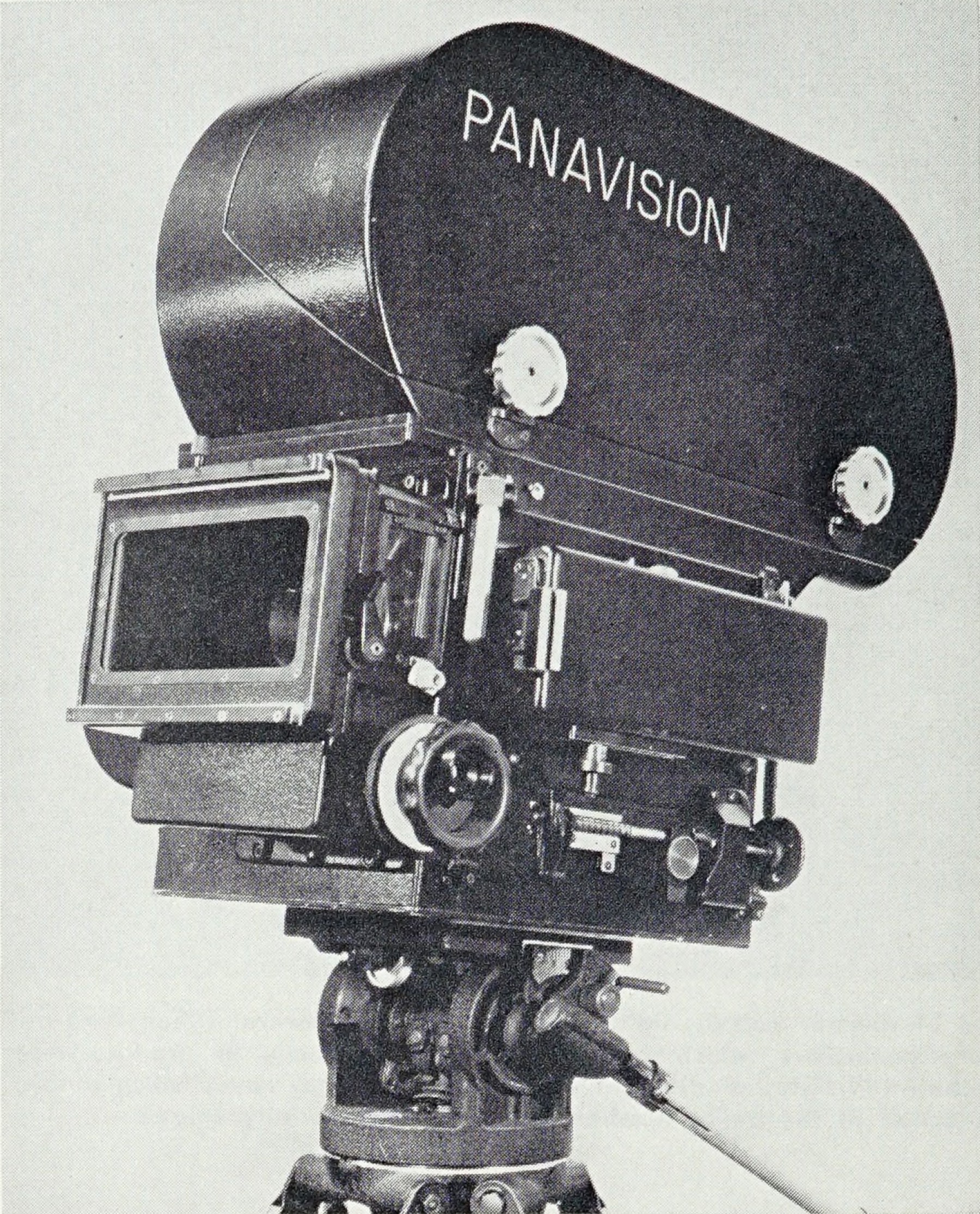
Illustration of the new Panavision Camera 65 system, 1960.
“Panavision’s Progress”, American Cinematographer, 41:5 (May): p. 302.
Selected Filmography
Shot in Ultra Panavision and distributed in 70mm prints for single-projector Cinerama.
Shot in Ultra Panavision and distributed in 70mm prints for single-projector Cinerama.
Shot on MGM Camera 65, the film was originally released in three different formats: anamorphic 70mm at 2.76:1, flat 70mm at 2.55:1 and anamorphic 35mm at 2.5:1.
Shot on MGM Camera 65, the film was originally released in three different formats: anamorphic 70mm at 2.76:1, flat 70mm at 2.55:1 and anamorphic 35mm at 2.5:1.
Planned in various wide formats throughout the 1950s (CinemaScope, CinemaScope 55, etc.), the film finally began shooting in 1962 in three-strip Cinerama, then switched to Ultra Panavision after a few days. The film was distributed in 70mm prints for single-projector Cinerama.
Planned in various wide formats throughout the 1950s (CinemaScope, CinemaScope 55, etc.), the film finally began shooting in 1962 in three-strip Cinerama, then switched to Ultra Panavision after a few days. The film was distributed in 70mm prints for single-projector Cinerama.
Shot in Ultra Panavision and distributed in 70mm prints for single-projector Cinerama.
Shot in Ultra Panavision and distributed in 70mm prints for single-projector Cinerama.
Shot in 65mm Ultra Panavision and distributed in 70mm in a limited number of cinemas worldwide with DTS 70mm digital sound system.
Shot in 65mm Ultra Panavision and distributed in 70mm in a limited number of cinemas worldwide with DTS 70mm digital sound system.
Shot in three-strip Cinerama, the film also features several action and rear-projection projection shots photographed in Ultra Panavision, and borrows some battle scenes from Raintree County.
Shot in three-strip Cinerama, the film also features several action and rear-projection projection shots photographed in Ultra Panavision, and borrows some battle scenes from Raintree County.
Photographed in Ultra Panavision 70 – but only distributed in 70mm prints for single-projector Cinerama (sometimes referred to as “Ultra Cinerama”).
Photographed in Ultra Panavision 70 – but only distributed in 70mm prints for single-projector Cinerama (sometimes referred to as “Ultra Cinerama”).
A British production shot in Ultra Panavision in 1965 and distributed the following year in 70mm prints for single-projector Cinerama.
A British production shot in Ultra Panavision in 1965 and distributed the following year in 70mm prints for single-projector Cinerama.
The first film to be released under the Ultra Panavision 70 name and the last to be distributed in 70mm anamorphic prints.
The first film to be released under the Ultra Panavision 70 name and the last to be distributed in 70mm anamorphic prints.
Shot in 1956 using the MGM Camera 65 process, the film remained unreleased in 70mm and was only released in anamorphic 35mm prints with mag-opt sound.
Shot in 1956 using the MGM Camera 65 process, the film remained unreleased in 70mm and was only released in anamorphic 35mm prints with mag-opt sound.
Shot in 65mm Ultra Panavision and 65mm IMAX. Screened in 70mm with DTS 70mm digital sound system or IMAX 70mm with IMAX 6-Track digital sound system in a limited number of cinemas in North America and London.
Shot in 65mm Ultra Panavision and 65mm IMAX. Screened in 70mm with DTS 70mm digital sound system or IMAX 70mm with IMAX 6-Track digital sound system in a limited number of cinemas in North America and London.
Technology
The widescreen race of the early 1950s had highlighted the graininess of 35mm prints projected onto larger and wider screens. So, Douglas Shearer at MGM opted to start with a negative almost twice as wide as 35mm. He drew his inspiration from Todd-AO's five-perforation tall frame on 65mm-wide negative which had a flat aspect ratio of 2.21:1, but combined it with a small degree of horizontal anamorphic image compression of 1.25x to obtain a frame ratio of 2.76:1 for the corrected projected image. The aim was to obtain an even wider image without the optical distortions caused by CinemaScope, offering a better depth of field than spherical lenses, and a rate of 24 fps with no perceptible flickering in projection, thanks to a three-blade shutter. The intention was also to be able to print high-quality three-strip Cinerama, 70mm spherical, 35mm anamorphic, 35mm and even 16mm copies – all from the same 65mm negative (Lightman, 1960: p. 163).
Though quite loud, the Mitchell FC Grandeur 70mm cameras developed in the late 1920s were chosen for their reliable film transport. They were adapted to 65mm and soundproofed with a 7cm-thick (2.76 in) magnesium casing, bringing their total weight up to 136kg (300 lb) (Lightman, 1960: p. 192).
Named the APO Panatar, the monobloc anamorphic camera lens was built around a pair of counter-rotating prisms, rather than cylindrical lenses, and used a spherical lens – probably made by Hasselblad. Originally intended with a horizontal anamorphic compression of 1.33x (with a projected image aspect ratio close to 3:1, which no screen can support), the completed lens eventually offered an anamorphic compression of 1.25x with a maximum on-screen aspect ratio of 2.76:1. Lenses were available in 57mm, 75mm (considered standard), 100mm, 150mm and 230mm focal lengths – with a maximum aperture of f/1.7 (Lightman, 1960: p. 192). These lenses were later refined with cylindrical anamorphic elements to reduce their volume and correct some of their defects. These were then combined with new cameras developed for specific use with the new lenses, although some of the old Mitchells remained in service at the time.
70mm prints were made by Technicolor on Eastman Color stock (because MGM’s in-house lab Metrocolor was unable to handle large format film), and featured six-track magnetic stereo sound. Thanks to the Micro Panatar converter, it was also possible to print non-anamorphic color copies from the anamorphic negative. This allowed the manufacture of 70mm Cinerama versions using an optical printer, with increasing compression from the center of the image to the edges, to compensate for projection on a deeply curved screen. It also allowed for 35mm anamorphic reduction prints (with mag-opt sound), or the extraction of three non-anamorphic “panels” for Cinerama. This allowed for some shots of How The West Was Won (1962) to avoid the extreme distortion caused by Cinerama’s unique 27.5mm short focal length lenses (Scot 1960, 304).
For screening, the Ultra Panatar variable prism lens (based on Steinheil Pan-Quinon lenses) could be adapted to different set-ups. Few theaters were originally able to project a 2.76:1 image using a 5-perforation 70mm image (20 per cent higher than a 4-perforation 35mm image) (Lightman, 1960: p. 192). CinemaScope widths were often used, as the 2.35:1 ratio of 35mm anamorphic prints with mag-opt sound could be reduced to a 2.50:1 aspect ratio through masking on the print.
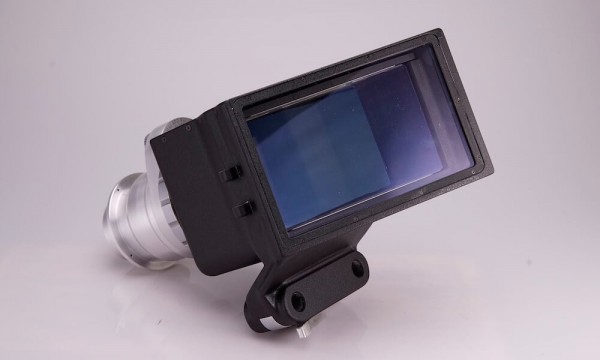
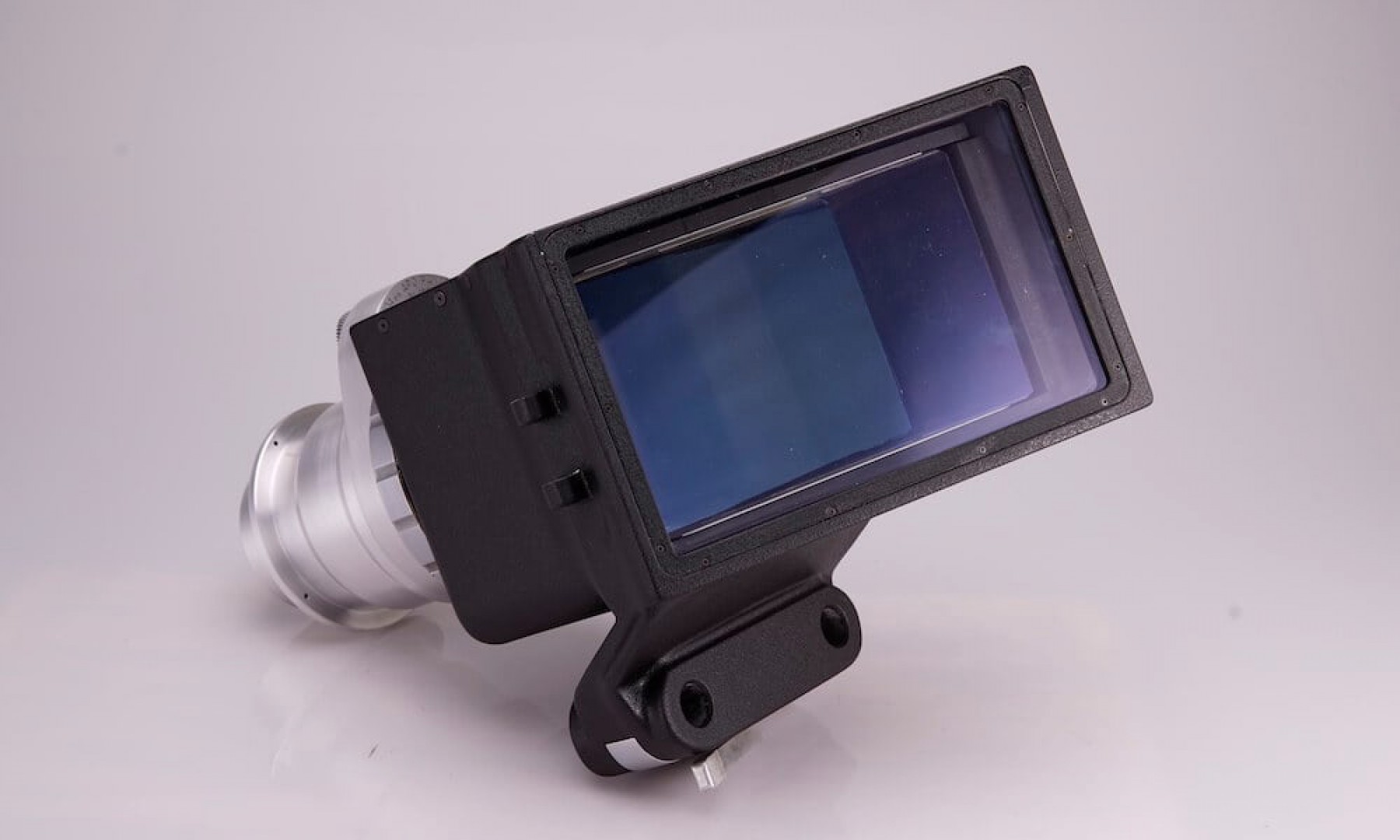
APO Panatar 1.25x anamorphic prism lens introduced in 1957 by Panavision for the MGM Camera 65/Ultra Panavision 70 system.
Panavision, Inc. (2026). “Celebrating 70 Years of Optical Innovation”. https://www.panavision.com/highlights/highlights-detail/celebrating-70-years-of-optical-innovation (accessed Feb. 10, 2026).
References
Boxoffice (1955). “65mm photographic process to be used for MGM films.” Box Office (Apr. 30): pp. unknown.
Chisholm, Brad (1985). “Widescreen Technologies”. The Velvet Light Trap (Widescreen), 21 (Summer): p. 67.
Film Daily (1955). “The New Ultra Panatar Lens.” Film Daily (Mar. 18), p. 12.
Lightman, Herb A. (1960). “Why MGM Chose Camera 65”. American Cinematographer, 41:2 (Mar.): pp. 162–3, 192.
Lipton, Lenny (2021). The Cinema in Flux: The Evolution of Motion Picture Technology from the Magic Lantern to the Digital Era. New York, NY: Springer, 2021.
Scot, Darrin (1960). “Panavision’s Progress”. American Cinematographer, 41:5 (May): pp. 302–4, 320–4.
Shearer, Douglas (1955). Letter to Arthur Loew (President of MGM) “MGM Panavision Large-Film System” (August 25, 1955). Transcript available at www.in70mm.com (Large-format film history website). https://www.in70mm.com/presents/1957_ultra_panavision/library/camera_65/ (accessed Feb. 10, 2026).
Patents
Wallin, Walter. Anamorphosing System. US patent US2890622A, filed August 11, 1954 and granted June 16, 1959. https://patents.google.com/patent/US2890622A/en
Compare
Related entries
Author
Simon Daniellou is a lecturer in Film Studies at Rennes 2 University, and is particularly interested in the impact of technology (film formats, camera ergonomics, special effects, etc.) on shot breakdown decision-making in cinema. He has co-edited the books Penser la photographie du film (Presses universitaires de Rennes, 2025) and De l'écran géant à l'espace domestique – Histoires et esthétiques des formats cinématographiques (Presses universitaires de Rennes, 2023), as well as issue 7 of the journal Création collective au cinéma, dedicated to the digital transition. His contributions also include collective works published by Presses universitaires de Rennes Le Découpage au cinéma (2016), Point de vue et point d'écoute au cinéma : approches techniques (2017) and Paradoxes sur l'acteur numérique : jeux, corps, personas (2022).
Daniellou, Simon (2026). “Ultra Panavision 70”. In James Layton (ed.), Film Atlas. www.filmatlas.com. Brussels: International Federation of Film Archives / Rochester, NY: George Eastman Museum.
Margaux Chalançon