Pola-Lite(c.1953–1954)
A single-strip 3-D printing and exhibition process, acquired by the Pola-Lite Company, a purveyor of plastic 3-D film viewing spectacles.
Film Explorer
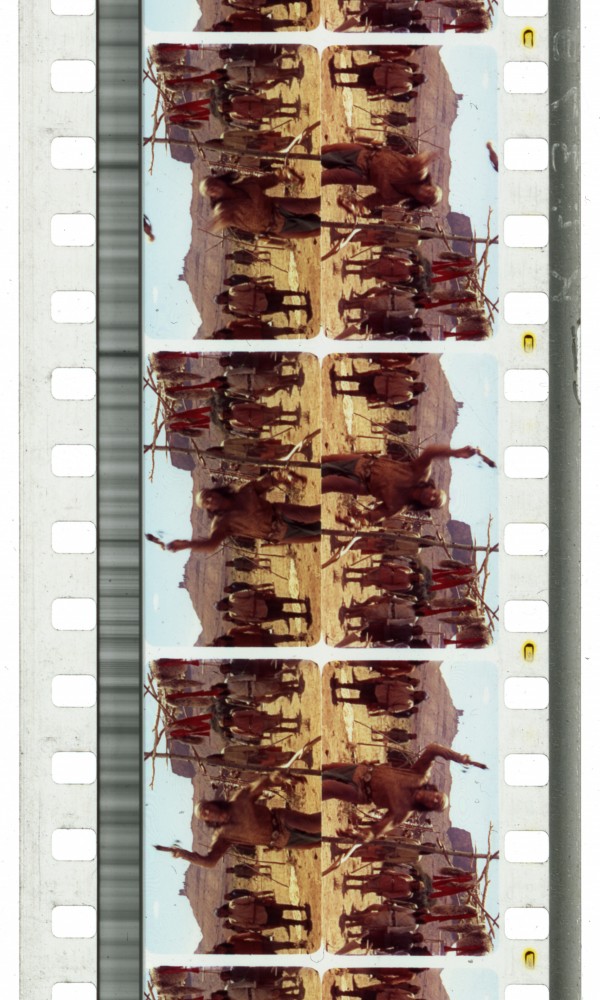
A frame from a 35mm Pola-Lite print of Douglas Sirk’s western, Taza, Son of Cochise (1954). A three-quarters shot of a man raising a spear above his head, ready to vault it forward. Seen in 3-D, the action on screen sends the spear hurtling forward towards the viewer in negative parallax. The Pola-Lite process printed both left- and right-eye images in two subframes rotated 90 degrees to each other, which then fit within the space of a traditional four-perforation, 35mm frame.
National Audio-Visual Conservation Center, Library of Congress, Culpeper, VA, United States.
Identification
18.29mm x 10.16mm (0.720 in x 0.400 in) (Motion Picture Herald, 1954c).
Variable: 1.75:1 (Creature from the Black Lagoon [1954]); 2.00:1 (Taza, Son of Cochise [1954]). Pola-Lite prints projected in different aspect ratios from flat and dual-strip counterparts.
B/W or Technicolor dye-transfer.
The surviving Pola-Lite print of Taza features standard Eastman Kodak edge markings.
1
Color prints of Taza were made by the Technicolor dye-transfer process. As such, the colors in the surviving print remain saturated and unfaded.
None
Monaural, variable-density sound.
Unknown
B/W or color.
Unknown
History
The Pola-Lite single-strip system began in the early 1950s as two separate but related concerns: a 35mm, 3-D printing and exhibition process developed by All Dimensions, Inc. under the name Moropticon; and a range of polarized 3-D spectacles, manufactured and distributed by the Pola-Lite Company. Compared with dual-strip stereoscopic processes, Pola-Lite allowed exhibitors to project 3-D features without synchronizing two projectors and eliminated challenges that theater operators faced, such as the need for intermissions and reducing the effects of audience eyestrain, resulting from poorly configured 3-D projection. As the first commercially viable, single-strip stereoscopic system, Pola-Lite offered a potential lifeline to 3-D filmmakers and exhibitors, at a moment when audiences, studios and theaters seemed ready to do away with the third dimension entirely. Milton Herman, the general manager of Detroit’s Roxy Theater, which publicly premiered Pola-Lite on March 31, 1954, with a presentation of Universal-International’s mid-century monster show, Creature from the Black Lagoon (1954), opined that Pola-Lite offered “the only salvation for the third dimension in motion pictures” (Juntunen, 1954). Yet no matter how the company framed its technology, 3-D filmmaking and exhibition quickly faded from view, and only a handful of features received Pola-Lite releases during the spring and summer of 1954.
The single-strip process, later known as Pola-Lite, began sometime in 1953 as Moropticon, named after its purported inventor, the Hollywood producer and FBI double-agent Boris Morros. Contemporary sources, such as an item tucked away in the September 12, 1953, issue of Motion Picture Herald, repeated the claim that Morros invented the process, in Vienna. While industry accounts remain light on details, Morros did file a patent on September 3, 1953, with the Austrian Patent Office for a “photographic and cinematographic apparatus for recording or reproducing two adjacent, preferably stereoscopic images, with a single lens”. All Dimensions, Inc., chaired by Morros, held Worldwide patent rights for Moropticon, while former Universal-International executive Matthew Fox acted as president and chief executive officer.
At the same time, Fox served as chairman for the Pola-Lite Company, which also emerged in early 1953, as a manufacturer of adjustable 3-D glasses (New York Times, 1953). An early advertisement in the trade journal Film Bulletin, urges exhibitors to order the firm’s “expendable 3-D glasses that are adjustable”. This indeed constituted Pola-Lite’s major differentiator in the 3-D spectacles marketplace. Rather than using the flimsier cardboard hawked by its competitors, Pola-Lite produced models made from reinforced plastic, sized for both adults and children, as well as a clip-on model for audience members who wore prescription glasses for vision.
Together, Moropticon and Pola-Lite offered exhibitors a higher-quality 3-D process and audience experience than dual-strip systems, such as Natural Vision 3-Dimension, or Stereo Techniques 3-D. On November 5, 1953, at the annual convention of the trade organization Theater Owners of America, Pola-Lite officially announced a business agreement with Moropticon to furnish the latter’s system to exhibitors purchasing Pola-Lite glasses (Motion Picture Daily, 1953). Pola-Lite’s initial pricing scheme made the optical apparatus, still called the Moropticon, nominally free for exhibitors after a $500 deposit and an agreement to purchase 30,000 pairs of spectacles over the course of a year. Alternatively, the firm offered two- and five-year leases with, and without, an agreement to purchase their spectacles (Film Bulletin, 1953). As interest in 3-D pictures receded the following year, Pola-Lite attempted to renew exhibitor interest by lowering prices. In June 1954, according to Variety, the company began offering the optical unit and installation for $150, with a reduced agreement to purchase only 6,000 pairs of spectacles per year. The Pola-Lite glasses, according to one ad campaign, cost $0.10 per pair (Motion Picture Herald, 1954a).
Complicating a straightforward story of corporate synergy, contemporary reporting from early 1954 onwards suggests that Dr. Leon Wells, a Polish-born physicist and Holocaust survivor, and not Morros, invented the Pola-Lite system “in about eight months” (Juntunen, 1954; Motion Picture Herald, 1954b). But aside from these public claims, archival evidence remains sparse. Bob Furmanek of the 3-D Film Archive suggests that Wells “refined” the existing Moropticon system (Furmanek, n.d.), while the historian Ray Zone credits only Morros (Zone, 2012). Morros’ Austrian patent clearly predates any US patent filed by Wells. Only in 1961 did the United States Patent Office grant Wells a patent for a “motion picture projection system utilizing beam splitting means”. But that patent applies abandoned applications to Wells’ Cinerama-style widescreen Wonderama (ARC 120) images, rather than stereoscopic ones. Most likely, Wells gave up pursuing any specific ideas that he brought to Morros’ system as interest in 3-D technology faded from the public view.
At any rate, Wells maintained an active role in further developing and marketing of the Moropticon system throughout the fall and winter of 1953. During its debut at New York City’s RKO 86th Street Theatre on September 9, The Hollywood Reporter noted that industry insiders found the process, however “impressive,” lacking “in way of screen light” (1953). But by November, The Independent Film Journal reported “vast progress” after viewing sequences in the format from the forthcoming Douglas Sirk-directed western Taza, Son of Cochise. Archival images also attest to physical changes in the optical attachment. In 1953, the Moropticon attached to a theater’s projector by brackets (Boxoffice, 1953), while by 1954 the device, now called Pola-Lite and attributed solely to Wells, affixed directly to the lens barrel (Motion Picture Herald, 1954c). Throughout that spring, Wells traveled across North America to support exhibitors installing the system and to further drum up industry and popular support for the Pola-Lite brand (Juntunen, 1954; Boxoffice, 1954).
Principal competition in single-strip 3-D came from the Nord Corporation, which developed a printing and exhibition process similar to Pola-Lite’s. George Schutz outlined the differences between the Nord and Pola-Lite systems in a 1954 article for Motion Picture Herald, namely, the arrangement of perpendicular left–right images within a traditional 35mm film frame and the placement of an optic apparatus outside the projection booth for Nord, as opposed to Pola-Lite’s more streamlined projector attachment.
Pola-Lite named Taza as its first release, scheduled for mid-February 1954 (International Projectionist, 1953), but public concerns about illumination levels and image quality continued through the winter. So, while Taza featured prominently in a series of industry demonstrations in late 1953 and early 1954, most first-run filmgoers saw Taza in flat, or dual-strip 3-D presentations. According to research conducted by 3-D historian Mike Ballew, Taza’s Pola-Lite release only occurred later in the year in second-run theaters (Ballew, n.d.).
Instead, Pola-Lite publicly debuted on March 31, 1954, at the Detroit premiere of Creature from the Black Lagoon. Although Creature proved so successful in the format that Universal doubled their initial print order of the film from ten to twenty (Motion Picture Daily, 1954), and while the firm contracted with dozens of independent exhibitors and regional chains across North America to play Pola-Lite product throughout the year, the format never reached widespread use. In April, Pola-Lite vice president for distribution Al O’Keefe announced forthcoming releases in the process: Gog (1954) and Southwest Passage (1954), both from United Artists, and Gorilla at Large (1954), from Fox. But evidence for these releases remains sparse. An item in the June 30, 1954, edition of Canadian Film Weekly, following Pola-Lite’s first demonstration in that country, suggests that Pola-Lite did in fact print these films using the process. Likewise, a 3-D filmography compiled by Gary Palmer in 2004 records Pola-Lite prints for these features, as well as Jack Arnold’s 1955 Creature follow-up, Revenge of the Creature (Palmer, 2004). Research by Furmanek, and others, have yet to turn up playdates for these films in the format, or to uncover extant prints. If, indeed, prints for any of these features were made in Pola-Lite, waning public exuberance for so-called “deepies” no doubt diminished their runs – by April 1954, the industry press was readily declaring 3-D “dead” in America cinemas (Variety, 1954a).
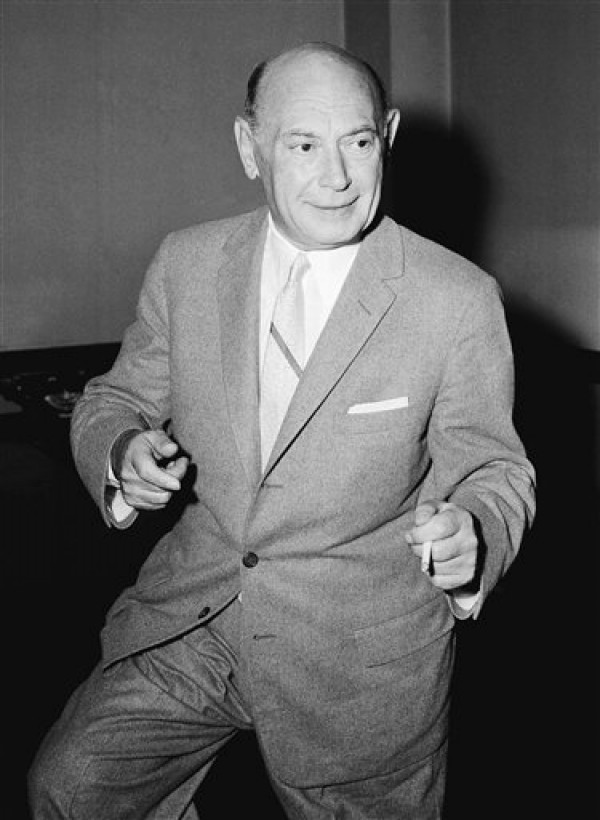
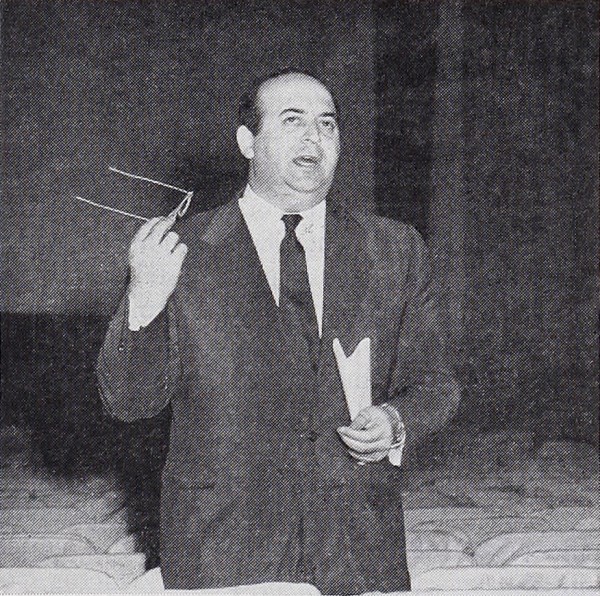
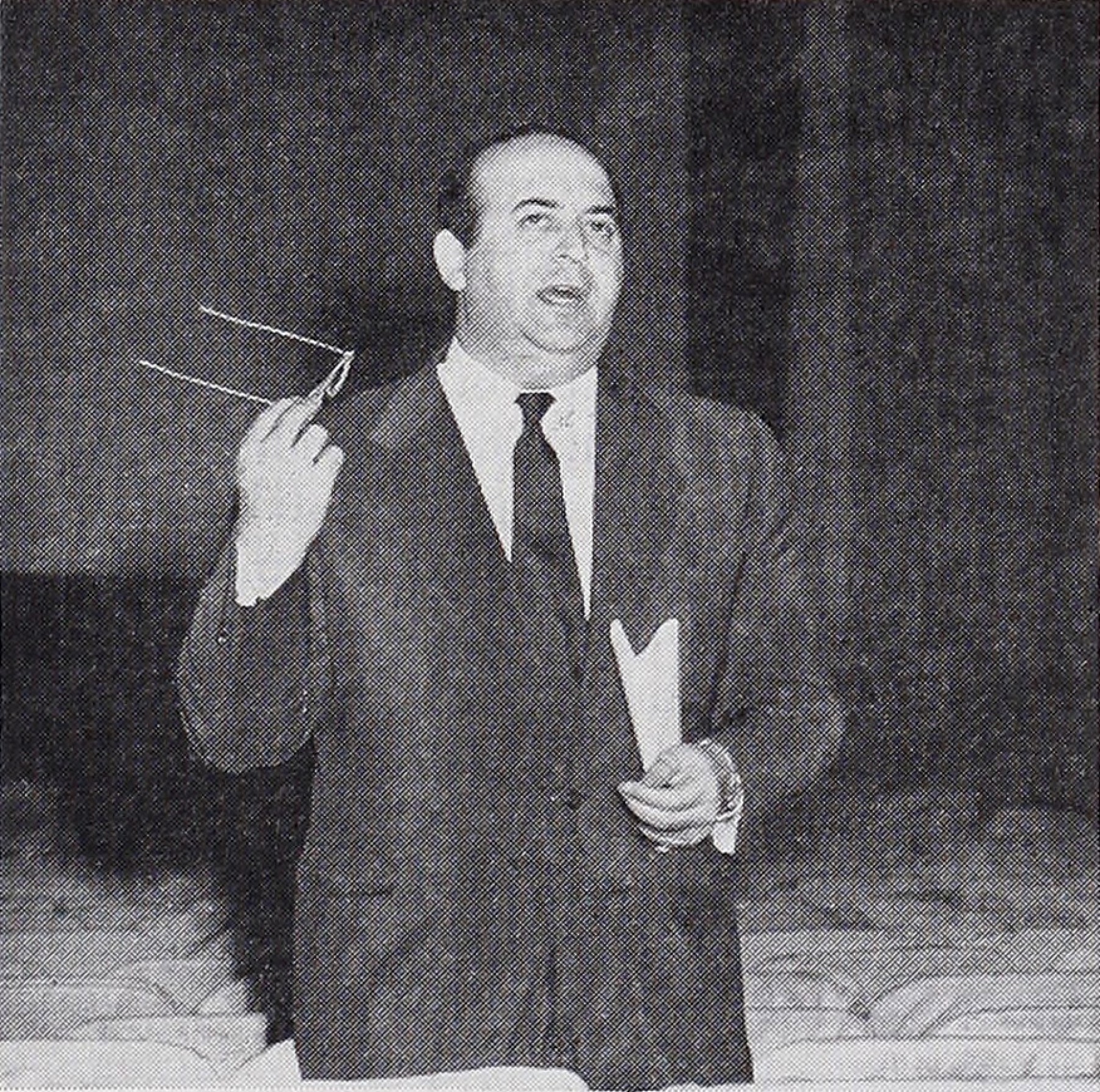
Boris Morros, Hollywood producer, FBI double agent and Moropticon inventor, at a news conference in 1957.
Anthony Camerano, August 12, 1957, Associated Press.
All Dimensions president Matthew Fox unveiling the Moropticon one-strip process at RKO’s 86th Street Theatre, New York.
Motion Picture Herald, September 19, 1953: p. 19.
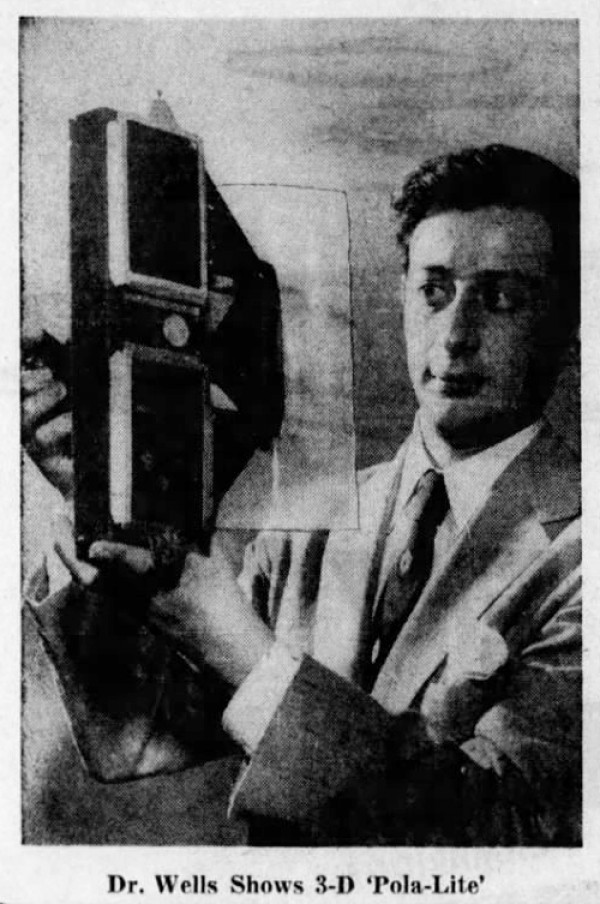
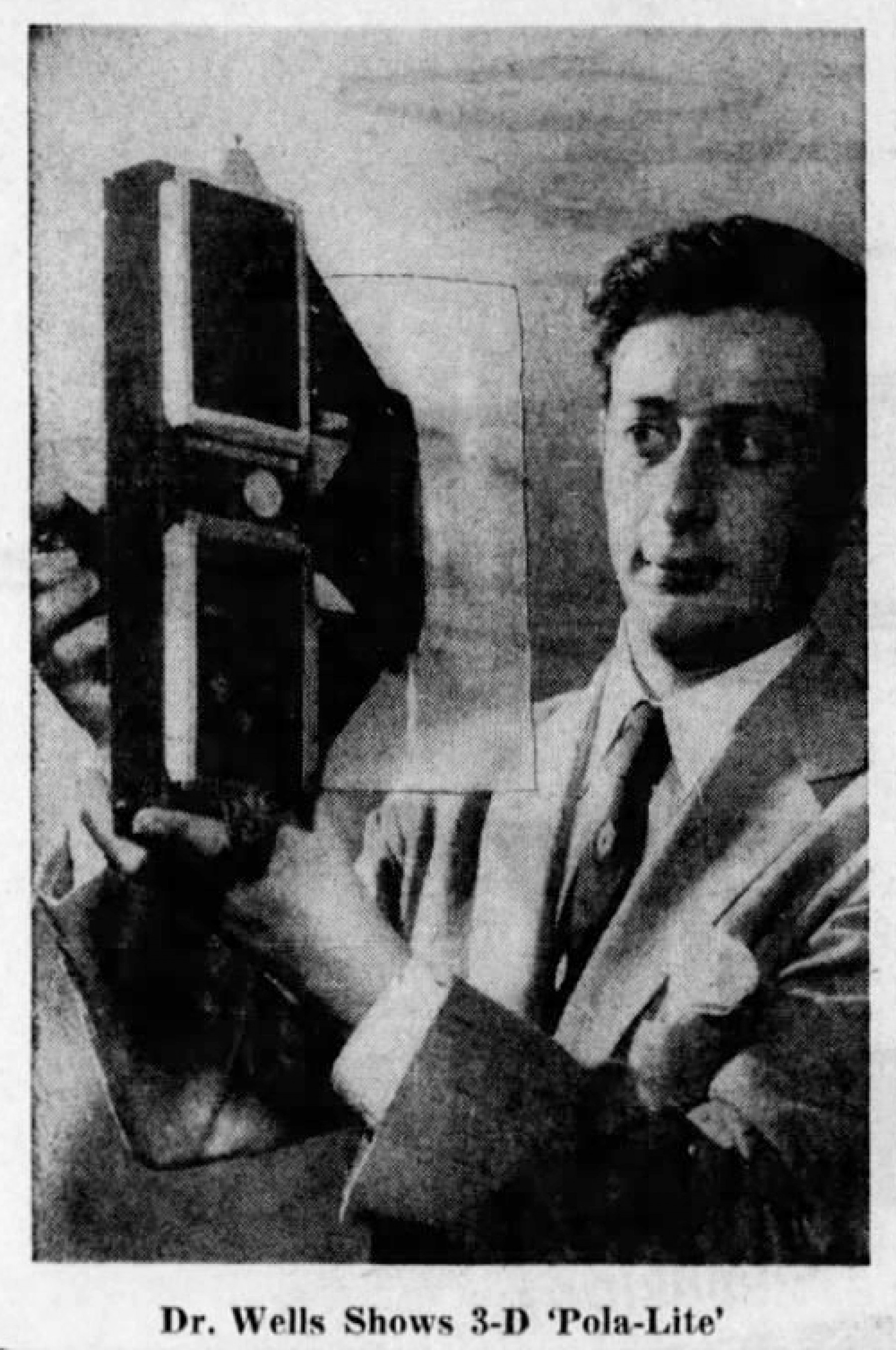
Dr. Leon Wells holding the Pola-Lite attachment in 1954.
Detroit Free Press, April 1, 1954: p. 25.
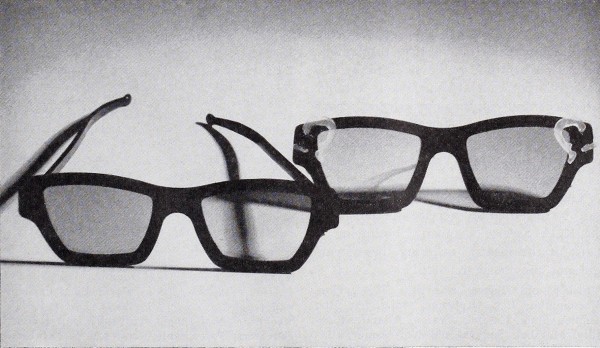
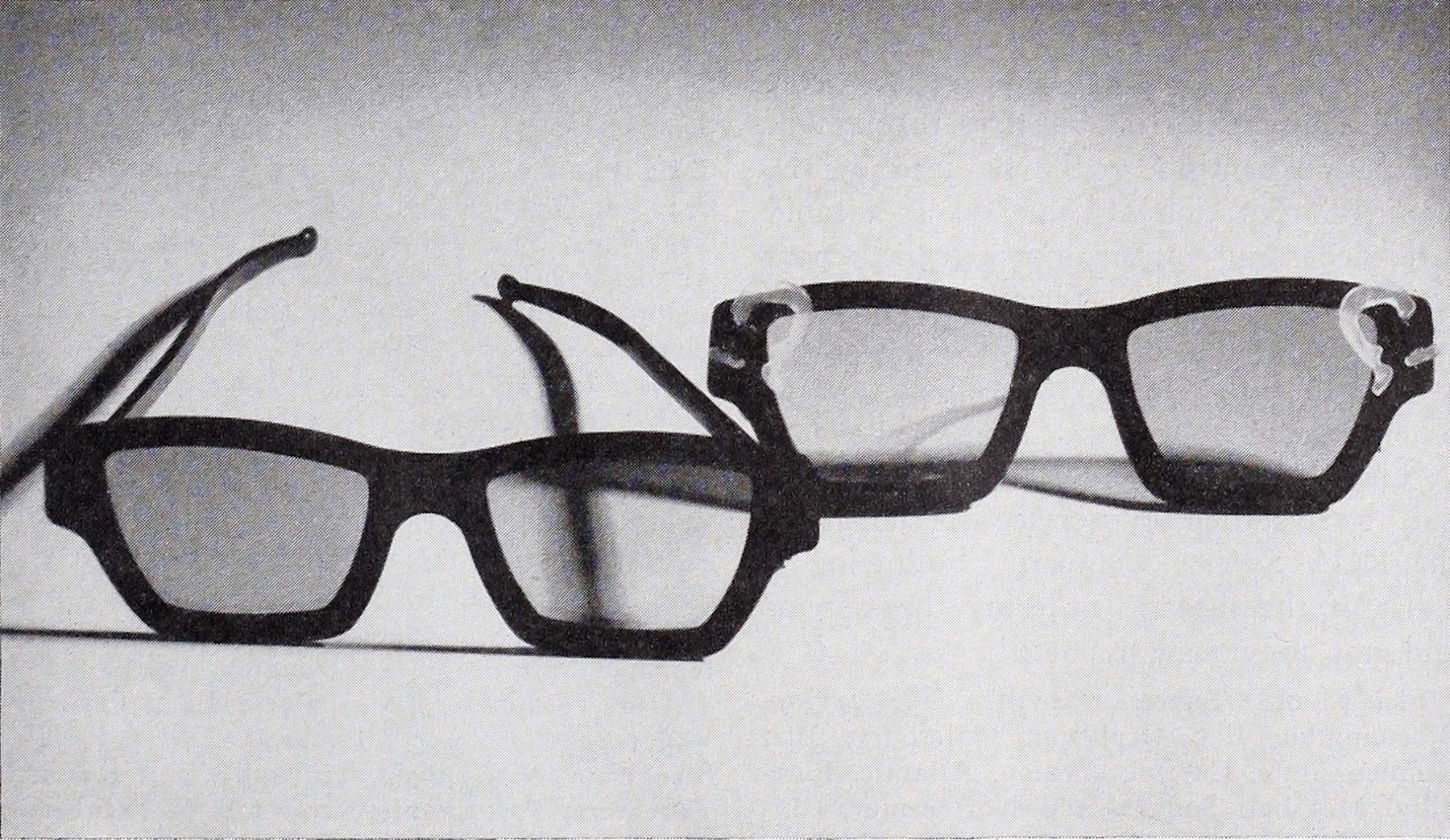
A publicity still with two models of Pola-Lite’s adjustable, plastic, polarized 3-D glasses.
Motion Picture Herald, April 10, 1954: p. 14.
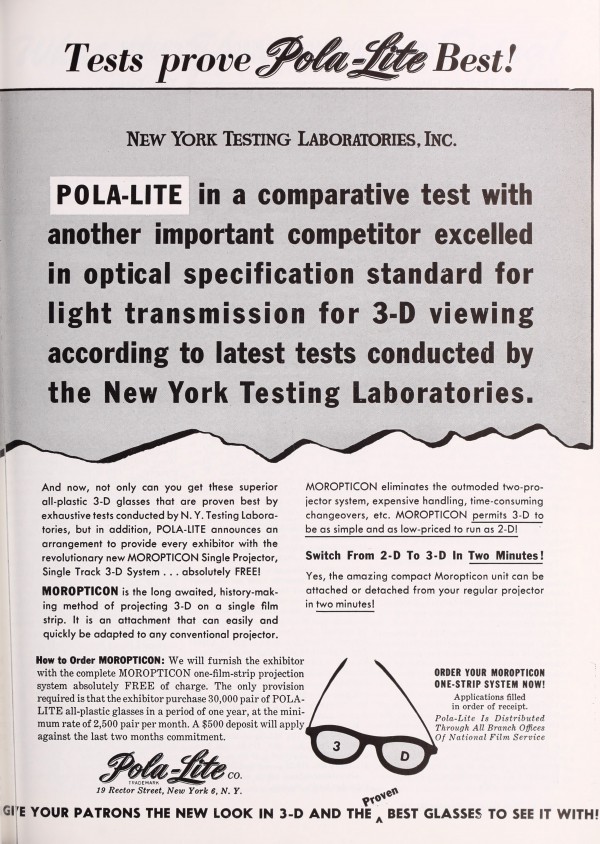
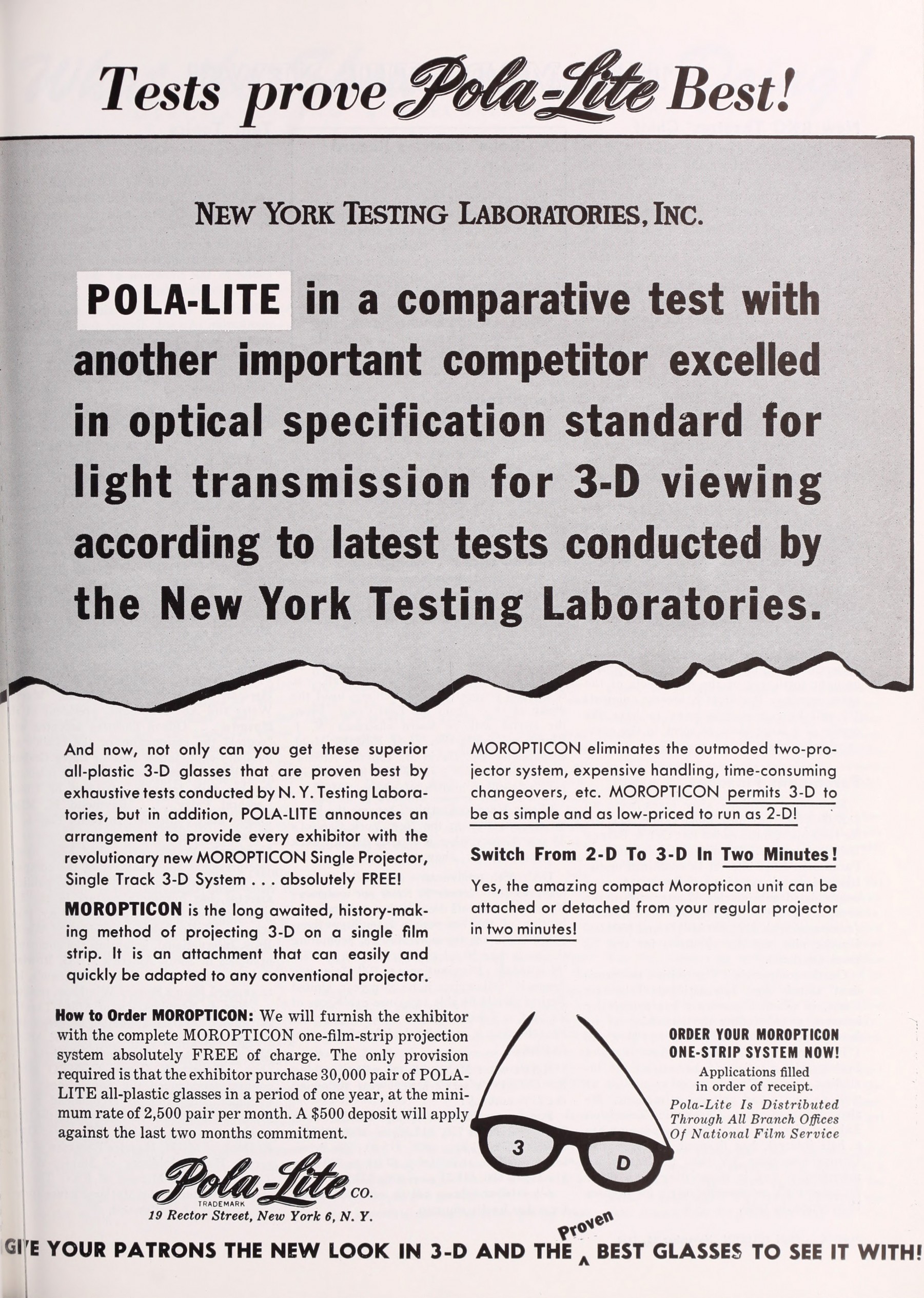
A Pola-Lite advertisement campaign, typical of those run in industry journals. While later campaigns used the Pola-Lite name for the optical system used to exhibit the one-strip 3-D process, in late 1953 Pola-Lite was still using the Moropticon branding.
Film Bulletin, November 30, 1953, p. 13.
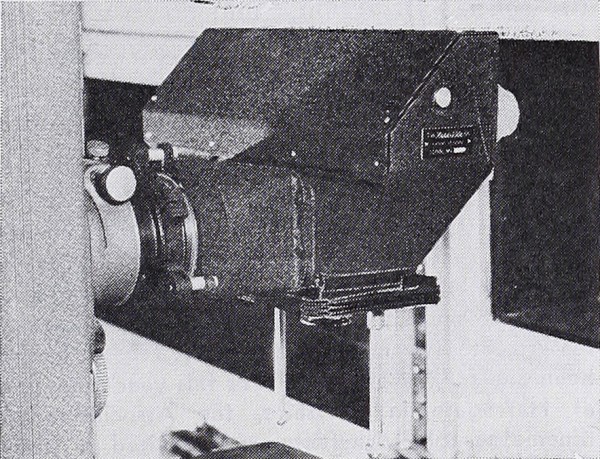
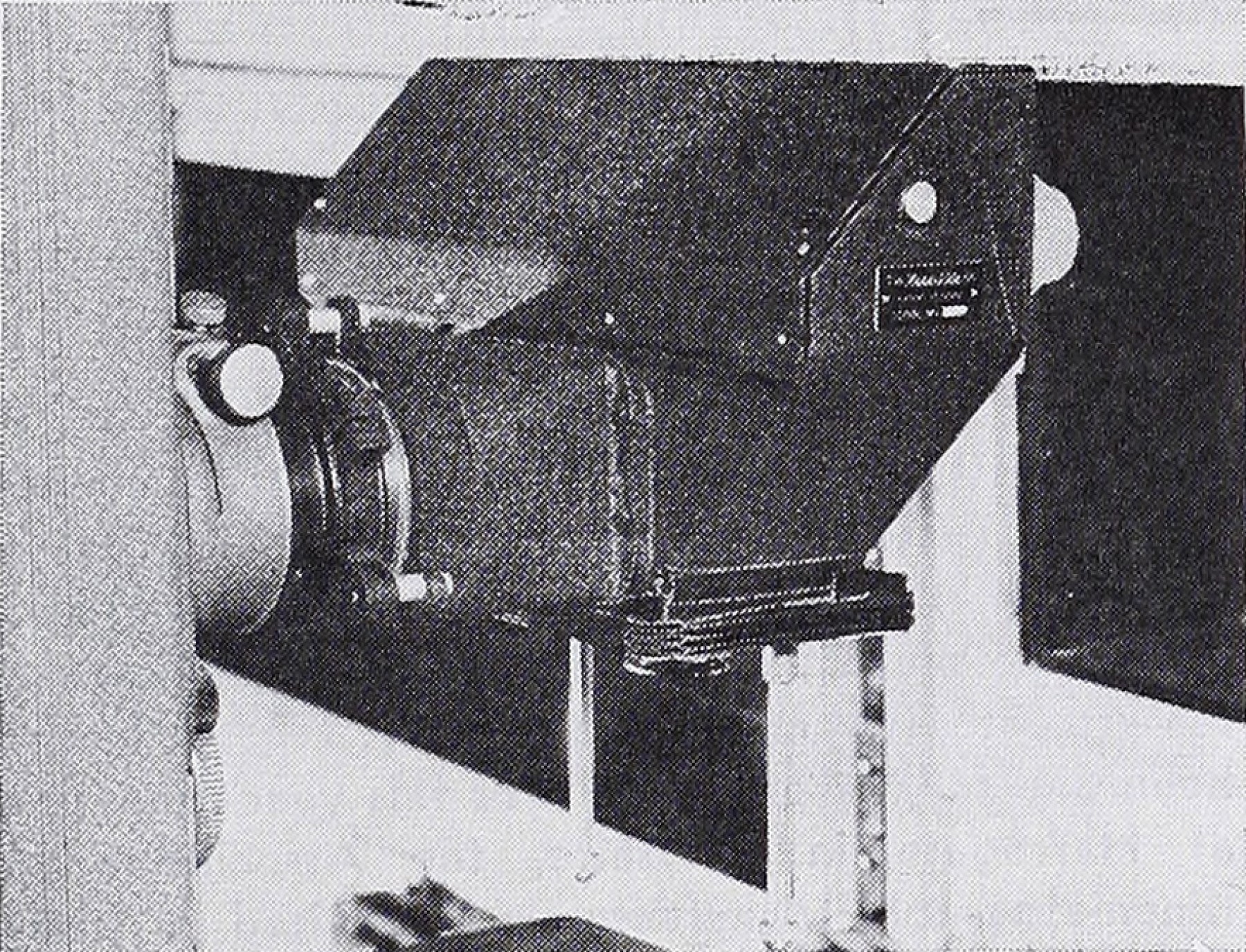
The Pola-Lite optical attachment was affixed directly to a projector’s lens house and was unsupported by brackets.
Motion Picture Herald, August 7, 1954: p. 19.
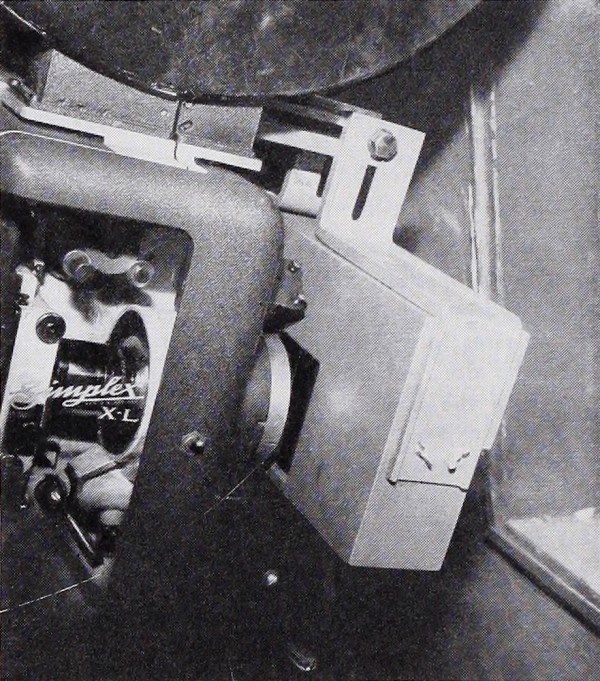
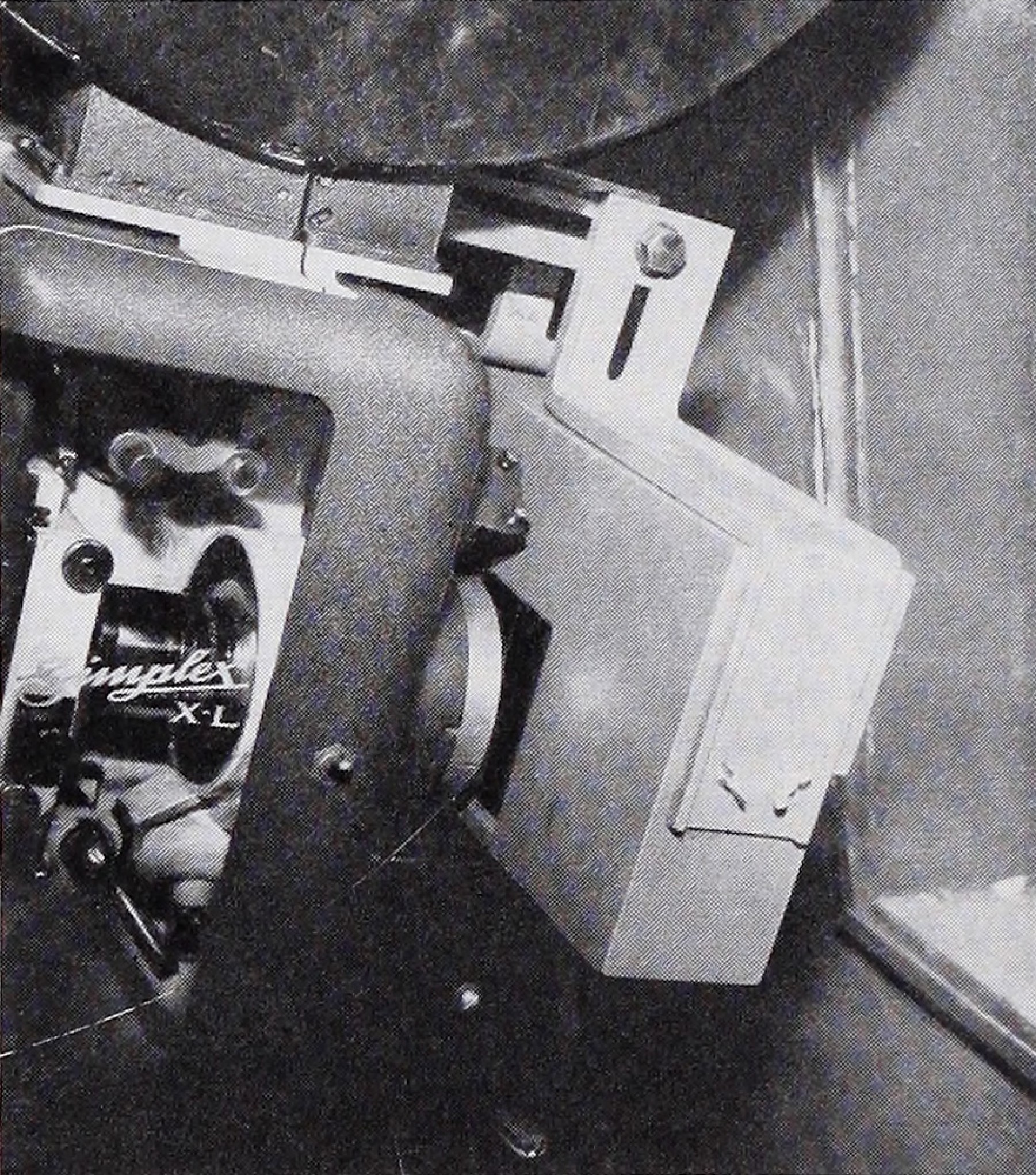
The Moropticon optical device attached to a Simplex projector using a bracket.
Motion Picture Herald, January 9, 1954: p. 14.
Selected Filmography
Universal returned to its monstrous roots with an exemplary mid-century creature feature. Searching for a prehistoric link between land- and sea-animals, a group of scientists encounter a strange “gill-man” in the Amazon and fight the creature for their survival – as well as among themselves. Initially released in dual-strip 3-D and flat formats on February 12, 1954, Creature became the most prominent Pola-Lite release six weeks later following the public premiere of the system in Detroit. Universal soon doubled their initial order of ten Pola-Lite prints to twenty, and the film played in the format in cities across America during the spring of 1954.
Universal returned to its monstrous roots with an exemplary mid-century creature feature. Searching for a prehistoric link between land- and sea-animals, a group of scientists encounter a strange “gill-man” in the Amazon and fight the creature for their survival – as well as among themselves. Initially released in dual-strip 3-D and flat formats on February 12, 1954, Creature became the most prominent Pola-Lite release six weeks later following the public premiere of the system in Detroit. Universal soon doubled their initial order of ten Pola-Lite prints to twenty, and the film played in the format in cities across America during the spring of 1954.
Douglas Sirk directed his only Western with this largely fabricated story based around real-world Chiricahua leader Taza. Despite compelling 3-D photography of Arches National Park and a more nuanced approach to American–indigenous relationships than other mid-century pictures, the film still struggles to raise itself above a reliance on red-face and dated sociocultural sensibilities.
Douglas Sirk directed his only Western with this largely fabricated story based around real-world Chiricahua leader Taza. Despite compelling 3-D photography of Arches National Park and a more nuanced approach to American–indigenous relationships than other mid-century pictures, the film still struggles to raise itself above a reliance on red-face and dated sociocultural sensibilities.
Lineage
Technology
Pola-Lite served exhibition, rather than photographic purposes, and studios still photographed films released in the Pola-Lite process using traditional dual-strip camera setups. The Pola-Lite projection system, originally known by the name Moropticon, consisted of a printing process that placed left- and right-eye 3-D images within one 35mm film frame, along with an optical device fitted to the lens of a standard projector that projected both of these images as one 3-D whole. Myriad issues with projection quality associated with two-strip processes, such as misalignment of left- and right-eye prints (images not properly superimposed), poor synchronization (one record appeared temporally slightly ahead of the other), or even challenges in keeping the light sources of both projectors of equal luminosity, had both exhibitors and audiences bleary-eyed at the prospect of more 3-D pictures by early 1954. In January, Motion Picture Herald editor George Schutz reminded theater operators that “films out of sync as little as three-quarters of a frame disturb fusion of the image enough to reduce the effect of depth and set up severe eye strain” (Schutz, 1954: p. 12). Pola-Lite designed its “single-track” system to allow exhibitors to easily showcase 3-D films without the bother of synchronization and other unwanted hassles, such as intermissions to allow audiences’ strained eyes to recover.
As an exhibition format, Pola-Lite printed both left and right images vertically (rotated 90 degrees) within the space usually used for a single frame. In effect, the format printed two subframes, one for the left eye and one for the right eye, alongside four perforations, with the top of each subframe facing the outside edge of the film (Heuel & Koshofer 1978, p. 964). A diagram drawn by Schutz called such arrangement “toe to toe.”
A beam-splitting prism system attached to the lens house of the projector rotated the two images and projected them overlaid through opposing polarized filters, via an arrangement of mirrors. Like other polarized 3-D processes such as Natural Vision 3-D, polarized glasses decoded the two images for spectators. Unlike the bulkier, auditorium-bound Nord system, the purportedly seven-pound (3.18kg) Pola-Lite system affixed directly to the projector, without other support. An early report by the trade journal International Projectionist, following a demonstration of the system at New York’s Capitol Theater in November 1953, commented on both the attachment’s “compact” nature and ease of use, and noted that assembly took “less than 30 minutes”.
In addition to its small size and the general benefits of a single-strip projection method, the Pola-Lite system also allowed exhibitors to readily switch between three-dimensional and traditional “flat”, or planar, presentations. With only the “turn of a couple of wing nuts”, exhibitors could quickly remove the optical components from their mountings inside the Pola-Lite apparatus, to project flat presentations without the need to fully remove the Pola-Lite system from the projector (Motion Picture Herald, 1954c).
But even with its focus on a better technological solution for 3-D, Pola-Lite struggled to overcome the standard drawbacks of stereoscopic presentations, such as the consistency and quality of light. The system required the projector’s light source to pass through an additional set up of prisms and mirrors, although the company claimed that their system netted “96 to 98 per cent transmission of light” when compared to traditional projection (Juntunen, 1954). Pola-Lite attempted to counter a darker projected image by printing films lighter than their planar counterparts. The Independent Film Journal remarked in November 1953, after attending an industry demonstration, that the system’s “only flaw came in a night scene which had been printed so much lighter than usual that it appeared to be shot during the day”, while International Projectionist wrote that “print density had been cut to the point where the film was almost transparent”, which resulted in both lower picture quality and washed-out colors.
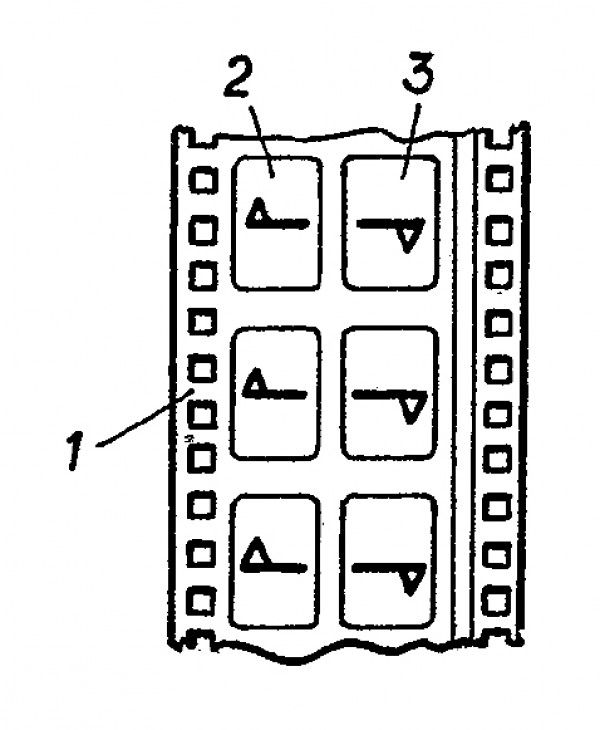
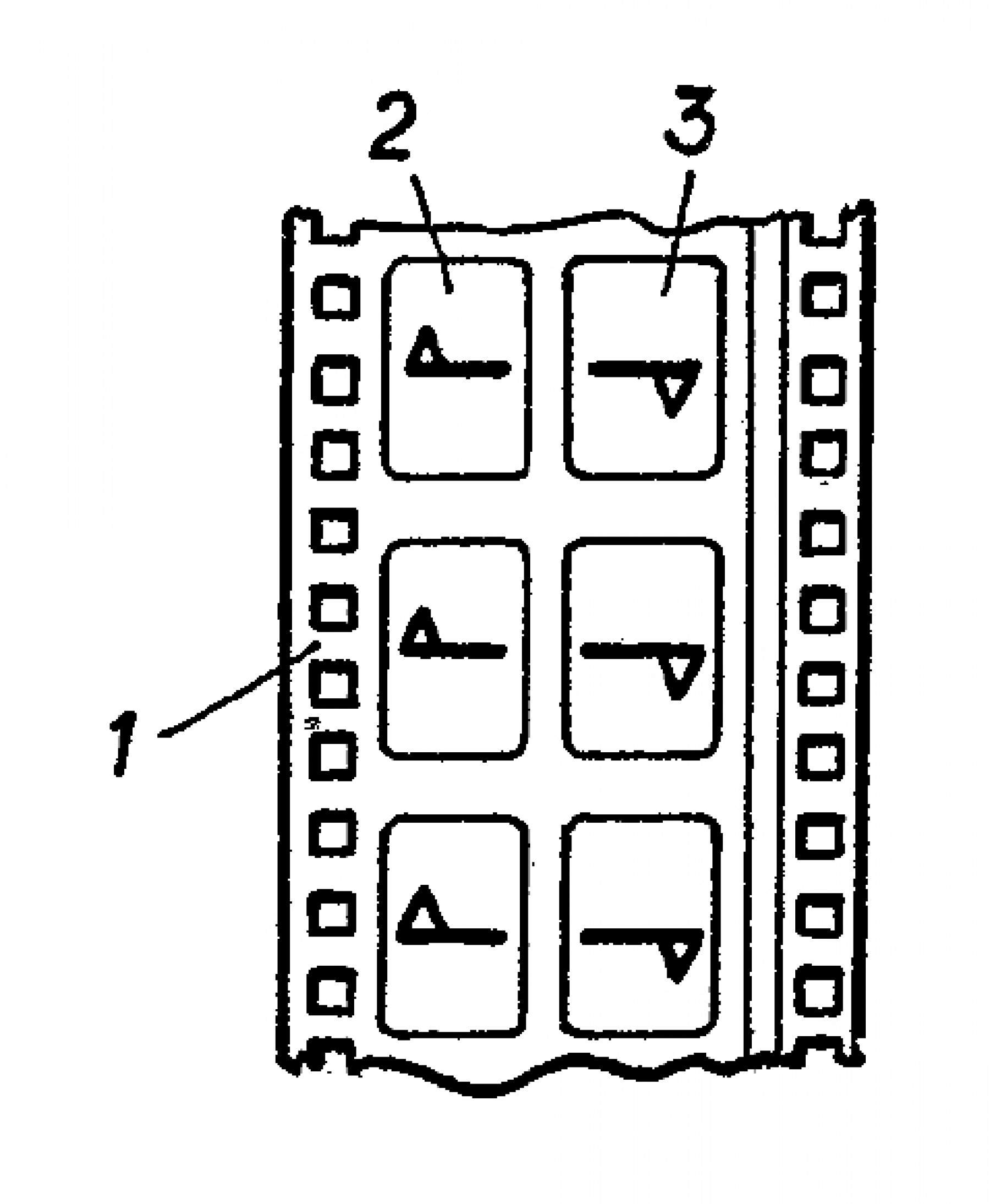
A figure from Boris Morros’ Austrian patent for the Moropticon device, showing the arrangement of left- and right-eye images set in parallel.
Boris Morros. Vorrichtung an photographischen und kinematographischen Apparaten. Austrian patent AT179966B, filed September 3, 1953, and issued October 25, 1954.
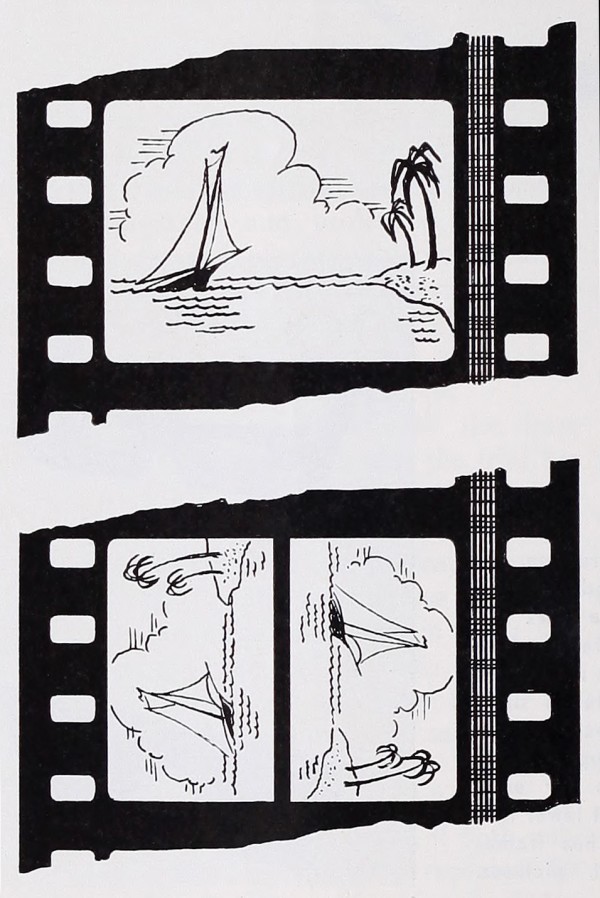
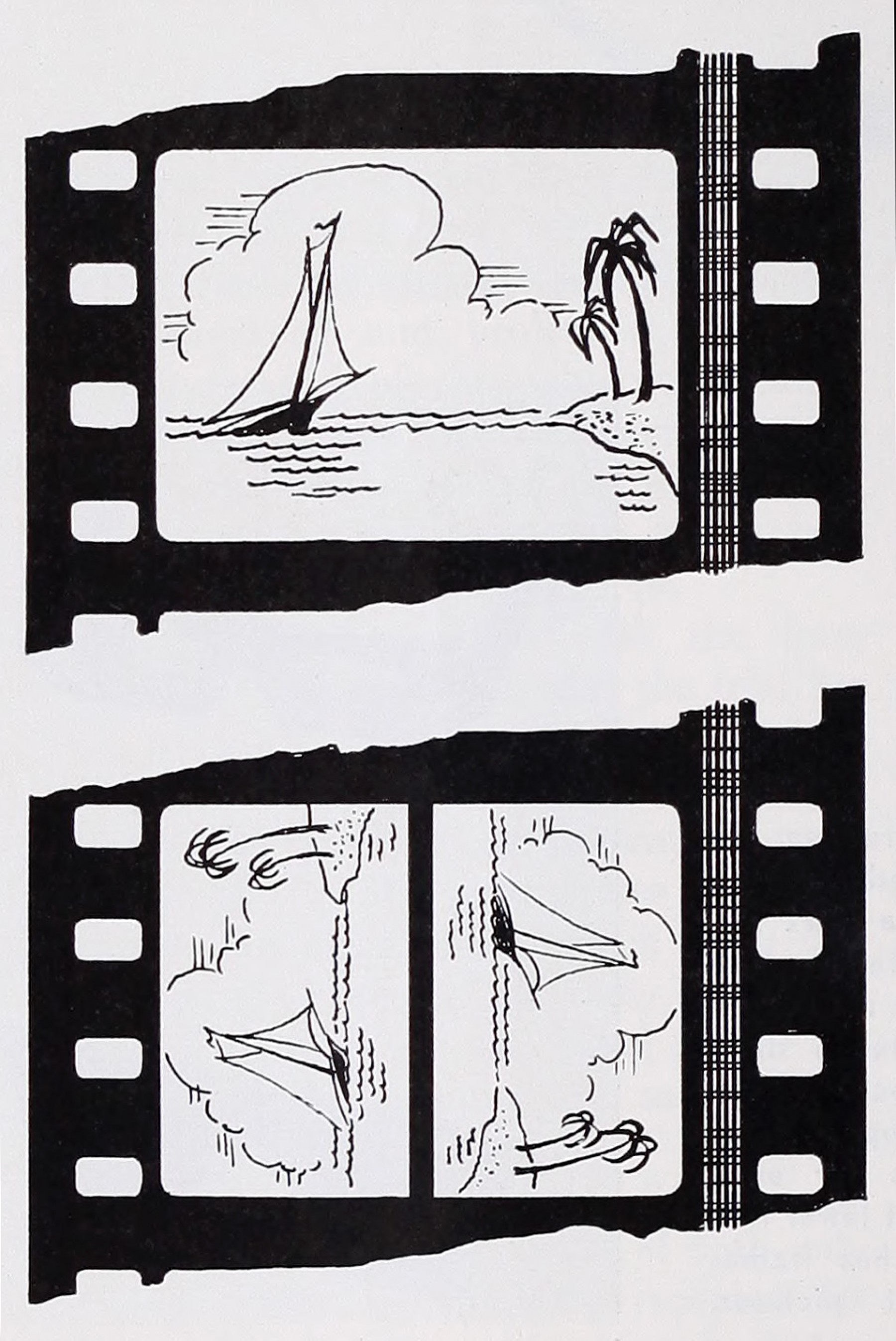
An illustration of a traditional 35mm film strip (above), compared to a frame printed in the Pola-Lite – then still called Moropticon – process. Pola-Lite printed a left and right image “toe to toe” in the space of a standard frame.
Motion Picture Herald, January 9, 1954: p. 14.
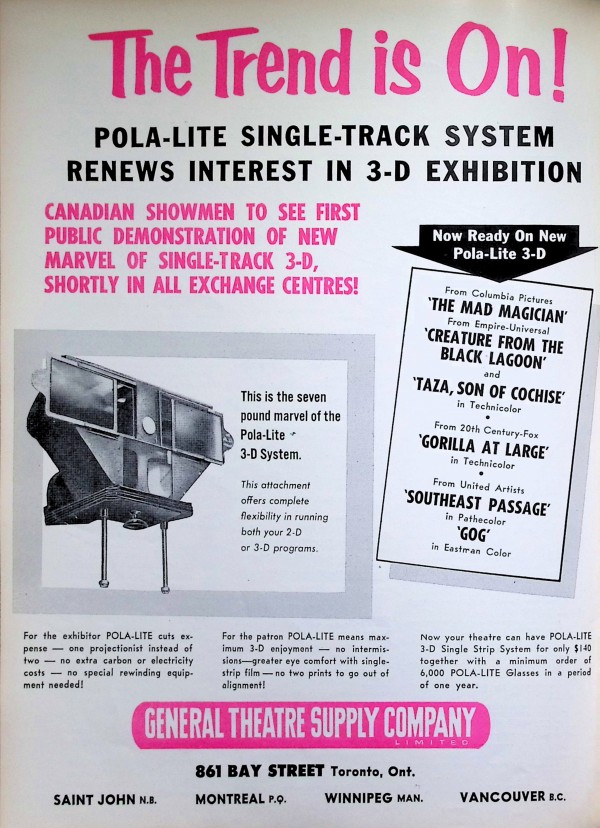
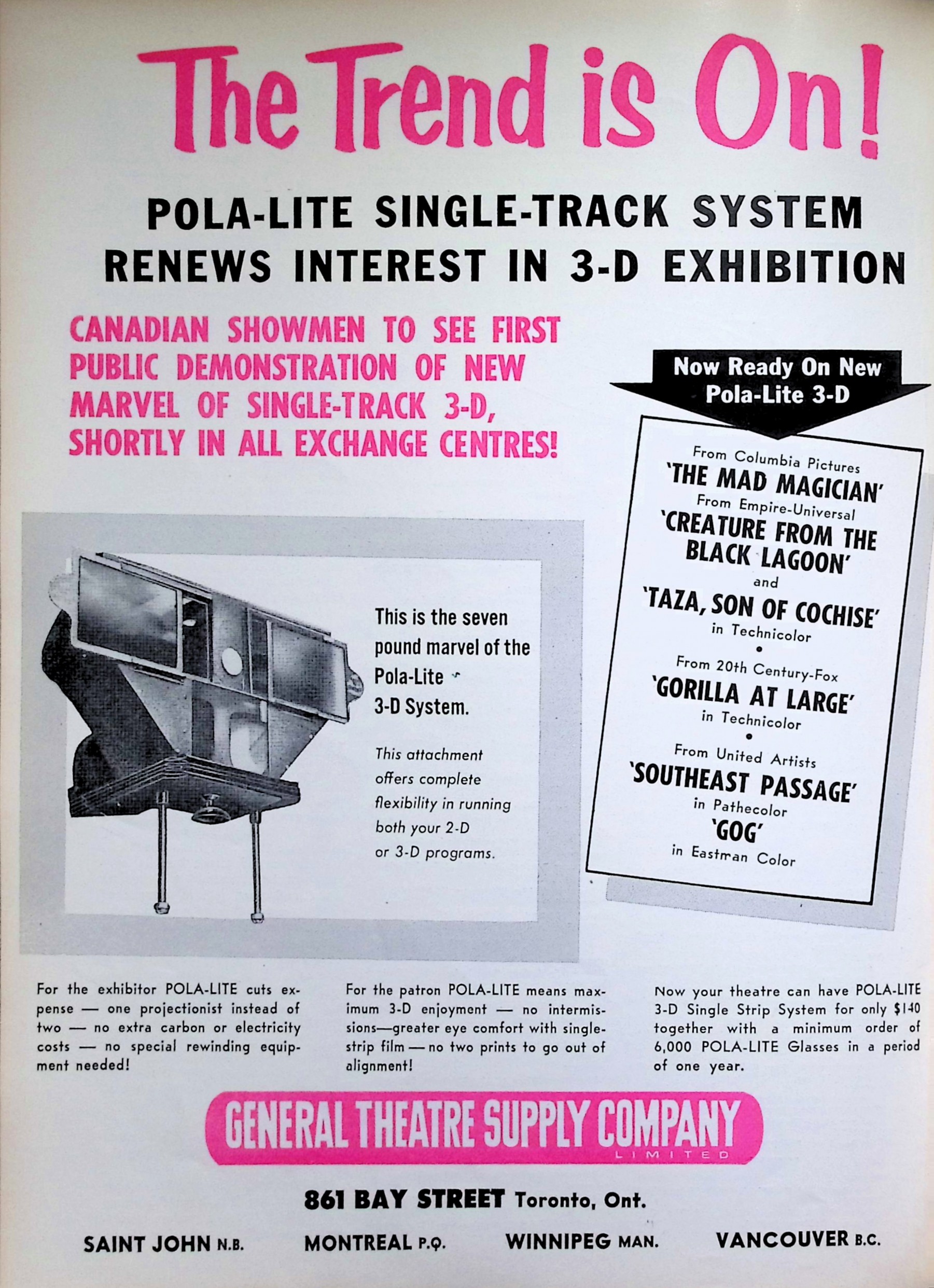
An advertisement for Pola-Lite touting the “seven pound marvel” lens attachment to Canadian exhibitors.
Canadian Moving Picture Digest, June 26, 1954: p. 14.
References
Ballew, Mike (n.d.). “Taza, Son of Cochise: 3-D Worth Waiting For!”. 3-D Film Archive. https://sites.google.com/site/3dfilmarchive/taza-son-of-cochise (accessed Jan. 10, 2025).
Boxoffice (1953). “U-l to Produce ‘Taza, Son of Cochise,’ For Moropticon as Well as Two-Strip 3-D”. Boxoffice (Nov. 28).
Boxoffice (1954). “Cincinnati,” Boxoffice (May 1). https://www.yumpu.com/en/document/view/27005478/boxoffice-may151954 (accessed Mar. 10, 2025).
Canadian Film Weekly (1954). Canadian Film Weekly (June 30): p. 1. Media History Digital Library. http://archive.org/details/canadianfilmweekly-1954-06-30.
Canadian Moving Picture Digest (1954). Canadian Moving Picture Digest (Jun. 26): p. 14. https://archive.org/details/canadian-moving-picture-digest-1954-06-26/page/n13/mode/2up (accessed Aug. 4, 2025).
Film Bulletin (1953a). “Moropticon Demonstration”. Film Bulletin (Sep. 21): p. 24. https://archive.org/details/filmbulletin195321film/page/n605/mode/2up (accessed Aug. 4, 2025).
Film Bulletin (1953b) “New Pola-Lite-Sales Plan”. Film Bulletin (Dec. 14): p. 33. https://archive.org/details/filmbulletin195321film/page/n787/mode/2up (accessed Aug. 4, 2025).
Furmanek, Bob (n.d.). “Single-Strip 3-D”. 3-D Film Archive. https://sites.google.com/site/3dfilmarchive/single-strip-3-d (accessed Jan. 15, 2025).
Heuel, Hans-Joachim & Gert Koshofer (1978). “The Magic Screen: The Story of 3D and Wide-Screen Films – Part 2”. The British Journal of Photography, 125: 6171: pp. 963–65.
Hollywood Reporter (1953). “7,000,000 Glasses Wkly. Seen for Pola-Lite”. The Hollywood Reporter (Aug. 12).
Hollywood Reporter (1954a). “‘Moropticon’ 3-D Process In New York Demonstration”. The Hollywood Reporter (Sep. 10).
Hollywood Reporter (1954b). “20th-Fox, UA Releasing 3-D Films in Pola-Lite”. The Hollywood Reporter (Apr. 26).
International Projectionist (1953). “Single-Strip 3-D To Get Circuit Tests”. International Projectionist (Dec.): p. 28. https://archive.org/details/internationalpro28finn/page/32/mode/2up (accessed Aug. 4, 2025).
Juntunen, Arthur (1954). “Single Film 3-D Makes Bow”. Detroit Free Press (Apr. 1): p. 25. https://www.newspapers.com/article/detroit-free-press-pola-lite-detroit/42652862/.
Motion Picture Daily (1953). “Moropticon in Deal with Pola-Lite Co.,” Motion Picture Daily (Nov. 6): p. 2. https://archive.org/details/motionpicturedai74unse_0/page/n205/mode/2up (accessed Aug. 4, 2025).
Motion Picture Daily (1954). “‘U’ Increases Print Order for ‘Creature,’” Motion Picture Daily (Mar. 29): p. 2. https://archive.org/details/motionpicturedai75unse/page/n425/mode/2up (accessed Aug. 4, 2025).
Motion Picture Herald (1953). “This Week in Pictures”. Motion Picture Herald (Sep. 19): p. 19. https://archive.org/details/motionpictureher192quig/page/n637/mode/2up (accessed Aug. 4, 2025).
Motion Picture Herald. (1954a). “Now Every Theatre Can Play to Greater 3-D Profits”. Motion Picture Herald (Mar. 27): p. 23. https://archive.org/details/motionpictureher194quig/page/n723/mode/2up (accessed Aug. 4, 2025).
Motion Picture Herald. (1954b). “Single-Track 3-D System”. Motion Picture Herald (May 8): p. 6. https://archive.org/details/motionpictureher195quig/page/6/mode/2up (accessed Aug. 4, 2025).
Motion Picture Herald. (1954c). “Single-Strip 3-D Spreading Steadily but Needs Product,” Motion Picture Herald (Aug. 7): pp. 19–20. https://archive.org/details/motionpictureher196quig/page/n361/mode/2up (accessed Aug. 4, 2025).
New York Times (1953). “Pola-Lite Co. Elects”. The New York Times (Aug. 12). Times Machine. https://timesmachine.nytimes.com/timesmachine/1953/08/12/83820918.html (accessed May 17, 2025).
Palmer, Gary (2004). “3-D Filmography”. Film History, 16:3 (Special Issue: 3-D Cinema): pp. 256–76. https://doi.org/10.2979/FIL.2004.16.3.256.
Schutz, George (1954). “3-D: Its Progress and Its Prospect”. Motion Picture Herald, (January 9): pp. 12-14. https://archive.org/details/motionpictureher194quig/page/n99/mode/2up (accessed Aug. 4, 2025).
Variety (1954a). “3-D Looks Dead in United States”. Variety (May 26).
Variety (1954b). “Pola-Lite’s 3-D Pitch Continues”. Variety (June 9).
Zone, Ray. “Single-Strip 3-D Systems.” In 3-D Revolution: The History of Modern Stereoscopic Cinema, pp. 79–91. University Press of Kentucky, 2012.
Patents
Morros, Boris Michael. 1954. Vorrichtung an photographischen und kinematographischen Apparaten [Device in photographic and cinematographic apparatus]. Austrian patent AT179966B, filed September 3, 1953, and issued October 25, 1954.
Wells, Leon. Motion Picture Projection System Utilizing Beam Splitting Means. United States Patent Office 2,967,453, filed March 31, 1959, and issued January 10, 1961.
Followed by
Compare
Related entries
Author
Paul T. Klein is a film scholar and cultural historian specializing in the material cultures of American film exhibition. Paul’s work charts the ways that individual films, exhibition technologies and industry practices shape our shared filmgoing culture. Paul’s writing appears in Film Matters and on Reading Movies, and has presented research at major conferences, including the American Historical Association and the Society for Cinema and Media Studies. Prior to his work in film history, Paul worked in both cinema and technology startup operations. More at www.ptklein.com.
My thanks to G, to Dr. Despina Kakoudaki, and to every friend who has sat through a movie on my behalf for their support and spirited discussions about why movies matter.
Klein, Paul T. (2025). “Pola-Lite”. In James Layton (ed.), Film Atlas. www.filmatlas.com. Brussels: International Federation of Film Archives / Rochester, NY: George Eastman Museum.