ARC 120(1959–1964)
A single-strip widescreen format, invented by Leon W. Wells and developed by Leon Bronesky, that split a wide image into two parts, and arranged them on the print perpendicular to regular orientation.
Film Explorer
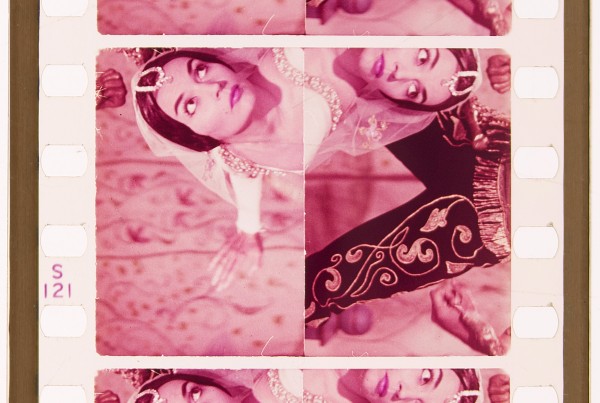
Ludmilla Tchérina in Luna de Miel (1959), directed by Michael Powell. Combined Eastman Color print with magnetic stripe soundtracks on both edges. Faded to magenta. The two images were rotated and joined using a special lens during projection.
BFI National Archive, Berkhamsted, United Kingdom.
Identification
Full frame: 24.50mm x 18.0mm (0.964 in x 0.708 in); each subframe: 12.25mm x 18.0mm (0.482 in x 0.708 in).
Eastman Color.
Standard British Eastman Kodak markings, partially obscured by the magnetic stripes.
1
Eastman Color negative stock was used, which was processed by Technicolor. The ARC 120 prints were in Eastman Color. Special printers were reportedly installed at Denham Laboratories in Buckinghamshire, UK, suggesting ARC 120 prints were printed there. The partial ARC 120 print held at the BFI National Archive is now heavily faded to magenta. All known ARC 120 films were also released in other formats, such as Cinemascope and Technirama. These prints were made by Technicolor and had a Technicolor screen credit.
Unknown
Magnetic stripe soundtracks applied to the film’s edges, outside the perforations.
Technirama: 38.0mm x 25.2mm (1.496 in x 0.992 in).
Color
Standard British Eastman Kodak markings; footage number on the opposite film edge.
History
ARC 120, later marketed as Wonderama, was a widescreen format projected onto a 120-degree curved screen, invented by Leon Wells and exploited by Leon Bronesky in the 1950s. It had limited use and was short-lived, despite being marketed as an affordable technology which could rival the likes of Cinemascope and Cinerama. ARC 120 prints could be converted from any type of widescreen negative and the projector required only a simple lens addition to create the wide image on screen, allowing filmmakers and cinemas flexibility when shooting and projecting. The process and the films shown in the process were given middling reviews but press from the time noted ARC 120’s potential as a projection format, especially for smaller, budget-conscious venues. It was a commercial failure and was discontinued just a few years after its invention.
Leon Weliczker Wells was a Polish engineer and inventor. He was a Holocaust survivor, escaping capture multiple times, including from internment at the Janowska camp in Poland. After the war ended, Wells studied engineering in Gliwice, Poland, and then in Berlin, before emigrating to the United States in 1949. He worked for the Courant Institute at New York University until 1953, after which he began working in the private sector on film processes such as Pola-Lite 3-D. Wells appears to have begun work on the ARC 120 process in the latter half of the 1950s. The printing and optics of ARC 120 shared striking similarities to that of Pola-Lite 3-D, suggesting he incorporated and developed much of what he had learnt from his work on Pola-Lite. His regular collaborator at this time was Leon Bronesky, an American film and theater producer. (It is unclear how Wells and Bronesky met and if any other companies were involved with the early development of ARC 120.) The first mention of the yet-to-be-named system was in February 1956, when Bronesky spoke about the upcoming process to the press. He described it as using “only one camera and one projector but two images on each film frame” (Film Daily, 1956).
Wells and Bronesky’s first patent application for the system was in July 1957, but this version of the technology was abandoned for further development. They applied again in March 1959 with a more detailed application, which was granted in January 1961.
The marketing for ARC 120 hinged on its versatility for filmmakers and ease of installation and affordability for exhibitors. The format was versatile in that prints could be made from Technirama, Cinemascope, Vistavision or Todd AO negatives. Printing costs were noted as being “approximately the same as that of printing a standard 35mm print” (Motion Picture Exhibitor, 1962), despite the reduction and rotation of the image during printing.
Other systems like Cinerama required three separate strips of 35mm film to be projected in synchrony, in customized theaters. In contrast, ARC 120 needed a simple lens attachment to adapt existing regular 35mm projectors and a deeply curved 120-degree screen which could be readily hung, on a temporary framework in front of any existing screen.
The simplicity of the lens and screen system supposedly meant a quick installation, with the press at the time noting: “It is claimed that the complete installation can be accomplished in less than six hours” (Box Office, 1961).
The cost for the lens and screen was around $5,000. This was considerably cheaper than rival systems: the Cinerama set-up installed at the Warner Theatre, New York, was between $40,000 and $50,000 in 1953, for example (Motion Picture Daily, 1953).
The process apparently also boasted the ability to see an undistorted image from any seat in the house. Also, because the process was not anamorphic, it did not have any loss of definition or pincushion distortion towards the edges of the projected image. These features of the process were marketed as being perfect for smaller cinemas that didn’t have a large budget or room for multi-projector systems. Temporary, extended-run roadshow venues were also a target, as the system could be assembled quickly (in theory) and didn’t require much in the way of specialist equipment.
The first film shown in ARC 120 was the Michael Powell feature Luna de Miel (Honeymoon, 1959). British Lion, the distributor of the film in the UK, approached Bronesky with the idea of using ARC 120. Bronesky agreed, with stipulations in his contract that he would have approval over the film’s cut. Bronesky disliked several sequences and would only proceed if cuts were made, leading to delays and tension between the parties. Technical difficulties in printing also slowed progress. The film was finally shown in ARC 120 at the Palace Cinema, in the British seaside town of Blackpool, Lancashire, in August 1960. The film was shown for just over a month in Blackpool and was not received favorably. Michael Powell was far from impressed with Bronesky and the two quarreled over future screenings of the film in ARC 120, with Bronesky refusing to show the film in other venues without further cuts to improve reception. British Lion sided with Powell and eventually broke the contract with Bronesky, choosing to show the film in Cinemascope instead. (Powell, Michael, 1961a).
ARC 120 was next used for screenings of the French ballet anthology film Un Deux Trois Quatre (Black Tights, 1960). The film was first shown at the 1960 Venice Film Festival in a 35mm Technirama print, before being converted to ARC 120 for the Mar del Plata International Film Festival, Buenos Aires, in January 1961. By this time, Bronesky had created the company Bronesky International Films to launch the process, supported by a number of investors, which included hotelier Abe Margolies and talent agent William Morris Jr. The festival was a showcase for ARC 120, with press and industry members given a behind-the-scenes look at installation. It was favorably received, with ease of installation, reasonable ticket prices, cost and image quality being the highlights noted by the press. Motion Picture Exhibitor reported that the installation was so simple that local technicians completed the set up with only an instruction booklet to guide them, however Variety stated that Wells completed the installation himself. The process was offered as a rental package with no upfront cost – the fee was instead gleaned from 10% of the ticket sales (Variety, 1961a). ARC 120 was given a special award as part of the festival for its “outstanding contribution to the film industry” (Motion Picture Exhibitor, 1962).
Following the festival, Morris proposed a tour of the process in Chile, Peru and Brazil before heading to Hollywood. Ultimately, no tour of South America appears to have taken place, although ARC 120 demonstrations were subsequently held in the Academy Theatre and Grauman’s Chinese Theatre in Hollywood in March 1961, although these didn’t lead to any bookings. When Un Deux Trois Quatre was shown in London in September 1961, and as a roadshow across America starting in New York in spring 1962, it was in 35mm Technirama prints.
Further ARC 120 press screenings took place around November 1961 at the Bellevue Theatre in Montclair, New Jersey. Financial backer Abe Margolies was in attendance and proposed financing a film in the process, but this never materialized.
Around late 1963, Walter Reade Jr. of Walter Reade-Sterling, Inc. purchased the rights to use the system in the company’s chain of US movie theaters. ARC 120 was rebranded as Wonderama and launched with the repackaged German travel film Mediterranean Holiday (Traumreise unter weissen Segeln, 1962), which had originally been released in Europe in 70mm. At this time, Wells, Bronesky and Morris were still involved with the process, but they needed more financial backing to generate interest.
Four hundred investors and industry members were invited to a lavish premiere of Mediterranean Holiday in Hartford, Connecticut, in January 1964, with a dinner and introduction planned before the screening. But the preparations for the screening were disastrous – the wrong lenses were installed, and the event was postponed. It was eventually rescheduled for February and relocated to the Strand Theatre in Plainfield, New Jersey, with Reade busing in attendees from Connecticut and New York at great expense. Samuel J. Colosimo, chief engineer at Reade-Sterling, supervised the installation of equipment for the screening. But more technical problems marred the screening – the center line was visible, the two halves of the image moved around, independently of each other, dark spots appeared in corners, and the image was intermittently blurred throughout the screening. Despite all the problems the press were, perhaps, surprisingly kind in their write-up of the system, with many mentioning that it had potential. Mediterranean Holiday was shown in Wonderama at the Strand for six weeks and then at the Trent Theatre in Trenton, New Jersey, during August. Both theaters were owned by Reade-Sterling. No other Wonderama screenings of the film appear to have taken place – the bulk of US bookings were in CinemaScope prints. Reade-Sterling seemed to have given up on Wonderama.
By February 1964, Leon Wells was no longer involved with Wonderama. He had attended the New Jersey premiere of Mediterranean Holiday, but he wasn’t involved during the installation. (A few years later, he would resurface with the Panacolor Pik-A-Movie format).
In June 1962 there were reports that Wonderama was to be used one final time for the production of Felicia (1964). The film was shot in Eastman Color, wasn’t completed until 1964, and indeed it was never widely released due to financial problems – screening only in South America.
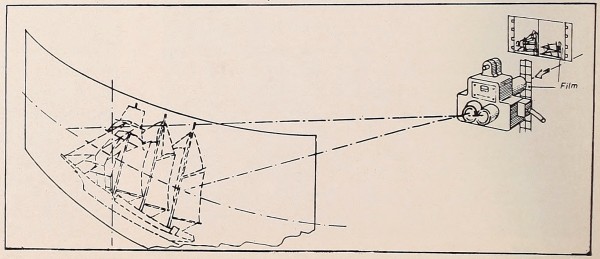
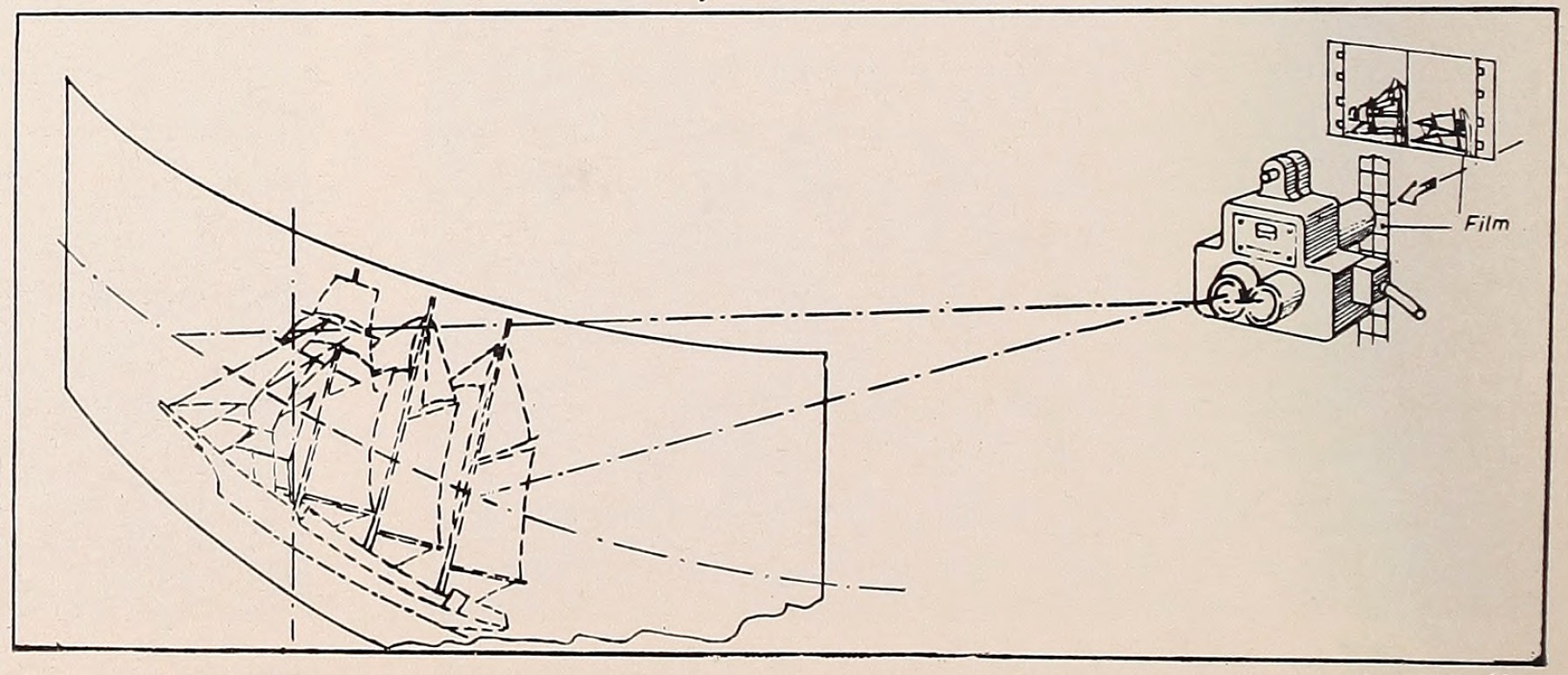
An illustration depicting the rotation and recomposition of the two half-images on the print into one widescreen image on the screen, during projection.
International Projectionist (1964), 39:5 (May): p. 14.
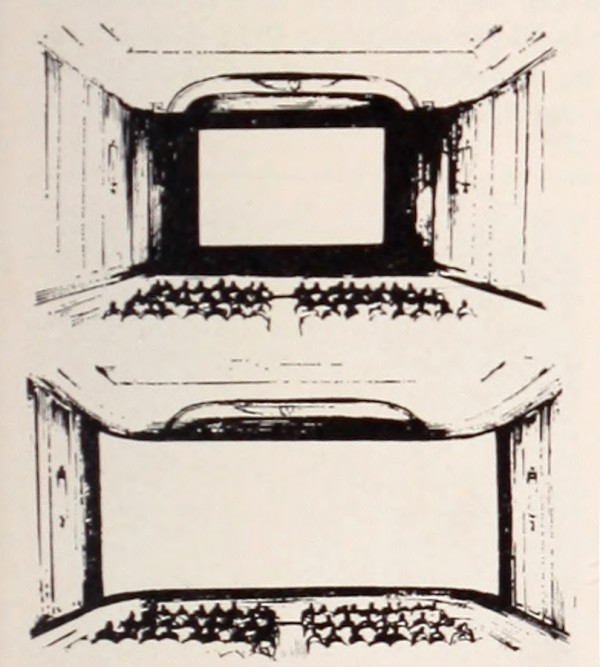
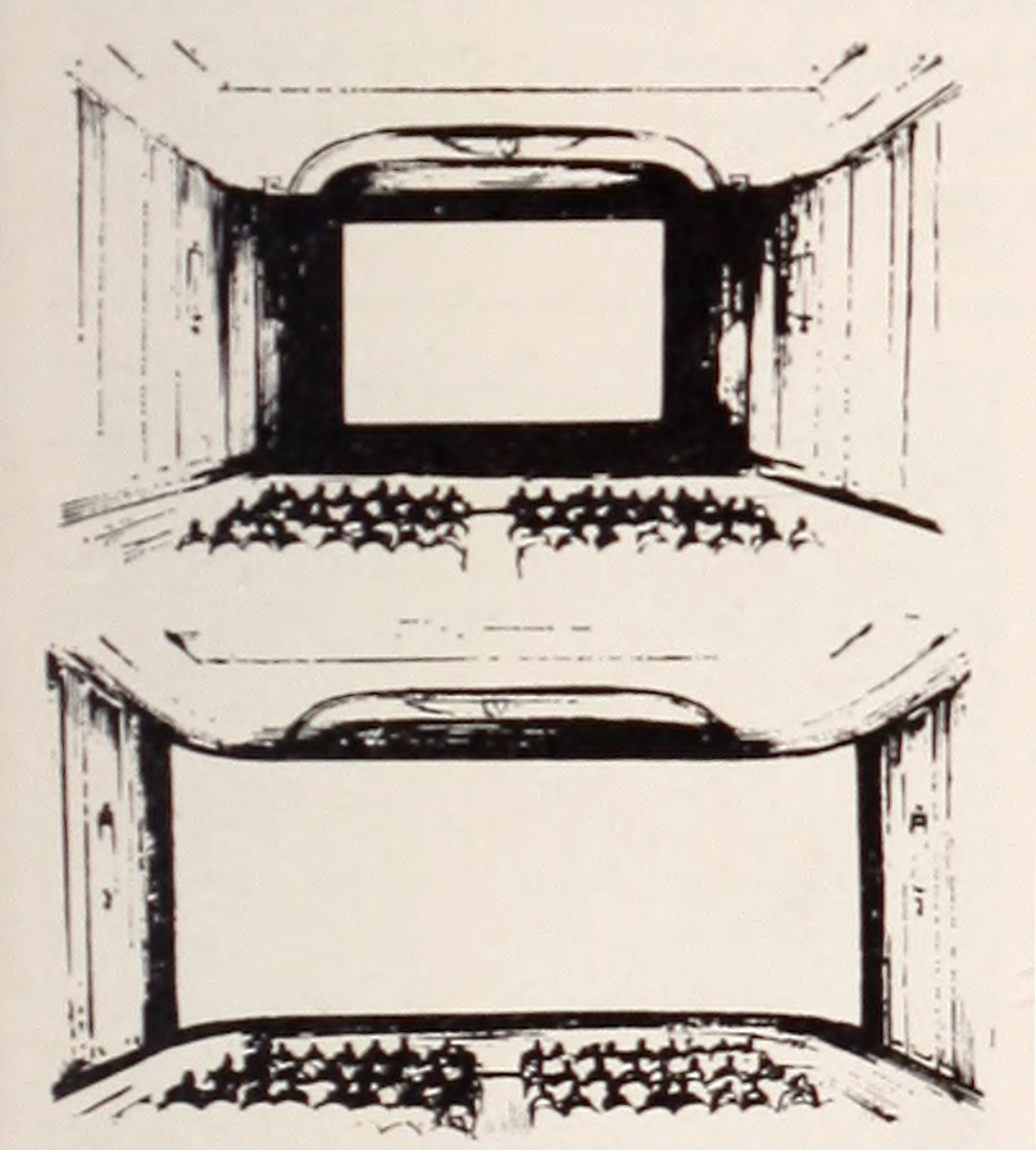
A standard screen versus the ARC 120 screen. The image depicts the ARC 120 screen as just over 1.5 times taller and 2.2 times wider than a regular Academy aspect ratio screen.
International Projectionist (1964), 39:5 (May): p. 15.
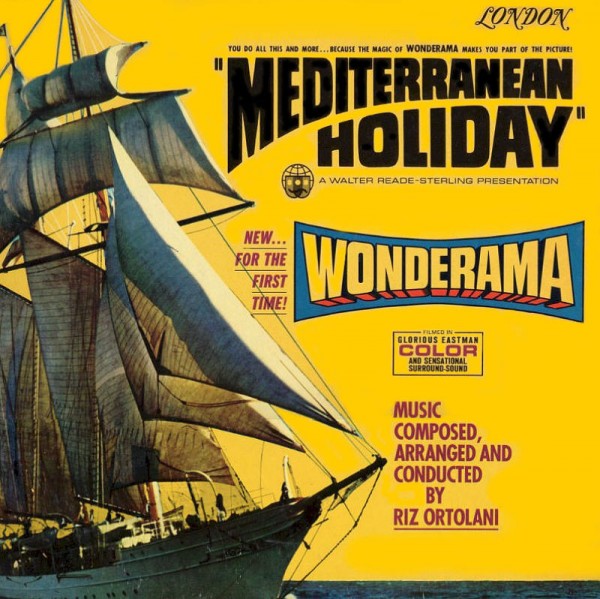
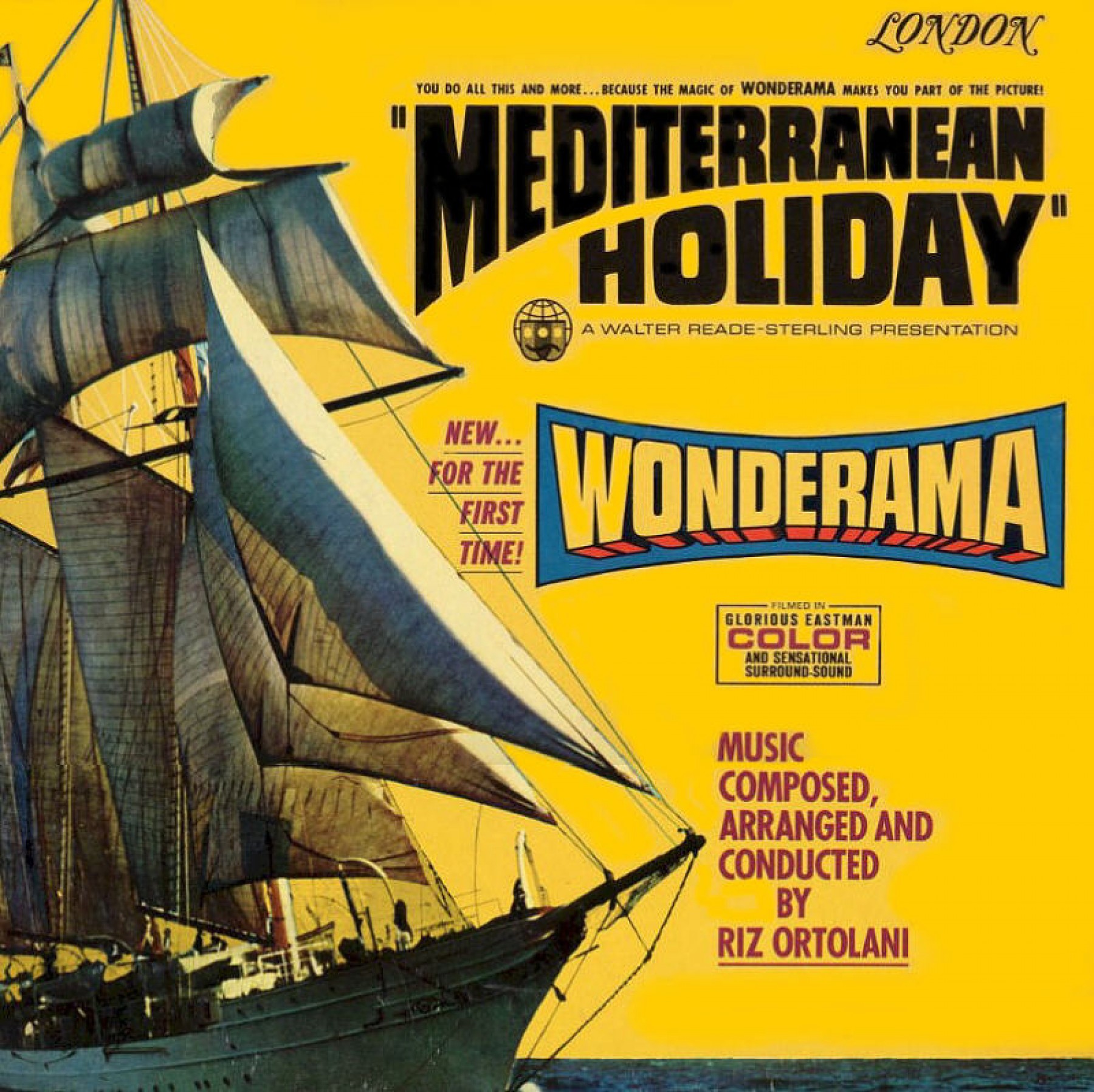
The soundtrack album cover of Mediterranean Holiday (1962).
Cinerama.com (n.d.) “Mediterranean Holiday”. cinerama.com (website). https://incinerama.com/mediterraneanholiday.htm (accessed October 12, 2024).
Selected Filmography
Eastman Color romantic murder mystery featuring Louise Allbritton, as a suspicious wealthy widow, who returned from retirement to take the lead role. Eastman Color negative with ARC 120 prints.
Eastman Color romantic murder mystery featuring Louise Allbritton, as a suspicious wealthy widow, who returned from retirement to take the lead role. Eastman Color negative with ARC 120 prints.
Technicolor musical drama set in Spain featuring extensive dance sequences with Ludmilla Tchérina and Antonio Soler. Also known as The Lovers of Teruel. Technirama negative, with ARC 120 and Technirama release prints.
Technicolor musical drama set in Spain featuring extensive dance sequences with Ludmilla Tchérina and Antonio Soler. Also known as The Lovers of Teruel. Technirama negative, with ARC 120 and Technirama release prints.
Eastman Color travel documentary following the Flying Clipper sailing ship as it tours the Mediterranean. MCS 70 Superpanorama negative with CinemaScope, ARC 120 and three-strip Cinemiracle prints.
Eastman Color travel documentary following the Flying Clipper sailing ship as it tours the Mediterranean. MCS 70 Superpanorama negative with CinemaScope, ARC 120 and three-strip Cinemiracle prints.
Technicolor ballet anthology film based on the ballets of Roland Petit, who adapted them for the film, and had a starring role alongside Zizi Jeanmaire, Moira Shearer and Cyd Charisse. Technirama negative with ARC 120 and Technirama release prints.
Technicolor ballet anthology film based on the ballets of Roland Petit, who adapted them for the film, and had a starring role alongside Zizi Jeanmaire, Moira Shearer and Cyd Charisse. Technirama negative with ARC 120 and Technirama release prints.
Lineage
Technology
The ARC 120/Wonderama system was an exhibition-only format which attempted to create an extra wide image on a deeply curved screen without the use of anamorphics. The uniquely designed film prints were made using specially built optical printers, while an adapter lens attached to the front of the existing lens of the projector and a deep-curved cinema screen facilitated projection. No special camera or negatives were needed and a standard 35mm projector could be used once fitted with the adapter lens and a brighter bulb.
Negatives
ARC 120 was promoted as being able to use any widescreen, or squeezed, camera negative. Cinemascope, VistaVision and Todd AO were listed as possible formats. Technirama and 65mm negatives were both used to make ARC 120 prints.
Printer & prints
A special printer, installed at Denham Laboratories, Buckinghamshire, on the outskirts of London, unsqueezed the image (if necessary), divided it into two halves and rotated them 90 degrees, arranging them toe-to-toe next to each other within a full-aperture 35mm frame. All known ARC 120 prints are on Eastman Color stock. Two magnetic stripe sound-tracks were applied to the outside of the perforations, on both sides of the frame. Little is known about this unique sound-track arrangement, with no description of the technology or speaker layout in the contemporary press beyond it being stereo.
Projection
A similar beam-splitting optical device was then fitted to the projector, which rotated the two half-images 90 degrees, joined them as one and expanded them out to 2.65:1 on the screen using prisms, mirrors and lenses. A vibrating shutter device blended and minimized the visibility of the join between the two halves. A brighter bulb was also needed in projection to ensure that the smaller film images retained clarity when increased in size on the very large screen. The lamp drew 140 amps of electricity, instead of 65 amps, which was standard at the time.
The cinema screen size varied and could be up to 61-ft (18.59m) wide, 22-ft (6.71m) high. The curvature of the screen was 20-ft (6.10m) deep at its center, matching the aspect ratio. The screen used at the test screenings in the Bellevue Theatre, New Jersey, was 50-ft (15.24m) wide with a 12-ft-deep (3.66m) curve. The screen in the Palace Cinema, Blackpool, Lancashire, was 55-ft (16.764 m) wide, 22-ft (6.71m) high and 10-ft (3.05m) deep at the center. It was made by Perlux and was suspended in front of the proscenium (the Palace cinema was also used as a legitimate theatre). The screen at the Argentinian Film Festival was reported to be 54-ft (16.46m) wide and 21-ft (6.40m) high. Different projector lenses were made, with different focal lengths, to fill any size screen at any distance of projection. The lenses were manufactured by Zeiss Ikon in Kiel, West Germany.
Image quality
The final projected image was reported to be mediocre, with poor focus, inconsistent brightness and independent movement of the two halves often being cited. The quality of the projected image would have been low, having been reduced to fit together within a single 35mm frame – this was especially noticeable when compared against 35mm anamorphic or 70mm formats.
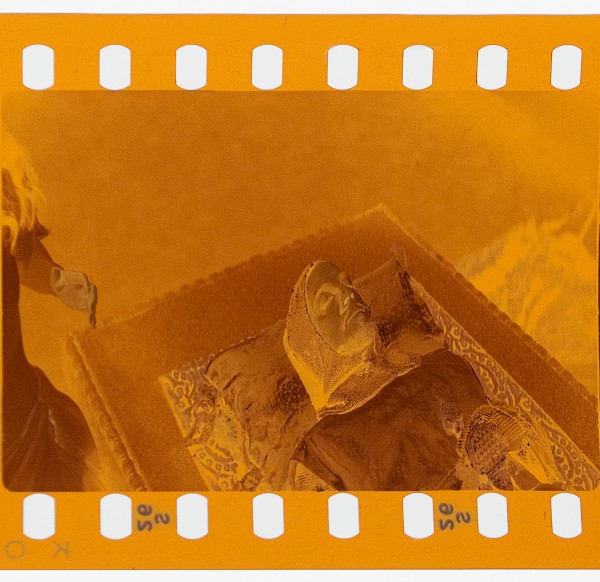
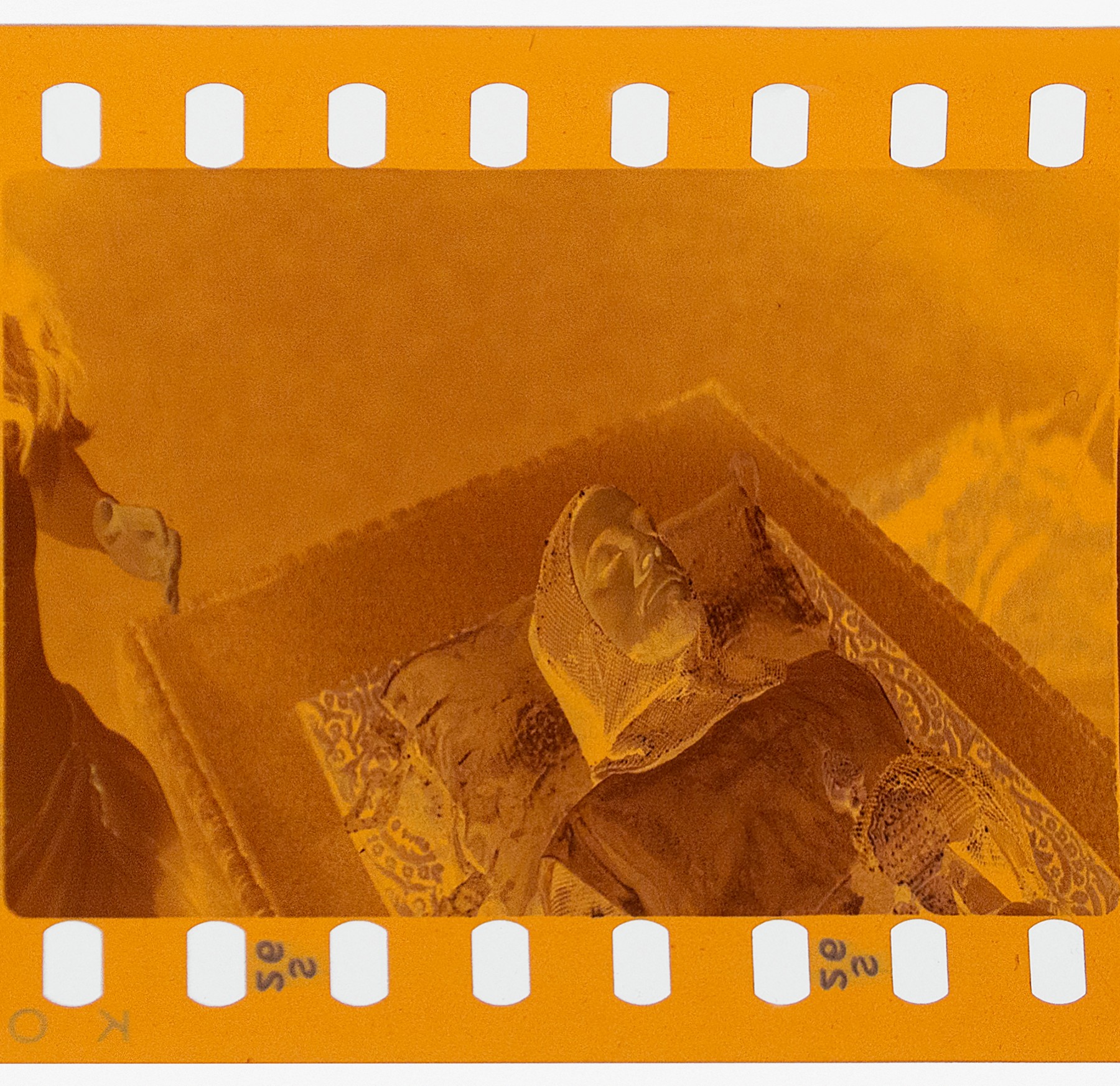
The 8-perforation horizontal 35mm Technirama negative of Luna de Miel (1959) before being converted to ARC 120. The anamorphic lens used in filming squeezed the wide image horizontally by a factor of 1.5x onto a narrower frame.
BFI National Archive, Berkhamsted, United Kingdom.
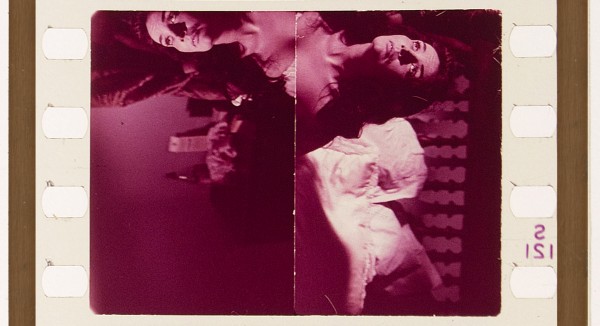
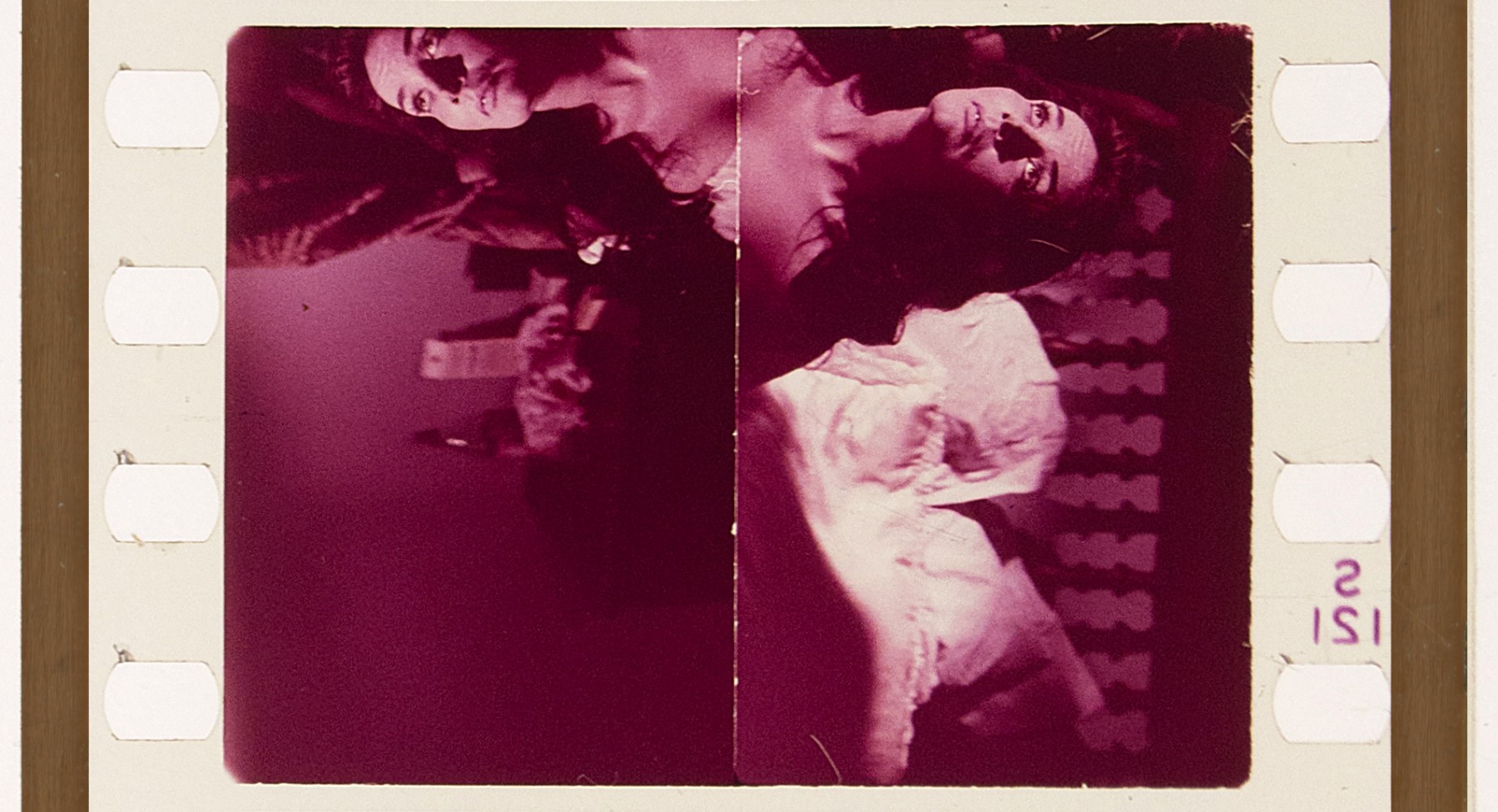
An ARC 120 35mm print of Luna de Miel (1959). The image has been unsqueezed, the frame size reduced and the two halves of the image have been arranged toe-to-toe. When projected, there was an overlap of the two images, which was hidden by a vibrating shutter device in the adapter lens.
BFI National Archive, Berkhamsted, United Kingdom.
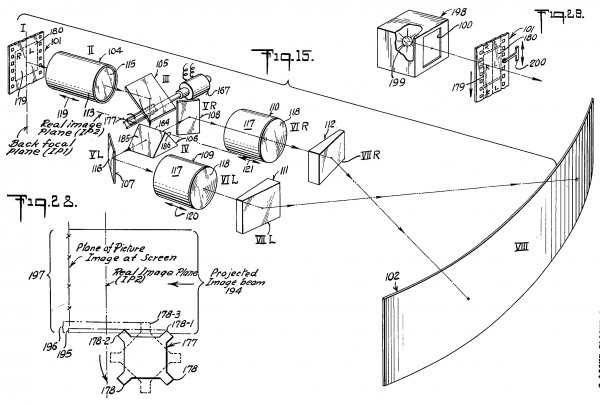
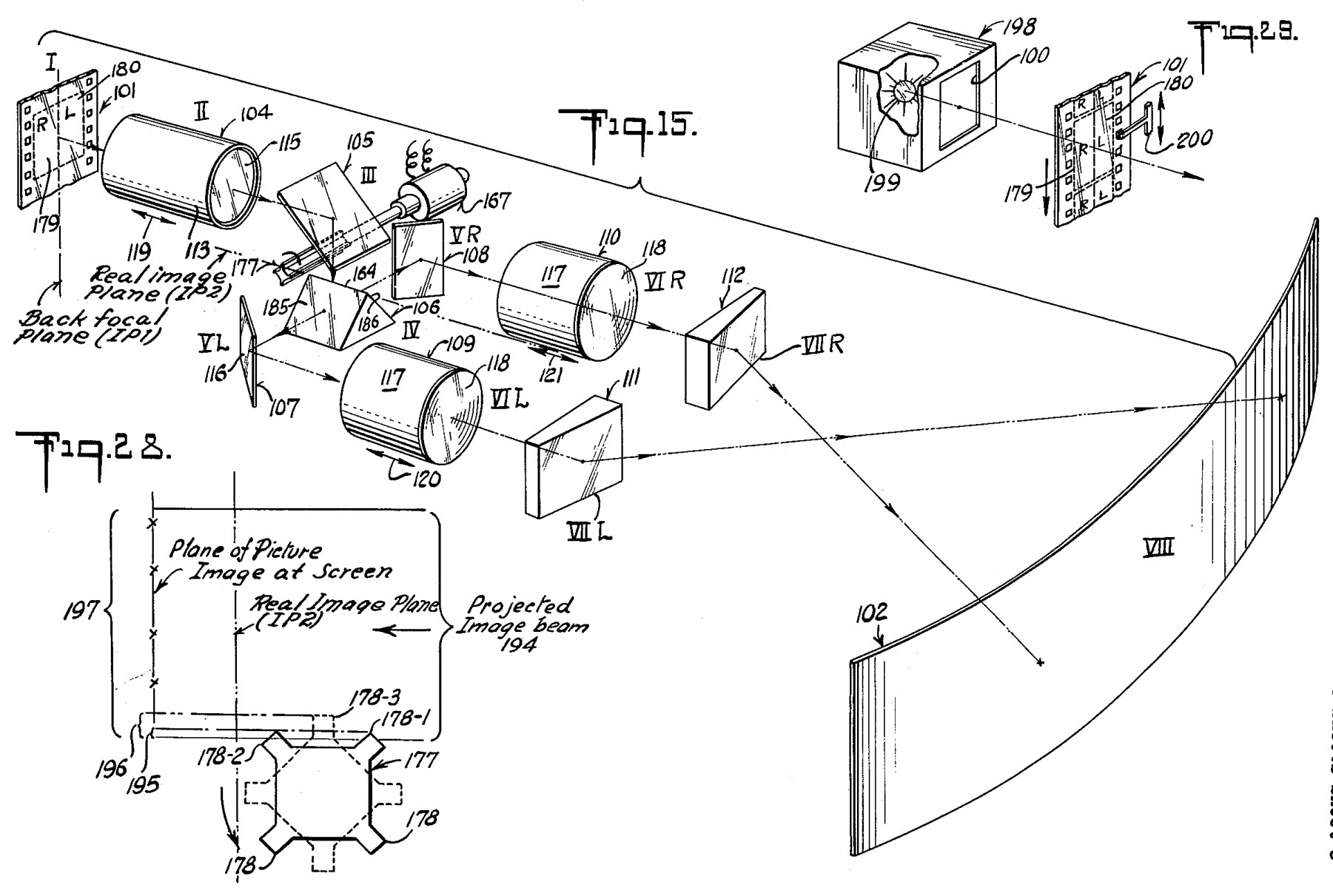
The two half-images on the print were rotated and blended on the screen during projection.
Wells, Leon W. & Leon Bronesky. Motion Picture Projection System Utilizing Beam Splitting Means. Worldwide application US2967453A, filed March 31, 1959, and issued January 10, 1961.
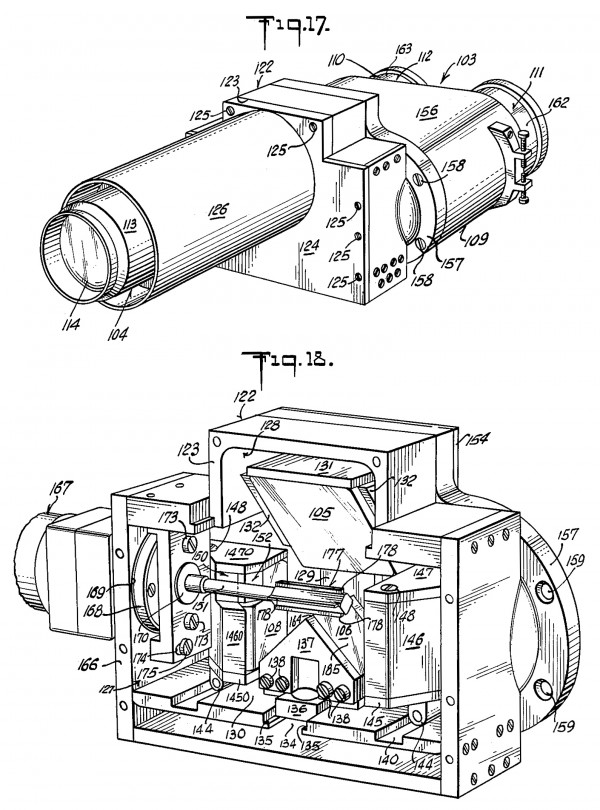
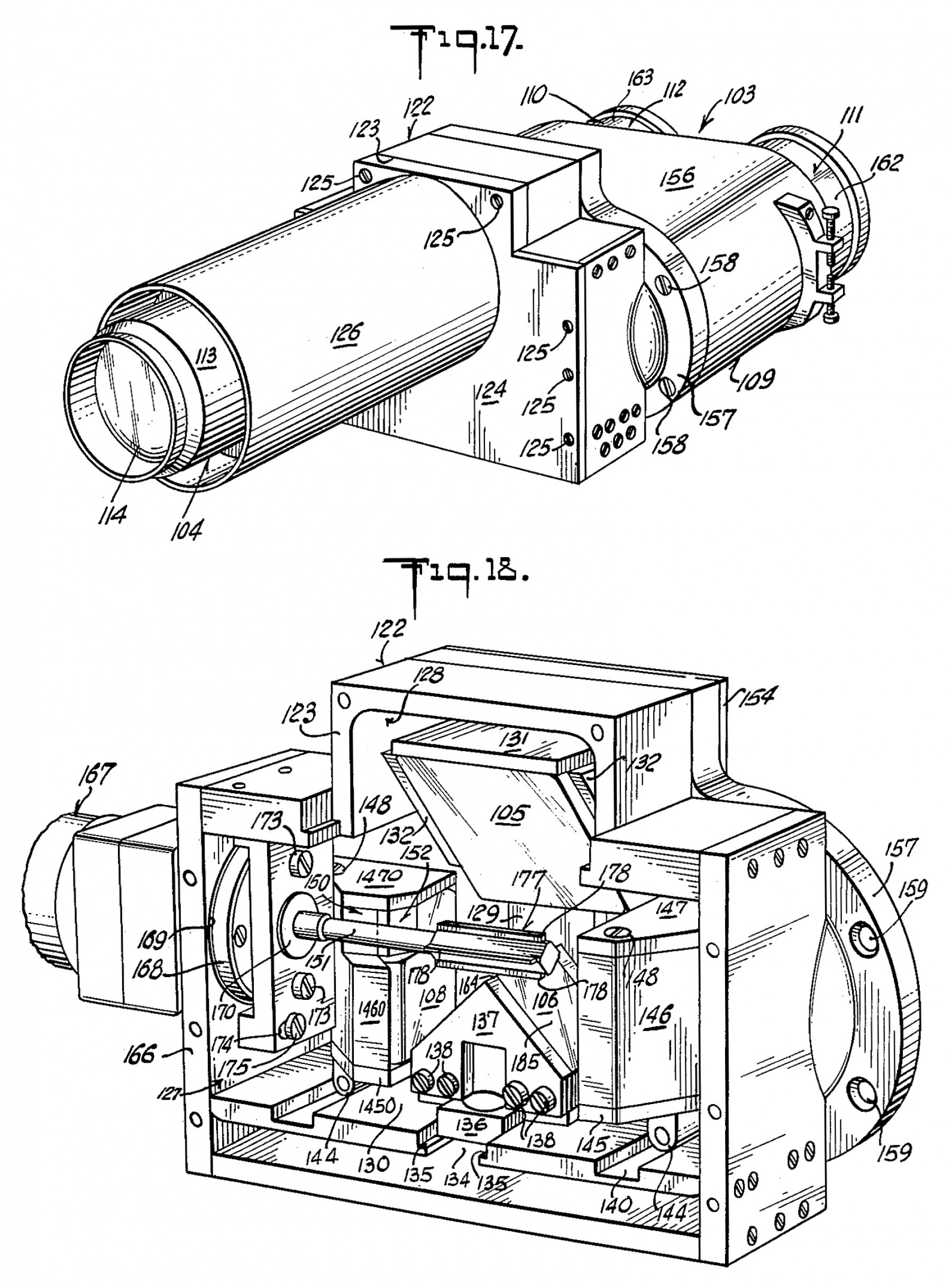
The beam-splitting adapter lens for projection. Fig. 17 shows the singular tube which attached to the front of the standard projector lens. The image travelled through to the central box, Fig. 18, which housed mirrors for splitting the image in two and the rotating shutter used to blend the images. The image was then projected through the two lenses on the front of the box (seen in Fig.17).
Patent application US2967453A, sourced through Google Patents.
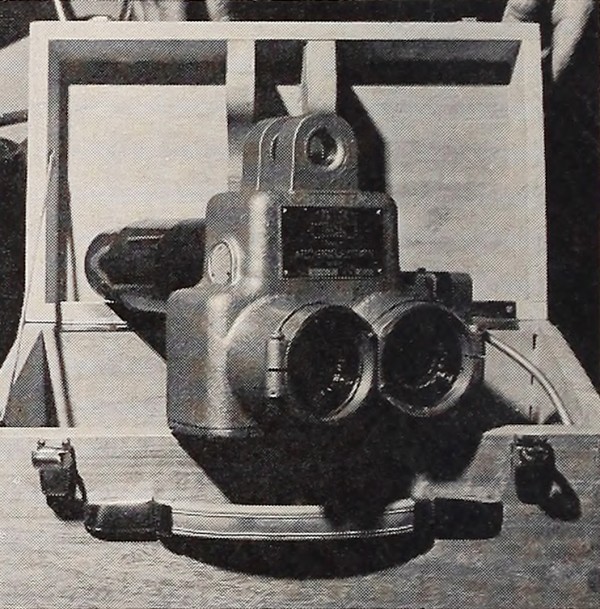
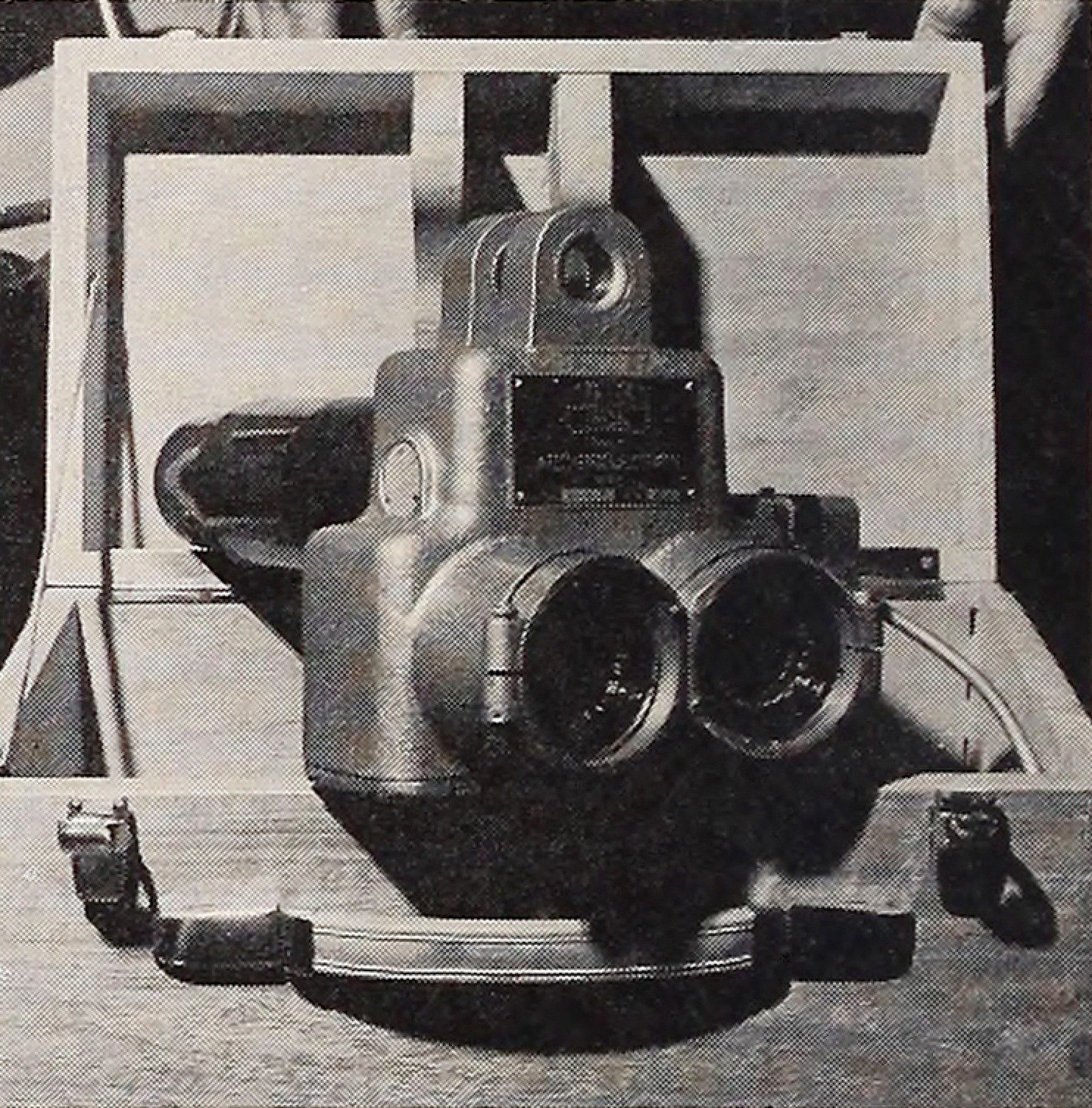
The ARC 120 projection lens.
International Projectionist (1964), 39:5 (May): p. 15.
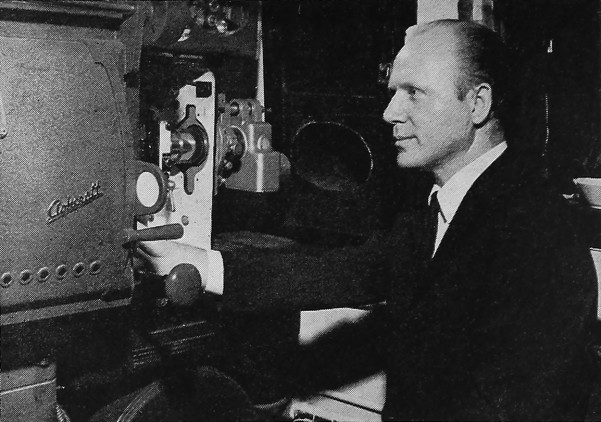
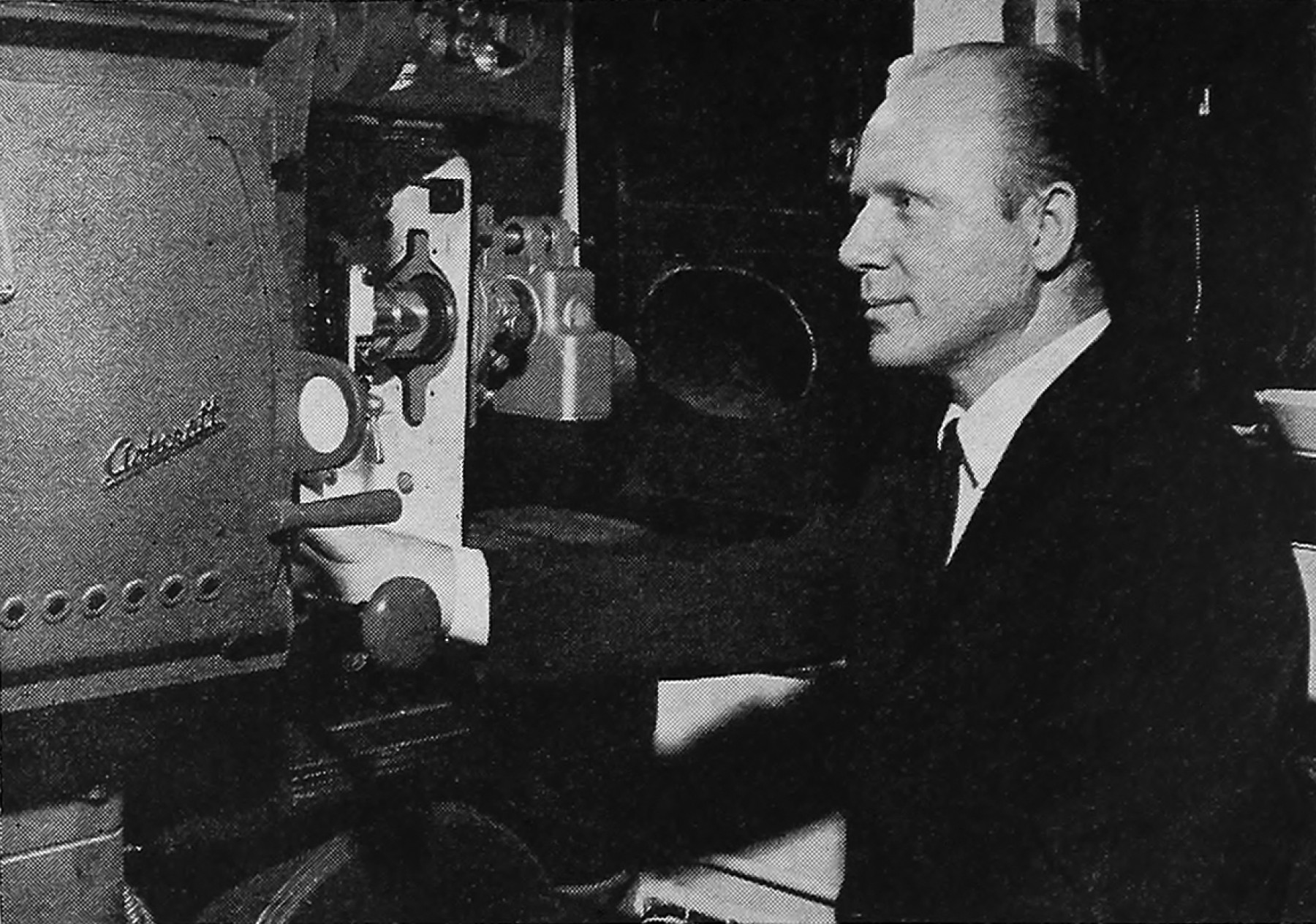
Leon Bronesky standing next to a 35mm projector fitted with an ARC 120 lens attachment.
International Projectionist (1964), 39:5 (May): p. 15.
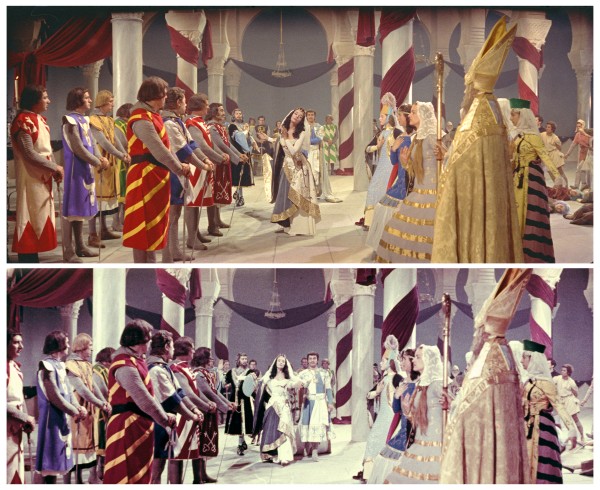
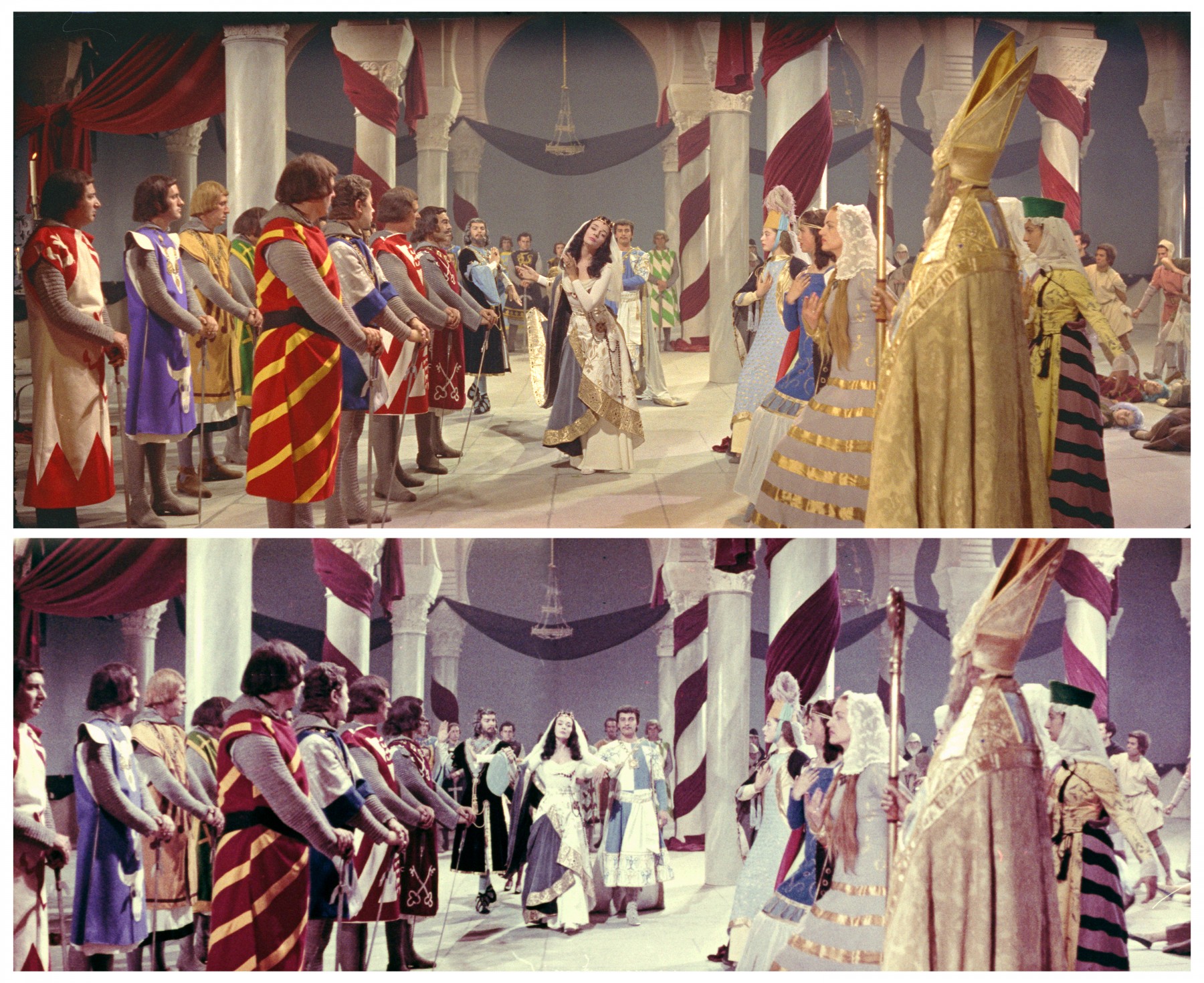
Above: Digital reconstruction of the inverted, unsqueezed Technirama negative (4K Cintel scan). Below: Digital reconstruction of the two ARC 120 images, rotated and merged. Magenta fading has been digitally corrected; colors are approximate. The quality is notably different to the negative, with heavier grain and reduced sharpness (4K Cintel scan).
BFI National Archive, Berkhamsted, United Kingdom.
References
Box Office (1961). “New York”. Box Office, 80:3 (Nov. 6): p. 13.
Box Office (1964). “Wonderama Unveiled; New Screen Process”. Box Office, 84:9 (Mar. 9): p. 10.
Coe, Brian (1981). The History of Movie Photography. London: Ash & Grant.
Cinerama.com (n.d.). “Mediterranean Holiday”. Cinerama (website). https://incinerama.com/mediterraneanholiday.htm (accessed Oct. 12, 2024).
Dane, Mark (1964). Felicia. New York: Belmont Books.
Film Bulletin (1961). “Look for Magna on American Exchange”. Film Bulletin, 29:12 (Jun. 12): p. 14.
Film Daily (1956). “1 Projector, 2 Lenses to Project 2 Images from Split Frames on 35mm”. Film Daily, 109:24 (Feb. 3): p. 9.
International Projectionist (1956). “Super Hilux” advertisement. International Projectionist, 31:5 (May): p. 31.
International Projectionist (1964a). “Wonderama Reviewed in New Jersey: Enthusiastic Welcome for New Process”. International Projectionist, 39:4 (Apr.): p. 9.
International Projectionist (1964b). “’With the Small Theatre in Mind’ … Wonderama Augments Capabilities”. International Projectionist, 39:5 (May): pp. 14–15
Jewish Telegraphic Agency (2010). “Survivor who testified at Nuremberg, Eichmann trials, dies”. Jewish Telegraphic Agency (website). https://www.jta.org/2010/01/24/lifestyle/survivor-who-testified-at-nuremberg-eichmann-trials-dies (accessed Oct. 6, 2024).
Kinematograph Weekly (1960). “ARC-120 Gives Wider Vistas”. Kinematograph Weekly, no. 2771 (Nov.): pp. 32 & 34.
Lost Media Wiki (n.d.). “The 5,000 Fingers of Dr. T (lost original cut of Dr. Seuss film; 1953)”. Lost Media Wiki (website). https://lostmediawiki.com/The_5,000_Fingers_of_Dr._T_(lost_original_cut_of_Dr._Seuss_film;_1953) (accessed Sep. 17, 2024).
Motion Picture Daily (1953). “Cinerama Cost of Installation Drastically Lowered”. Motion Picture Daily, 73:102 (May 27): p. 1.
Motion Picture Exhibitor (1962). “ARC 20 – New Projection System”. Motion Picture Exhibitor, 67:16 (Apr. 4): pp. 48 & 50
Motion Picture Exhibitor (1964). “New Item”. Motion Picture Exhibitor, 71:9 (Mar. 11): pp. 14 & 18.
Powell, Michael (1957). Personal correspondence between Michael Powell and Cesáreo González (Aug. 3). British Film Institute Archive acquisitions.
Powell, Michael (1960a). Personal memorandum of a meeting at Pinewood between Michael Powell and Leon Bronesky (Jan. 29; typed Feb. 4, 1960). British Film Institute Archive acquisitions.
Powell, Michael (1960b). Personal correspondence between Michael Powell and Leon Bronesky (Jul. 11). British Film Institute Archive acquisitions.
Powell, Michael (1960c). Personal correspondence between Leon Bronesky and Michael Powell (Nov. 29). British Film Institute Archive acquisitions.
Powell, Michael (1961a). Personal correspondence between Michael Powell and Cesáreo González (Jan. 23). British Film Institute Archive acquisitions.
Powell, Michael (1961b). Personal correspondence between Michael Powell and David Kingsley (Jun. 6). British Film Institute Archive acquisitions.
Thrower, Stephen (2007). Nightmare USA. Surrey: FAB Press.
Variety (1961a). “ARC-120: Poor Man’s Cinerama”. Variety, 221:8 (Jan. 18): pp. 5 & 78.
Variety (1961b). “Delay Black Tights”. Variety, 234:5 (Sep. 27): p. 3.
Variety (1962). “’Felicia Rolls in Puerto Rico: Uses ARC-20 Device”, Variety, 227:3 (Jun. 13): p. 5.
Variety (1964a). “Reade Postpones ‘Wonderama’ Bow”. Variety, 233:9 (Jan. 22): p. 8.
Variety (1964b). “Leon Wells is Out”. Variety, 233:11 (Feb. 5): p. 18.
Variety (1964c). “‘Wonderama’ Process Test in Jersey”. Variety, 234:1 (Feb. 26): p. 24.
Variety (1964d). “Bugs Still Infest Reade’s ‘Wonderama’”. Variety, 234:3 (Mar. 11): p. 3.
Patents
Bronesky, Leon. A Method of Producing Wide Screen Motion Pictures and Apparatus. British Patent GB860180A, filed July 21,1958.
Wells, Leon Weliczker & Bronesky, Leon. Film and Apparatus for Producing Wide-screen Images and Methods of Producing Such Film. German Patent DE1157913B, filed July 22, 1958.
Wells, Leon W. & Bronesky, Leon. Motion Picture Projection System Utilizing Beam Splitting Means. US Patent 2967453A, filed March 31, 1959, and issued January 10, 1961.
Preceded by
Followed by
Compare
Related entries
Author
J. M. Fernandes is an archivist at the BFI National Archive. Fernandes has a particular interest in early colour systems and has previously written an article on Technicolor II for Sight and Sound. Fernandes also contributed stills to FIAF’s expanded edition of Harold Brown’s Physical Characteristics of Early Films as Aids to Identification (2020).
I would like to thank James Layton and Crystal Kui for their help and guidance throughout, as well as those who reviewed my entry and gave their valuable feedback.
Fernandes, J. M. (2026). “ARC 120”. In James Layton (ed.), Film Atlas. www.filmatlas.com. Brussels: International Federation of Film Archives / Rochester, NY: George Eastman Museum.